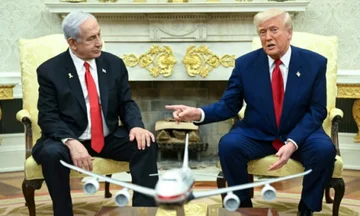
CNN: Netanyahu seeks emergency meeting with Trump amid mounting tensions over negotiations with Iran
 21 minutes ago
 (5 years ago)
The rise in extraordinary electricity and other basic products has made life difficult for citizens for whom the state has not yet done enough to protect them. So said Dardan Abazi, senior researcher at the Institute for Development Policy (INDEP) at the discussion table “The rise of prices in the market [...]
So said Dardan Abazi, senior researcher at the Institute for Development Policy (INDEP) at the discussion table “The rise of prices in the market and consumer protection”.
Ahaz stressed that consumer complaints are numerous for rising prices not warned by merchants, as he said in some cases there are also doubts about these expensive deals with prohibited agreements.
“The rise of extraordinary prices that have been made in this time of the end, in terms of rising energy prices and basic products, has led a large portion of consumers to choose between eating and educating or carrying out other expenses. Many consumers are in need of which the state has not yet done enough in order to cope with this crisis. We as consumers have sorrows and these complaints we're taking day after day in the institute's channels I UEP. A large part of consumers are complaining about prices that are being expensive without warning and immediately in the sector of which there are doubts that they are taking place through prohibited agreements”, he said.
On the other hand, surprisingly, the number of complaints by consumers addressed to the Ministry of Industry, Intervention and Trade(MINT) is extremely low.
According to this ministry from January this year until now, only 19 complaints have been filed, until prices have increased, no more than 4 complaints from consumers.
This little number of complaints has been argued by the head of the Trade Department at MINT, Zef Dedaj, who said citizens seem aware that these price hikes have resulted from import of goods.
“According to the platform operating within the MINT consumer protection department, actually from January this year and so far, 19 complaints from consumers have been addressed. Nine of them are on cartel allegations, and 10 are about price hikes. It's very interesting that only in September have four cases been addressed. So there are few, but I think consumers are understanding something that we're importing this price increase. These 19 cases have been addressed to the authority of competition, I don't have any information about what happened to this case”, Dedaj stressed.
Deday at this table stressed that it is evident that there are price hikes, which he called as disturbing, but according to him, this is being detected by imported goods from abroad.
The rising prices for fuel and oil by automatism has been associated with increased transportation prices, and this has affected Kosovo as well. In the energy growth that was highlighted, luckily we don't have the energy price increase, but anyway if products as raw materials were produced and affected by rising energy prices in the market, we've obviously been affected by this. But, fortunately, we have an energy price increase in Kosovo... The price increase has also been confirmed by the ASS, which in September has reached 4.9 per cent, and we as ministries confirm it through field analysis. However, it is disturbing. A piece of information I've received these days that transportation from China to Durres currently amounts to $19,000, which prior to this crisis was approximately 2,500. Products are mainly those basics which are expensive in Kosovo, have increased the price of bread, cereals, meat, milk, cheese, the eggs and many other basic products for which Kosovo is dependent on these products, which are imported and therefore inherit the” price, he said.
The director at the Competition Agency, Sakip Imer, has said that there is no dominant position in the market until he said that investigations are open to KEDS and KESCO.
“We have done market research in particular oil market research, this has been a concern in the first six months of 2021, and out of this concern we have come with a result that Kosovo has no oil producers, this is a situation for regret. There are only importers and oil divers for this product... In Kosovo there is no dominant position or powerful companies that import this product. From our analysis, there is no dominant position and there is no misuse. The scourge of companies that import and sell this product is brought in by 1 per cent to 8 per cent... As authorities we are trying to exercise our positions against the lack of a board that we have since June and the possibilities of making decisions for opening up the investigation and closing the existing investigations we have, as it is a collective decision”, he said.
OEK Chairman Berat Rukiqi said the energy crisis and the rising electricity prices have mostly affected businesses.
Rukiqi has encouraged businesses to raise wages for workers, until she stressed that some companies are already doing so.
This is one of the most sensitive parts in this crisis, and normally it requires active policy of all acts, so that we don't get into a crisis which can then affect regular power supply and here is that part that businesses are most affected, the cost of energy... Businesses have made a large part of them an increase in salaries or an overhaul of salaries in relation to inflation. This depends on the company's policies, normally I can't get involved, but I encourage others to do it as well because it keeps the worker motivated”, Rukiqi stressed.
an hour ago