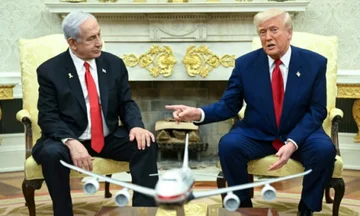
CNN: Netanyahu seeks emergency meeting with Trump amid mounting tensions over negotiations with Iran
 23 minutes ago
 (5 years ago)
Government circles from Berlin told the DW they are concerned about the situation in Bosnia and Herzegovina and are trying to find a solution to prevent the spread of conflict in the region. We are alarmed after the report submitted by High Representative (HR) Christian Schmidt, said from government circles Wednesday evening [...]
Government circles from Berlin told the DW they are concerned about the situation in Bosnia and Herzegovina and are trying to find a solution to prevent the spread of conflict in the region.
We are alarmed after the report submitted by High Representative (HR) Christian Schmidt, said from government districts Wednesday evening in Berlin. The Federal government shares High Representative Schmidt's major concern about the internal political situation in Bosnia and Herzegovina, and especially for a series of statements by Serbian President Milorad Dodik. “Calls for secession and for steps for weakening the state as a whole are irresponsible and totally unacceptable”, Germany's Ministry of Foreign Affairs for DW reported, among other things.
The German Foreign Ministry further judges that Bosnia and Herzegovina is going back, and that there is the danger of a permanent crisis with negative consequences for citizens of the whole country. The entire “risks the stability not only of Bosnia and Herzegovina, but of the entire region. We are consulting intensively with our partners, especially in the EU, in Queen and the Western Balkans, and within the framework of the Peace Implementation Council, for steps we can take to avoid such development”, the German Ministry of Foreign Affairs statement concludes. Quintus is made up of representatives of five Western states: Germany, Great Britain, France, Italy, and the United States of America.
Schmidt: There is dangerous escalation in Bosnia
The international community's high representative in Sarajevo, Christian Schmidt, had earlier warned in a report to the UN Security Council of a dangerous escalation of the situation in Bosnia and Herzegovina.
“Bosnja-Herzegovina is facing its most critical threat of the post-war period”, the German diplomat and former minister of Agriculture wrote in his latest report to the United Nations, informs dpa.
The report blames Milorad Dodik, the representative of Serbs in Bosnia and Herzegovina's presidential trion, for escalation of the situation. Dodik is preparing the creation of his army for Republika Srpska, which would lead to the destruction of the country's entire army, the report said. In addition, Bosnian Serb politician is currently blocking state institutions like the presidency and parliament through his boycott. If the international community continues to accept this policy, Republika Srpska will be “removed from Bosnia's constitutional order” and undermine the Dayton Peace Agreement,” wrote Schmidt in the report.
In 1995, the Dayton Agreement ended the bloody three-year war in Bosnia and Herzegovina. Among other things, the agreement envisioned the creation of two semi-automatic parts of the country, the Bosniak-Croat Federation and Republika Srpska. In addition, it established the Office of the High Representative, which is meant to monitor the respect of the Peace Agreement. German Christian politician Christian Schmidt took up this post in August 2021.
Meanwhile, the UN Security Council unanimously extended the EU mission to Bosnia for another twelve months. Prior to that, however, there had been a dispute over Schmidt's role as High Representative, Russia argues the position is no longer needed. Under the threat of a veto of the extension of the EU mission, Moscow prevented Schmidt from informing the UN's most powerful body in New York on Wednesday on the basis of its report on the situation in Bosnia and Herzegovina, it reportedly.
an hour ago