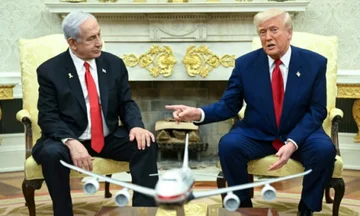
CNN: Netanyahu seeks emergency meeting with Trump amid mounting tensions over negotiations with Iran
 13 minutes ago
 (5 years ago)
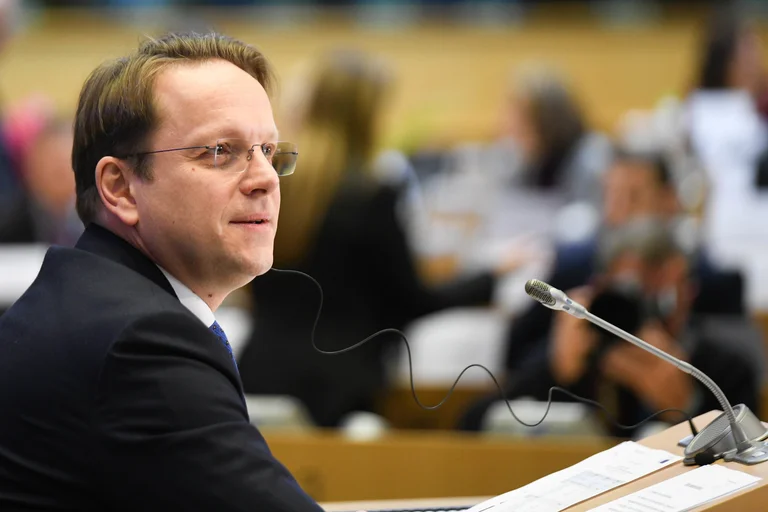
European Union Commissioner for Neighborship and Enlargement Oliver Varhely expressed optimism that the people of Kosovo will soon be able to travel visa-free to EU countries. He made these comments through a video message during the discussion organised by Hungary's Embassy in Kosovo and the Rochester Institute of Technology in Kosovo [...]
He made these comments through a video message during the discussion organised by Hungary's Embassy in Kosovo and the Rochester Institute of Technology in Kosovo (RITK), with the theme “Conference for Europe's future”.
Commissioner Varhely also told of European Union investments in the Western Balkans totaling 30 billion euros.
“I also hope that Kosovo young people will be able to travel soon without visas to the EU, and have even more contact with their peers. And we are promoting the economy, the development of the region and Kosovo, to offer you all possible opportunities in the country. Our economic and investment plan for the Western Balkans will mobilise as much as 30 billion euros, one-third for GDP in Investment. This package will bridge the economic development gap, with the EU, where it will help with recovery and progress on the road to the EU“, he said.
Varhely, while calling Kosovo's young as the most valuable asset, said their voice would greatly affect addressing economic development, making state institutions responsible for citizens' needs.
The European Commissioner for Neighborship and Enlargement said the EU supports Kosovo's youth through projects worth over 50m euros.
“Young people are the most valuable asset Kosovo has. Your voice, ideas and active participation are essential to addressing more challenges, ranging from economic development, making state institutions more responsible for the needs of citizens, to real reconciliation in the region. The EU supports Kosovo's youth through projects worth over 50m euros. Those projects are intended to develop your employment skills, social involvement and democratic participation. It is an investment that generations to come should benefit”, the European Commissioner for Neighborship and Enlargement said.
Even EU Office in Kosovo chief Thomas Szunyog said visa liberalisation is now in the hands of the Council of Ministers. He said the Kosovo government is also trying to communicate with the 27 EU member states to convince them of the pro vote for free movement for its citizens.
“As far as visa liberalisation is concerned, this is a question that we all have in mind, but again, as I mentioned several times, and I tried to explain to everyone I'm meeting, including government officials, this is an issue that should be formally decided by the Council of Ministers of EU member states... There are 27 member states that need to sit together and say, okay, that's the decision because we feel comfortable and that Kosovo is a reliable partner. So, in fact, it requires a kind of conglomeration between EU institutions, the European Commission, Parliament and others, but the Kosovo government actually tries to communicate with those 27 member states to convince all”, Ambassador Szunyog said.
Deputy Education Minister Dukagjin Pupovci stressed that Kosovo youth are the only ones who still cannot travel freely to Europe, which according to him gives Kosovo youth a sense of exclusion.
“Despite young people's high unemployment in Kosovo, this country suffers from lack of qualifications, which means that many businesses cannot find qualified workforce needed for their normal functioning, and it becomes evident that this is a major obstacle to the country's development. And the responsibility for this large-scale situation lies with the education sector. We are aware of shortcomings in our educational system and work together with our European and international partners to improve the situation. However, we think that as a country, we are already in competition with developed EU countries with regard to the qualified workforce. And this competition will become even more intense in the coming years after European economies recover from the effects of pandemic”, Pupovci said.
Leonora Kryeziu, who heads the Pristina Institute for Political Studies (PIPS), said Kosovo's young are at first faced with some obstacles that are unfinished to the country and are Kosovo-Serbia dialogue, integration prospects in the EU, non-recognition by the five EU member states, and no visa liberalisation.
41 minutes ago