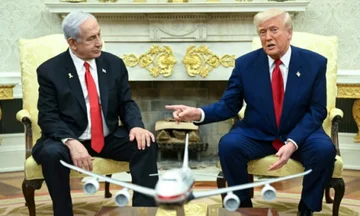
CNN: Netanyahu seeks emergency meeting with Trump amid mounting tensions over negotiations with Iran
 27 minutes ago
 (5 years ago)
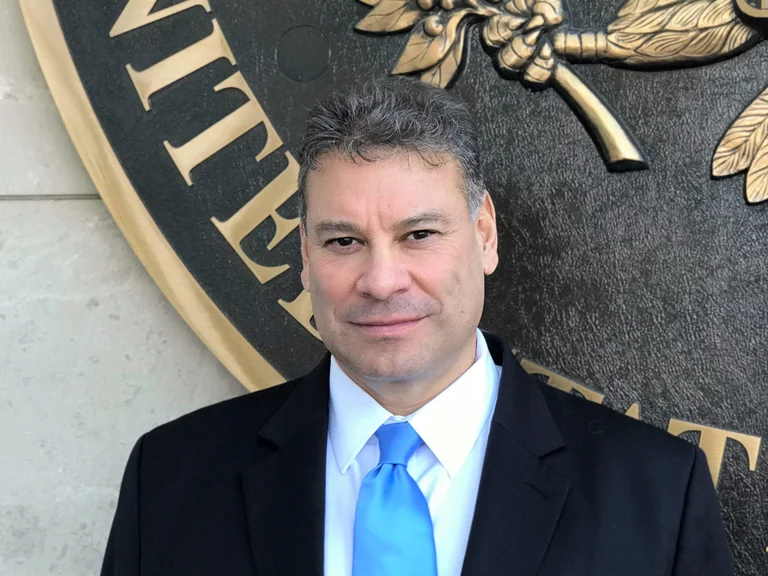
Deputy Assistant- US Secretary of State for Europe and Eurasia, simultaneously envoy for the Western Balkans Gabriel Escobar, prior to the visit to Bosnia and Herzegovina, has said he wants to send a message to the citizens of this country that there will be no war. I really want people in Bosnia to know that we are committed [...]
I really want people in Bosnia to know that we are committed to no war. And, believe me, all the countries in the region, including other Dayton signatories, including Croatia and Serbia, are committed not to seeing a war in the region”, Escobar said in an interview for Radio Free Europe.
He will arrive in Bosnia and Herzegovina on 7 November.
Tensions in Bosnia are on the rise as Republika Srpska's entity has taken some recent actions, which are estimated to be damaging the country's constitutional order and Bosnian Serb leader, simultaneously a member of the tripartite presidency, Milorad Dodik, has threatened the division of the Serb-run Republika Srpska entity.
Escobar has said he would speak to the US ambassador to Sarajevo before declaring possible sanctions, without specifying what sanctions could be a word.
In this interview, Escobar has stressed that the US is working closely with the European Union in the Western Balkans, including dialogue between Kosovo and Serbia.
Radio Free Europe: You will visit Bosnia on Sunday (November 7th). Is this part of the pressure the United States and the European Union are making towards the country to speed up reforms for European integration?
Gabriel Escobar: I wouldn't call it pressure, but I would say more is a partnership. So Dayton (the agreement that halted the war in Bosnia in 1995 v.j) has kept peace for 25 years, so we intend to go and express our support for sovereignty, integrity, and independence. Beyond that, I want to hold a series of meetings to discuss the potential for economic development in the region and the ways America can help create opportunities from which the Balkans would actually benefit.
Radio Free Europe: What kind of help is this? Can you explain?
Gabriel Escobar: Well, there's a lot of possibilities for help. First, I have sent the message to the European Union that the Balkans is a region of opportunity and that I would like to see the enlargement process accelerated. But I would also like to encourage American and European companies to see the Balkans for what it really is: a fast-growing market, excellent universities, and an extraordinary geographic position. So this kind of assistance is originally aimed at increasing awareness of opportunities, and secondly, to explore other ways we can follow to help, trade missions, USAID support (American Agency for International Development) and potential support of the DFC (U.S. Financial Force for Development). All of this is on the table. And I expect to meet with modern leaders and leaders who have this kind of mentality for integration into the European system and integration into the Western Balkans. So I will hold meetings, not only with politicians, but also with businesses.
Radio Free Europe: Will you meet Milorad Dodik?
Gabriel Escobar: This will be decided later in consultation with our ambassador to Sarajevo.
Dodik is trying to find ways to protect his power and money
Radio Free Europe: You have talked to Republika Srpska President Zeljka Cvianovic. She asked for a more balanced approach. But we still don't know what your message was about?
Gabriel Escobar: Yes, the message I gave her is the same as I gave to all leaders in the region. Dayton has secured peace for 25 years and is the basis of our policy. Any movement to undermine Dayton, including what Milorad Dodik is doing now, is very harmful and destabilising for the region.
Radio Free Europe: How can the country's threats of dissolution be dealt with, the transfer of competencies and the minimation of state institutions supported by Milorad Dodik? People are afraid a new war can happen. We haven't seen sanctions yet regarding these threats?
Gabriel Escobar: I want to discuss with our ambassador before we issue new sanctions. It's on the table. But, I want to tell the people of Bosnia: there will be no other war, we, the international community, are united with our partners in Europe, and what we want is to make sure that our commitments for the peace and security of people in the region have been met. But as for weakening central institutions, I'll be very honest, the reason for that is really corruption. What Milorad Dodik is doing is that he is trying to find ways to protect his power and money. So, I'm asking people not to let him do it.
Radio Free Europe:Do you consider yourself a man who can exert a decisive influence, not only to stop the growing anti-Bosnian rhetoric, but also to stop Dodik's agenda?
Gabriel Escobar:Frankly, the agenda Dodik is following is not being supported by anyone in the region, including Serbia, with which we are developing partnership. I'm not trying to reach the Serbs. In fact, what we are doing in Serbia now is that we are expressing support for the initiative of “Balkan opened”, which we think is a very positive development in the region, we have signed a $1 billion assistance between the Ministry of Finance and DFC, we have signed a new university partnership between Belgrade University, which is one of the best universities between Budapest and Athens, and between the Adriatic and the Black Sea, then we have the US Navy and the Gelbra Berettas developing training with Serbian special forces. That's what we can do for Serbs even in Republika Srpska. But it's the alternative messages Dodik is pushing forward, he would sooner see Republika Srpska become a Transnjersor, or South Ossetia, just to protect his wealth.
Radio Free Europe:According to a Guardian newspaper report, the international community's high representative in Bosnia and Herzegovina, Christian Schmidt, has warned of the real risk “” of the war. The authenticity of the report has not been denied. What's your opinion?
Gabriel Escobar:Well, look, I really want people in Bosnia to know that we're committed to no war. And believe me, all countries in the region, including other Dayton signatories, including Croatia, and Serbia are committed not to seeing a war in the region. And if you look at what's happening in the rest of the region, only in Bosnia, do you have this kind of growing tension, everyone else is focused on European integration and economic development. After my visit to Bosnia, I travel to Montenegro to discuss all possibilities Montenegro has to offer. I will meet with a government that is focused on creating real development routes, including the finance minister, who has talked about creating Montenegro as an E-Tradine centre, then the deputy prime minister, who has talked about creating Montenegro as a centre of transport, energy and tourist for southern Europe. All of this is possible. That's what we need to talk about. Instead, Dodik has been talking about the same issues for 25 years.
Radio Free Europe: You have said that with limited constitutional reforms associated with electoral and judicial reforms, Bosnia could become a much more functional state. How can this be accomplished if an agreement on all core issues is lacking?
Gabriel Escobar: There are examples in history that have a joint federal government and strong entities. Belgium is an example. Thus, within Europe, Bosnia can take such a form. We want a very strong Federation and a very strong Republika Srpska and no one questions the right of Republika Srpska to exist. It's part of the Dayton Agreement. What we're talking about is people taking moves to damage both Dayton and the central government. And, again, I have to stress, he (member of Bosnia's tripartite presidency, Milorad Dodik v.c) is doing this for his personal agenda.
Turkey, partner in Balkans
Radio Free Europe: Is the intervention of Serbia, Croatia and Turkey useful in Bosnia's internal affairs, or does it have a harmful effect?
Gabriel Escobar: I would say that in the context of protecting Bosnia's sovereignty and protecting Bosnia, Croatia and Serbia have a voice as they are signatories of Dayton. So we welcome our discussions with both capitals. As far as Turkey is concerned, in the context of the Balkans, they have been part of us there, they have contributed to economic development. So, as a NATO member, we welcome our commitment with Turkey even in the Balkans.
Radio Free Europe: What, according to you, are those hot spots in the Western Balkans?
Gabriel Escobar: I would say that generally we don't have them. So if you look at our relations with Albania and Northern Macedonia, they, in my opinion, are ready to start EU membership negotiations. And we hope that they will do so, that the EU will approve this and start those discussions this calendar year. Our partnership with both of these countries, as in NATO and bilaterally, has been extraordinary. They've been good allies, good partners, they're great friends and that's what I'm saying to the European Union. That's what they can expect from these places.
Then, Montenegro has made remarkable progress on the road to Europe. They are a solid partner of NATO. We are working very closely with the European Union for dialogue between Serbia and Kosovo mediated by the EU. And, I'm happy to say that we don't have any area of dispute with the European Union on this issue. As I said, we have developing partnership with Serbia that has been very beneficial for both countries. We have recently celebrated the 140th anniversary of the establishment of diplomatic reports with Serbia. And, that trajectory we've had for a century and a half, we hope to continue.
In Bosnia, we have very good prospects for European integration, if people agree that Bosnia should remain a sovereign, independent, full territorial country by fully respecting Dayton.
Radio Free Europe: So your priorities don't change when it comes to the Western Balkans, as you said when you were appointed to this position.
Gabriel Escobar: That is so, they have not changed. When I look at it, I look 20 years ago, the people who are being born in the Balkans now, have to find opportunities to live a normal, economically stable life in countries where they were born, if they wish, because at the moment, it is a very difficult choice for people to stay in the Balkans because of the economic situation. So, in my personal opinion, and that's why I've witnessed myself, Balkan people do very well everywhere. People in the Balkans and I are talking about Albanians, Bosniaks, Croats, Serbs, whatever they are, have built my country, they are building Europe, we need them to build the Balkans. And, we want to cooperate with that generation to find opportunities.
Radio Free Europe: Do you think the European Union should be more involved in the situation in Bosnia and Herzegovina? Looks like they're a little more away from the problems we have here...
Gabriel Escobar: That's not true. The High Representative is a European, whose peacekeeping forces recently extended the mandate are European. So many of the international structures within Bosnia are European now and everything we do is in consultation with our European colleagues, in fact, from Dayton, until the resolution of the license crisis between Serbia and Kosovo last month were done in co-operation with the European Union. We plan on going on like this.
an hour ago