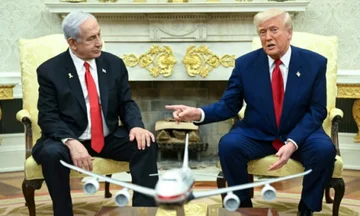
CNN: Netanyahu seeks emergency meeting with Trump amid mounting tensions over negotiations with Iran
 2 minutes ago
 (5 years ago)
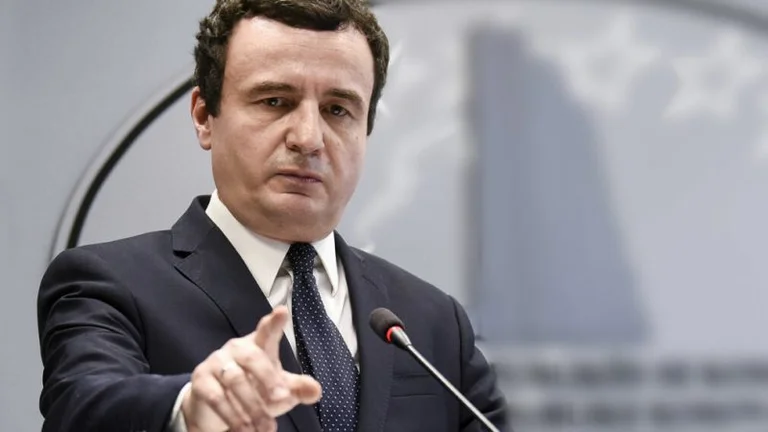
Kosovo's prime minister, Albin Kurti, has spoken in an interview for Deutsche Welle for the Association of Serb majority municipalities, the risk of Bosniaing Kosovo, dialogue with Serbia and “Open Balkan” to which it is strictly against. He argued the impasse of dialogue, stressing substantial differences with Serbia, while on the Balkan issue [...]
He argued the impasse on dialogue, emphasising substantial differences with Serbia, while on the open Balkan issue, cited the fact that Serbia recognises Albania, but not Kosovo.
DW: Mr. Kurti, you have several months in the government as Kosovo prime minister with a mandate won by over 50% of the vote in this year's February 14th elections. You've just managed to fulfill your responsibilities in the face of all that support you've received. The opposition constantly criticised you for failing to fulfill the promises.
Kurti: I believe that we have been successful during these eight months of our governance, we have won a clear mandate and three candidates on our February election list, today they run the country's three main institutions, but I also have a cabinet of ministers well prepared, educated and skilled professionals, while on the other hand they are known as responsible citizens in society, people who are incorruptible. During these eight months we have managed to fight corruption as no government before. We've had 437 police operations, 746 raids, and we've destroyed 31 criminal groups, and we've prepared the draft document for possession in justice so that our judiciary and prosecution can be done with integrity and be efficient and very active. On the other hand, we have very good economic achievements. Economic growth in 2021, according to the Central Bank, will be at least 9.9 per cent of the gross domestic product, and it is noteworthy that exports have increased by 68 per cent, while the tax administration has increased revenues of 34 per cent compared to last year. We are criticized for being compared to 2019 with pandemic, although this is also the year of pandemic, tax revenues compared to 2019 are 21 percent higher always without changing fiscal policies. The budget for 2022 will be above 2.7 billion euros, or 8.7 per cent higher than its mid-year review, and above all, we are happy for good management of pandemic. We found it with zero vaccines, zero contracts for vaccines, and today we're talking about 1.6 million vaccines.
In the October 17th local elections, you missed a satisfactory level of vote, as expected, you have said that yourself. What happened, why did this decline at the overall level of the vote, though we are talking about local elections?
Kurti: First I believe there is a huge difference between local and parliamentary elections, and it seems that in local elections we are a round of elections behind parliamentary elections. When we entered Kosovo institutions as a civil political organisation as we were, we did this first in parliament and if you look at the outcome of the elections, this is like Vetevendosje in 2019 and we don't have the Vetevendosje of the 2021 parliamentary elections. We're the first on the republic level even in this election, but we've expected to be in more municipalities in the runoff, we're in 12 Sosh, but these are extremely important, and we hope and wish the best for Sunday's runoff.
Placing reciprocity on car plates brought a tense situation in relation to Serbia, there were roadblocks in the north by local Serbs, blocking border points with Serbia. Sending the special unit there was criticised by EU foreign policy chief Josep Borrell, but not by the QUINT countries. There was also an anti-commercial police action in the north. Opposition parties said the action was to win political points before the elections. Now when the situation is quiet there, how do you judge these actions in the north?
Kurti: I believe we've done what the country's constitution and laws in force asked us to do. On September 15th, the deal expired and we have decided on reciprocity not for anyone's sake or for revenge on someone, but we believe it was our duty and a citizen's right. For more than 10 years when our citizens want to go to Serbia, they are forced to pay five euros and place Serbia's temporary license plates, while this was not worth it when vehicles from Serbia entered Kosovo. We took this reciprocity measure and started to implement it, but immediately the roads began and were blocked by members of Serbia's illegal structures in Kosovo and we were forced to send the special unit to protect our border police, as the impasse was unusual was with Manu and Bulldozer. When we add this to the fact that the vehicle registration center of Zubin Potok burned down, meanwhile, it's clear that it's about organized attack on our country's institutions. When Serbia's Defence Minister, together with the Russian ambassador to Belgrade, appeared at the Jarinje border checkpoint with Çaraats, were watching the collection of Serbia's military forces, where there were also armoured vehicles, they set up the Mig-29 military plane over them, which had been taken from the Russian federation, certainly tensions rose high, but not because of ours. They wanted to scare us, threaten us but we didn't back down, and finally it all ended up in Brussels, and today I'm happy we have the amount of reciprocity on the license plate. So we consider ourselves independent, Serbia does not recognise us, but it cannot require us not to recognise ourselves. We wish we didn't have any barriers at all, but as long as Serbia insists on them, we will need to respond by law.
However, these actions stabilised dialogue with Serbia, speak of the political level?
Kurti: I believe that the stagnation of dialogue with Serbia has taken place ever since, for many years it has been going and that is because of Serbia, which clearly wants to dominate Kosovo. The first ones do not want solutions for Kosovo Serbs, but want compensation for Serbia, compensation for the losses the Milosevic regime has caused by their view. I don't believe that Kosovo has ever met them, but they consider Milosevic lost it and now we have a new leader who will compensate for that loss. So we can't co-operate this way, we have to co-operate in how to integrate into the European Union in the Atlantic alliance, have good neighbours, address the past, have democratisation and rule of law, but not mourn for Serbia's losses from Milosevic's time. So political dialogue has long since gone, meanwhile, let's say this dialogue on the issue of the dead, nor is this one that has had any success but is continuing. And dialogue for example about some issues about the license work that still has a political dimension, but it's not about that comprehensive agreement that will normalise the reports between us. There have been achievements, but political dialogue is true that there is a impasse, but I believe because of Serbia's goal and approach.
How convinced are you of a Kosovo-Serbia final agreement soon so much demanded by the international factor, and how do you see the American and especially European role as mediator in the process?
Kurti: Kosovo and Serbia are certainly unable to make agreements outside the EU framework. The European Union should be the mediator and facilitator of this agreement, and this agreement should have mutual recognition at the centre. Currently, we have mutual non-recognition, Serbia does not recognise Kosovo's independence, Kosovo as the Republic does not recognise Serbia, and this is a relationship that we have now 13 years, unstable, but that concerns the recent war in Kosovo for which Serbia does not want to take responsibility. So not knowing the crimes in Kosovo and not recognising independence are not two very different things -- one is caused by the other. Refusing to accept the crimes committed in Kosovo, crimes against humanity, war crimes and genocide, Serbia does not accept Kosovo's independence, because it considers it the result of our liberation war, but also forgets that it is the result of its crimes that forced NATO to intervene in Europe against a state that by its own strength did not choose means to expel the population, kill and rape it.
That's the point. There have now been mistakes in the past since it is thought that Serbia's recognition comes to the end of the process, and Serbia has been trying to get as much to the end as it should not come, while Kosovo has not found the issue in terms of time, but primarily, and at the centre should be mutual recognition. There are many other elements, war reparations, unconscious, then mutual and other reports, but at the center of the agreement as a principle that organizes the agreement, it must be mutual recognition, if this centre is missing, everything else is unstable, so now we have the Serbian Mig-29 aircraft in the air for beautiful reciprocity technical issues as license plates.
As far as there is room in this deal you're talking about, the Association of Communities with the Serbian Majority. The European side is demanding that Pristina establish association based on the 2013 agreement. Will you then turn away from this covenant?
Kurti: In 2013, you should remember that there has been tremendous pressure on MPs to quickly overcome that principled agreement and lack of transparency, lack of proper information. Today you are in charge of institutions of people who in 2013 were against that agreement, while today those three people -- Vjosa Osmani, Glauk Konjufca and Albin Kurti -- on February 14, 2021 -- have won plebiscious victories. Second, December 2015 Constitutional Court Act The Serbian Major Community Association has demonstrated in light of the truth, which is integible in our legal and constitutional system. She has not handled the 2013 deal, but the impact of the 2015 contents when the 2013 deal broke out in its concrete, in its details, and in its soul has practically hit the 2013 agreement. In other words, this Constitutional Court act has not stated that only the letter of Association is problematic, but it has found that 23 articles of the constitution are being violated with it and that each of the seven chapters of Association is not in accordance with the constitution, but has also hit the spirit of this association. There can be no association with the Kosovo Constitution on ethnic grounds. This was done in Dayton, where a drill today called Republika Srpska was built and which is there for Belgrade, not the Serbs. Similarly, they want it in Kosovo. Look in Bosnia and Herzegovina, we have a state that is not republic, and there is a republic that is not a state. So, Belgrade likewise wants Kosovo to have a state that will not be called republic, but Association, and that will be within Kosovo called Republic but will not be a state. So we've learned lessons from the past and studied and analyzed Belgrade correctly because we know it well from our own experience.
The political situation in Bosnia and Herzegovina does not look good at least, according to international representatives there, with concerns manifested until the risk of dissolution. Does Kosovo feel threatened by developments in Bosnia and Herzegovina, talk about any scenarios, such as the division of the north?
Kurti: We have two strange pendulums describing the situation as moving in the Western Balkans. First we have the pendulum that first attacks us with the Association of Serb Major municipalities and when it doesn't walk then comes to what they really want, to partition Kosovo. So we have several weeks of association and a few weeks of exchange of territories that is the partition of Kosovo and we have the other pendulum where Belgrade several weeks attacks Sarajevo and weeks attacks Pristina. So, a few weeks of attacking the territorial integrity of Bosnia and Herzegovina and a few weeks that it does to the Republic of Kosovo. So these are the two pendulums we currently have in the Western Balkans and both have their cause in Belgrade. On the other hand, the situation in the Western Balkans is a miniature situation of the Russian Federation. More and more, it is showing that Serbia in the Western Balkans is behaving like the Russian Federation where Republika Srpska in Bosnia is trying to become a Belarus, while Montenegro wants to turn it into Ukraine. So the essence of the issue is that Serbia does not accept as real states the states that are not in the European Union, that is Bosnia and Herzegovina, Montenegro, Kosovo and even North Macedonia, so Serbia considers them to be temporary states and engages in all its capacity to do so.
Russia's influence in the Balkan region or its hybrid war is now evident not only in the Balkans but also in some European countries as senior NATO and EU officials have declared themselves. How much is Kosovo prepared to cope with Russia's influence, or is it already a victim?
Kurti: We have declared persons non grata two Russian officials in Kosovo, and Kosovo is highly protected by the Russian federation because of our country's population. Because the people of Kosovo are the most controversial people of the Russian Federation politics and tea, from all other Balkan countries. Even as state institutions, we are always doing our utmost in co-operation with our international partners in office with the EU NATO and the US. We consider Europe to be our continent, the EU is our destiny, while from the Russian Federation there are continuing trends to weaken towards the collapse of the European Union, for the fact that just as Serbia is nominal to Yugoslavia when it dominated this entire area and where it was held in the 1990s at the head of Milosevic and the Yugoslav Army in hand, the president of Russia is nostalgic for the time of the Soviet Union, when their forces were in Eastern Europe and were ruining governments. So there's a kind of grief, the power of those who have a lot of power while they're nostalgic, and here's another similarity, which naturally increases the risk for the Persian Balkans, but I believe their efforts will be a failure we know well, we're preparing and our alliances and partnerships with the West are stable.
Two days ago in Belgrade, the meeting of “Open Balkan” was held, with the participation of only three countries -- Serbia, Albania and Northern Macedonia. Albanian Prime Minister Edi Rama seems very persistent in this idea. Why are you so classy, against “Open Balkan”. What is wrong with Kosovo's free movement of people and goods, knowing that only Kosovo citizens face a isolation of freedom of movement in the Schengen Zone?
Kurti: There is a fundamental difference in this situation since Serbia accepts Albania as a state, but does not accept Kosovo and that rejection of Kosovo on the part of Serbia turns into discrimination everywhere for our citizens. So while a citizen of Albania can travel with a passport to Serbia, this is not worth a Kosovo citizen, since we are not accepted by our documents in Serbia. So, to become the open and free Balkans, Serbia must change once. If we co-operate with a Serbia that is not changing, it will not help change Serbia, rather encourage it. I don't prefer initiatives they don't have in and around the European Union. We saw three countries there, three representatives of Western Balkan states, but there was no one from the European Union. We support the Berlin process and the common regional market that has emerged from the Berlin process, and for which freedoms of circulation and qualifications are certainly needed and the recognition of professional and academic diplomas, but it is still Serbia that is not accepting that for Kosovo. On the other side when the Open Balkans are said to be open to whom? Because we should be with the European Union, but not open to the Russian Federation and China. In a way when it is said open, from Serbia's point of view it is targeted as it is Serbia is open to the Russian Federation and China, to become others in the Western Balkans. So we object to such a tendency and finally I have to tell you that personally as political orientation and as cultural sensitivity, I am not among those leaders who believe in the privacy of the Balkans. I'm repeating that Europe is our continent, and the European Union is our destiny.
What are your government's relations with the German government when you can pay an official visit to Germany?
Kurti: I am interested in having a visit there when the new German government is formed. Germany is our main trade partner, it is adding investments to Kosovo, and Germany is the place where we have the largest grant and brings the largest amount of remittances. Over 42 per cent of remittances coming to Kosovo on an annual basis come from our countrymen in Germany. When Germany presents the engine of the European economy, the intensifying of our cooperation can undoubtedly bring good things. In this case, it should not be forgotten that Chancellor Merkel, who is now at the end of her mandate and political career as she has warned, is perhaps the main politician who has successfully rejected the trends for partitioning Kosovo under the covering of so-called territorial exchange and has made a stolen contribution in 2017-2018 and 2019.
30 minutes ago