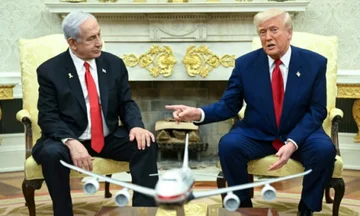
CNN: Netanyahu seeks emergency meeting with Trump amid mounting tensions over negotiations with Iran
 21 minutes ago
 (5 years ago)
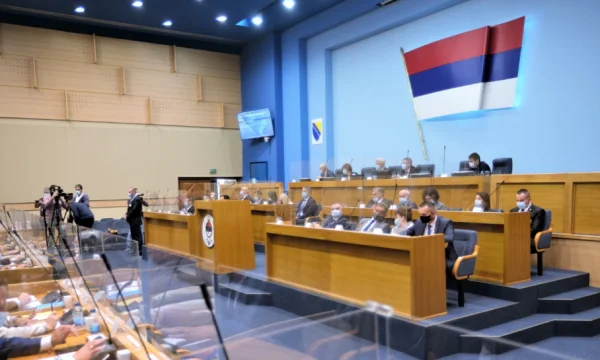
Bosnia and Herzegovina's National Assembly of the Republika Srpska adopted on Wednesday a law on medical products and equipment. The new law envisions the formation of the Republika Srpska Agency for Products and Medical Equipment. Under the law, the agency will be “an independent administrative organisation and will have the status of a judicial entity”. [...]
The new law envisions the formation of the Republika Srpska Agency for Products and Medical Equipment.
Under the law, the agency will be “an independent administrative organisation and will have the status of a judicial entity”.
Establishing such an agency is not in line with the Constitution of Bosnia and Herzegovina, which has emerged from the Dayton Agreement.
The Dayton Agreement has ended the war in Bosnia in 1995 and has divided this country into two entities: The Muslim-Croatian Federation and Republika Srpska.
According to the Constitution, these two entities have no right to take over state competencies or powers that have been transferred to the state level.
Bosnia and Herzegovina's Agency for Barna and Medical Equipment was founded in 2009.
It is the only regulatory body operating at the state level and has taken over most of the tasks of the pharmacy sector, which by 2009 have been performed by entities.
The agency was created after Bosnia and Herzegovina's Parliamentary Assembly has adopted the Law on Barnas and Medical Equipment.
The Law on Barnat, which is necessary for the work of the Agency, can be changed only at Bosnia and Herzegovina's Parliamentary Assembly.
The Republika Srpska National Assembly has 81 deputies, and the majority bloc is led by Milorad Dodik's Alliance of Independent Social Democrats.
Dodik is the Serb member of Bosnia and Herzegovina's tripartite presidency, which requires the transfer of all competencies from the state to entity level.
Dodik has also said that Republika Srpska will be removed from Bosnia and Herzegovina if these competencies do not return to entity.
The transfer of competencies from the Bosnian state to entities is not in line with the Bosnian Constitution.
Opposition parties left the Republika Srpska National Assembly session ahead of Wednesday's vote.
Serbian representatives in Bosnia's national institutions have boycotted the work of these institutions since late July, when Valentin Inzko, former senior representative of the international community in Bosnia, has imposed a law banning the denial of genocide and other war crimes.
Inzko's successor, Christian Schmidt, said on Wednesday that the Republika Srpska Law on Products and Medical Equipment is a serious challenge to the competencies and the proper functioning of Bosnia and Herzegovina's <x0).
Under the Constitution of Bosnia and Herzegovina, entities are obliged to fully respect the Constitution and decisions of state institutions”, Schmidt said.
an hour ago