3 minutes ago
QKUK has about 500 beds for patients with Ovid-19
Periskopi(6 years ago)
(6 years ago)About 500 beds can be made available at the University Clinical Centre in Kosovo (QKUK), for clinical management of COVID-19 disease causing the new choreography, health ministry officials confirm. About 40 of them are said to be used for intensive treatment. In a written statement about Radio Europe [...]
About 500 beds can be made available at the University Clinical Centre in Kosovo (QKUK), for clinical management of COVID-19 disease causing the new choreography, health ministry officials confirm.
About 40 of them are said to be used for intensive treatment.
In a written statement for Radio Free Europe, the Ministry of Health says that increasing cases with Covid-19, at the same time has resulted in increased numbers of people seeking hospital treatment.
Therefore, the Ministry of Health, in co-operation with the University Clinical Hospital Service of Kosovo (SHSKUK), has returned to full mobilization of the Pulmology Clinic, Dermatovenerology and Sports Medicine Clinic, as assistance to the Infective Clinic, to cope with a higher flow of patients in need of hospital treatment.
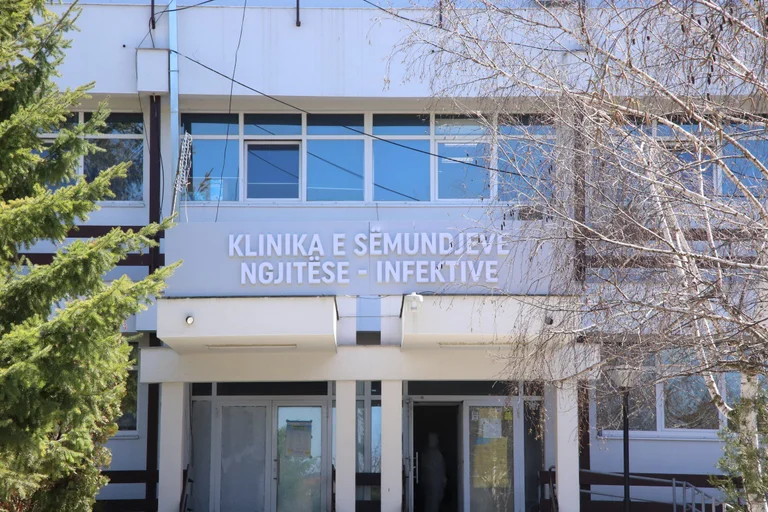
The director of the Infectal Clinic, Lindita Ajazaj-Berisha, announced on Tuesday that 104 people are hospitalised in this clinic, of which 101 are confirmed by Covid-19. She has said that a certain number of patients are already hospitalised in the Pulmology Clinic, which, along with the Dermavenerology Clinic and the Sports Medicine Centre, have been made available to treat cases with the new coronary.
On the other hand, for intensive treatment there are currently 40 beds, with the possibility of doubling in case of need, KKUK Director Basri Sejdiu tells Radio Free Europe. He added that seven beds for intensive treatment are at the Infectious Clinic and 32 in the new intensive treatment of Sports Medicine, which has been made available for handling cases with Avid 19.
“After the need we can increase capacities, release additional” spaces, Sejdiu said.
Sejdiu says QKUK is ready to host patients with all logistical and human capacities. He says that workers from other clinics have already moved to the Infectious Clinic.
Even in Sports Medicine, for intensive treatment, internists have been notified by other clinics to support the Infectious Clinic in the sports unit. Nurses from other clinics have also moved to the Infectious Clinic. So all the staff at QKUK makes moves where there is a greater need for”.
Over 700 doctors currently work at the University Clinical Centre in Kosovo, over 2,000 nurses, while the rest are administrative staff. In total, Sejdiu says, about 3,300 workers are at KKUK. The Hospital Service and the University Clinic of Kosovo(SHSKUK) has a total of 7,400 workers.
Otherwise, Health Minister Armenmen Zemaj, during a visit to the Infectious Clinic on Tuesday, has said that “aimed at reinforceing professional capacities, in addition to the current staff of these clinics, a number of professionals will also be involved through recruiting the ongoing healthcare professionals, but also through volunteers willing to engage”.
As for the number of respirators, the Ministry of Health say the health system in Kosovo has 160 respirators, including the last 20 days ago, provided by European Union countries (Norwegia, Switzerland and Luxembourg).
Kosovo's National Institute of Public Health on Monday has recommended the Health Ministry, which “does not test asimtomatic people, but to be guided to a 14-day privacy, as well as personal monitoring of the state of health”.
The Ministry of Health emphasises that most new cases discovered during June are with mild or no symptoms at all.
Consider the latest data, since the appearance of the first Corleone cases in Kosovo on March 13th and so far, 2,268 cases affected by coronarys have been recorded.
Of them, 1,108 people have recovered, until 38 patients have died. /rel/