2 minutes ago
U.S. Fights Coronavirus, China Places Military Resources in the Pacific
Periskopi(6 years ago)
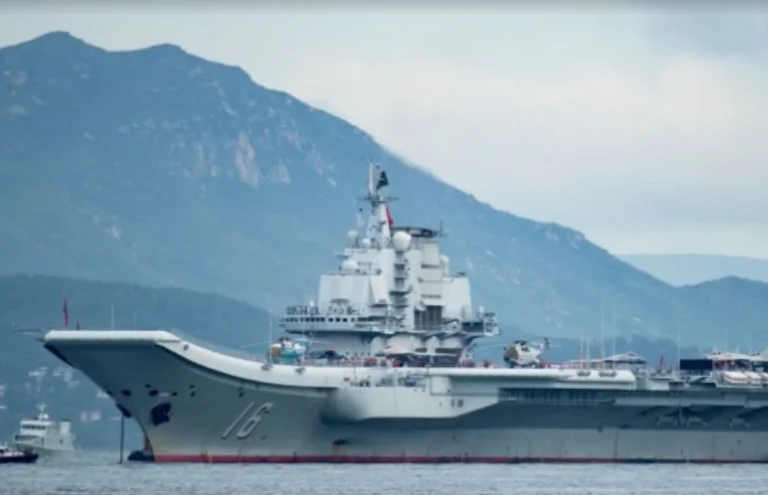
(6 years ago)Coronervirus' pandemic is inevitably affecting all spheres of international relations, including <x0...garten” between China and the United States of America in the Pacific. China, from which the Coronavirus originated, has struggled with the outbreak of pandemic, while the United States is currently under attack by the virus. Another carrier [...]
Coronervirus' pandemic is inevitably affecting all spheres of international relations, including <x0...garten” between China and the United States of America in the Pacific.
China, from which the Coronavirus originated, has struggled with the outbreak of pandemic, while the United States is currently under attack by the virus.
Another Pacific transporter, USS Ronald Reagan, is currently anchored in Japan for emergency supplies and repairs.
In March, Asia Times reported that Philippines President Rodrigo Duterte wants to terminate an agreement allowing American troops to stay in the country. At that moment, the Chinese People's Army expressed readiness to come instead of American troops.
However, after an explosion of a South China Sea transport and event, U.S. Army Pacific Commander Philip Davidson has submitted a request for a $20 billion increase in funds at the U.S. Congress, according to Euacteriv.
“National security and defence strategies and numerous intelligence assessments have revealed the renewed threat of conflict by key powers. The greatest danger for the United States is the erosion of conventional prevention. Without it, China and Russia will be seen as being encouraged to take action in the region to undermine US interests, <x1ndraporton Euractiv.
Following the end of the coronary pandemic, tensions are expected to increase.
The main question is how low the 2008 Chinese economy will drop it from an average growth rate of about 10 percent a year to a little over 6 percent.
A government division should not be expected, but some internal tensions are not excluded. The public's low information suggests that discontent is growing within the Communist Party's Political Bureau.
Specifically, Xi Jinping took over all power and abolished the mandate: but at the same time displaced the overall responsibility for political decisions.
He sent Prime Minister Lee to Wuhan in the middle of the crisis, without appearing for two weeks.
According to Chinese strategists, they are aware of the chaos prevalent in the White House and that these are positive circumstances for rapid progress in the strategic control of the South China Sea.
Gaining on its side the Philippines, along with stable good relations with Cambodia, Myanmar, and Laos, Beijing is creating strategic pressure on Vietnam, which in the Southeast Asia region becomes a leading US ally.
Japan has also been affected by COVIED-19, with South Korea calaming its own politics as well as China's stance towards North Korea, its main national interest.
Admiral Davidson is thinking for a long time, seeking to deploy intelligence troops into the Pacific that would protect the US from a possible Chinese attack.
It's a difficult scenario to imagine, but implementing his plan, which is very likely because Congress is inclined to do so, would provoke Beijing's violent reactions.
If internal problems occur in China, it is possible that Chinese President Xi Yingping will meet the threat to the “annexation of Taiwan”, which would have catastrophic global consequences, writes Euractiv.
China and the US will likely move to a stage of rivalry that will be reflected in all fields, especially if further economic division occurs.
Some require “co-operation”, but this will depend on the domestic relations of f orcs on both economic forces. Although China claims that “does not want to take over the role played by the United States in the world”, its movements are supporting the table.