an hour ago
How did some Macedonian teenagers deal with America: Reporter confessed before BBC on how they did Face News

Periskopi(7 years ago)
(7 years ago)In northern Macedonia, there is a small Internet site industry that publishs counterfeit and stimulating political articles targeting the American reader. This article was published by Simon Oxenham of the BBC and translated and adapted by Periscope. If you ignore the content, the typical day of a writer of “false warnings” will [...]
This article was published by Simon Oxenham of the BBC and translated and adapted by Periscope.
If you ignore content, the typical day of a writer from “would look like any other job in the office. Every morning, Tamara would open her laptop to be introduced into a document containing eight stories of origin on the other side of the world in the United States. The document also contained the deadline for those weeks, and no deadline was farther than a few hours later. Her job was to rewrite each story over time.
The difference? Tamara was rewrited fabricated and fake articles about two major internet sites in northern Macedonia that were then sent to American readers. Her job was to repair the semi-lagjimental copies of articles originally published on the sites of the far right in the United States so that her boss served with non-disputing Americans thousands of miles away.
I spoke with Tamar at the end of 2018 in a Skopje café, the capital of northern Macedonia. Within three days she told me in detail what she had done for nine months. Its perspective on the job market could only be that of the sole worker, its story stalwarts the reality of what it was like to work inside these sites.
Tamara wanted to remain anonymous in order to protect her identity, so her name and the individuals she works with has been changed. This article also contains a strong language.
One day in April 2017, Tamara received a phone call from a friend. I know you're doing nothing, but there's a way to make money without leaving the house at all,” She told him. You're good in terms of politics and you're good in English, so would you like to work on the news pages?
I said yes, why not”
The next step was a video call with Marco, a young man with strange behavior and a job offer.

When I accepted the call and Marco explained to me what kind of news site he was, I realized I would work for newsnews, false news,” says Tamara.
During other video calls, Marco would share his laptop screen with him to show him how to post items on his site and how to use Photoshop to edit images. He was very shy and strange,” says Tamara. Maybe I was older than him and working for him, he felt a little uncomfortable with that relationship, like my boss. She was in the mid - 1920s, while Marco had just turned 20 when Tamara joined his team.
It would be two months before she first met Marco. She would regularly take her way to the small Macedonian town to pick up an envelope of cash from Marco.
Tamara, who describes herself as a liberal, was terrified at the content of articles she had to rewrite. I believe they still have the worst articles,” she says, opening a page in her laptop, navigationing to an internet site from which she regularly copys content. I watched him print letters in research.
You can see as soon as I've crushed the Muslim attacks and there's so many articles about Muslims attacking people. A lot of them don't even think they're true. This site alone listed nearly 100 pages of the results of research on that question. Looking closer, you see that such articles contain terrifying inaccuracies and images taken from very different events. Tamar was required simply to find images using Google-to attach it to published articles.

Much of what Tamar published was misinterpretation based on real events, written in order to provoke fear and anger among readers. In general, stories offered a false view of the world, playing with their prejudice.
That thing happened, people were there, places were there. So it was never a fake story in the sense of manufacturing every detail. It was propaganda and brainwashing in the way the story was shown,” says Tamara.
Tamara's job was to rewrite original American articles so that they wouldn't be detected as plagiarization texts, also by making them more compact and more likely to be distributed in social media, generating them before Marco's site. A similar news site working in Veles with about 1 million preferences FacebookHe's been told he's won over 2,000 dollars a day. This was said by the owner himself in an interview for CNN. Marco led two sites that Tamara told me had over 2 million Facebook followers.
When I asked him if the work that made him read so much of it would affect him, Tamara describes his mixed feelings. All the time I wrote these stories, I always thought about “Oh, my God, who would believe this shit? How rude, how little intelligence you must have to read them. It's hard to read them. They are long, perhaps a thousand words, and the entire article may contain two news sentences, and after that it is all just insulting. It's hard to read. It's also unpleasant,” said Tamara.
Then he tells me something I don't expect. I usually cut these articles and avoided the parts I did not write. Or put something that I wanted to be there,” says, laughing. For example, if they were attacking, let's say, Muslims all the time, I would be so mad at all this that putting the end of something good that the boss wouldn't notice because he wouldn't read all the articles all the time. That made it easy for me to have my pain”. I asked him to give me an example. Oh, something like the end of the day, everybody is equal. Something like that”.
Was he influenced by the content? After all, some studies have shown that simply repeating false statements makes people believe them. I was aware that I was writing a lot of stories about Muslims, how they want to share their propaganda and how they all want us to live by their rules and things like that, and once I caught myself thinking something of this nature. So I was surprised. I had been influenced somewhat, this propaganda because no one is immune to it. ”
She says her political views are actually quite different from what she writes.
In 2016, just a week before the U.S. presidential election, Buzfeed discovered that over 140 news sites offering false news came from Veles. Tingers who run these sites claim to earn thousands of dollars a day and a month for what they do.
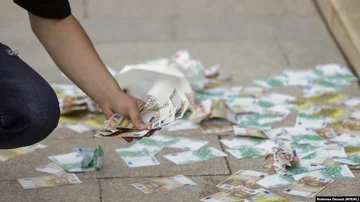
Tamara, however, did not make that much money. She was paid 3 euros for a post, and she was able to earn 24 euros for one day. That may be a small figure for some, but in the poor country where you live, it is triple the average wage.
In December 2017, Facebook closed several pages of false news from its site, including Marco's. I was working that day. When Facebook pages closed, I tried writing Marcos at the Messinger. His [personial] page was also closed, so I called him and learned that he was shocked”. After that, they stopped communicating until this summer, when Tamara accepted a phone call from Marco that asked her if she wanted to write about another site. She refused.
Who are the main drivers of these sites? Until recently, it has been widely believed that false news sites emerged in northern Macedonia quite spontaneously from local teenagers who wanted to make money.
According to new evidence, something else comes up. According to Buzfeed News, the one who had started the small fake news industry in Veles was Macedonian media lawyer Trajche Arsov, who had worked with some high profile American partners, including Paris Wade, a republican candidate who ran for the Nevada State Assembly.
When I bid farewell to Tamar and was driving a long way through northern Macedonia's neighbours through Kosovo, Albania, and Bosnia, I was hit by bitter irony. This is a region, the Balkans, which in our memory is known as shaped by divisions among peoples. The sad truth is that it has now become home to Internet sites that fuel division and polarization elsewhere this time, tens of thousands of miles away in the United States. /Periscope