7 hours ago
Kamenica emptys out, the mayor speaks worried

Periskopi(8 years ago)
(8 years ago)It has been less than seven months since it was elected to the top of the Kamenica municipality. Staying Kastrati, he is the youngest mayor of a municipality in Kosovo. The 30-year-old man from Kamenica's Hogotti won the leadership of local governance in Kamenica in the recent local elections as Vetevendosje Movement candidate. Now it's part [...]
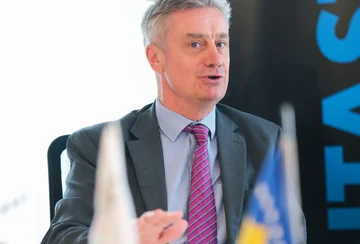
It has been less than seven months since it was elected to the top of the Kamenica municipality. Staying Kastrati, he is the youngest mayor of a municipality in Kosovo.
The 30-year-old man from Kamenica's Hogotti won the leadership of local governance in Kamenica in the recent local elections as Vetevendosje Movement candidate. It is now part of the split VV's disgruntled group, that is, part of the Social Democratic Party.
In an interview for KosovoPress, Kastrati does not talk much about his recent political movement. He says that few know the real reasons but he doesn't want to talk about them right now. The transition to the PSD, however, says it has not infected its work on Kamenica's governance.
This is the issue that I've decided not to speak publicly until a certain moment, so I'm now ready to talk to you in the quality of the mayor. .. Now it doesn't seem to have impacted something my political movement, in this respect, quite normal part of it is not informed of what [that happened] and it didn't happen directly to us why I've done such an act and they've had very great hope and joy, and they can immediately start with prejudice and then think. But no matter what I've become chairman and all that has become director, one thing is clear to us, since you win you're all citizens and it doesn't matter the subjects anymore. You won't only offer services to your voters or to a subject's voters, but all citizens should be treated equally. ”, Kastrati said.
Kastrati had joined LVV in 2009. He had served as an assemblyist at the Municipal Assembly in Pristina four years later, and by 2015 he had led the LVV Assembly Group in Pristina. He has also been a member of the Committee for Policy and Finance in the Pristina municipality.
Experience there says that today helps them carry out his duties in governing Kamenica.
Given the importance of capital investments and the creation of better services for citizens, he complains of discrimination legally done to small municipalities like Kamenica because of the very low budget for investments that would develop civic welfare.
The situation of the municipality is not easy for us to have the 9m-euro budget, 80 percent of the budget is about to go to wages, 90 percent goes to salaries, goods and municipal expenses. .. Last year we've had 124m euros in capital investments, that is, the former government, while now for six months around 600 thousand euros of projects gained that are five times more projects we've won from donors and from various organisations than the entire budget that has been in the last mandate. ...The general grant is distributed according to the number of residents, and we are now legally and formally discriminated against as to what we are as a municipality that we are a very large municipality, but with the number of residents we are small even if we compare it to the capital, we are about 80 percent the size of Pristina on the surface, and 15 per cent that Pristina is numbering the population”, he says.
Mayor Kastrati also said there is a trend of driving the population away from Kamenica, precisely because of the specifics mentioned, related to the development of the municipality.
The exile trend is several years before the war, but it has continued even after the war. I think the main reason is the lack of economic development, economic orientation that we have as a state. Normally, if you have import-export 1 to 10, then you realize that within the state the entire population will concentrate on the bigger places. Because the only way to do business or find a job is through trade. Businesses operating in trade go to countries where the biggest market is. For me it is very important that as Kosovo changed this approach because out of all small municipalities the population goes and focuses on the capital, or in the 2-3 largest cities”, he said.
An opportunity to improve the economic situation, according to him, is to facilitate doing business from central governance and investment in the agriculture sector.
The industry worked in the past. Unfortunately with privatisation, some have returned to restaurants, some don't work at all. But agriculture has also been highly developed. Now I think it's one of the areas that I think you need to reach out to, help me, support me, and or put it into that. But one issue must be clear, that it is not just a matter of the local level of agriculture. There are issues from tax policies from the state, how it helps to secure the market, how it makes it more suitable to sell local products on the Kosovo market than those coming from abroad. We as a municipality are looking at the possibility since this autumn, we have been municipalities that produce renewable energy twice as much as the municipalities consume. There is also increased interest in these hala capacities. We are looking at the possibilities of how to create a botanical garden and other things, which in Kosovo would look more interesting and are not anywhere else”, he told Kosovas.
He also said he intends that 50 percent of the time be spent to attract funds from both the central level and from different organisations, because if budget management is enough in large municipalities, in small municipalities like Kamenica that is not enough, but it is also important to attract funds.
Until he showed how the mayor didn't take advantage of the representation or the car belonging to the mayor 24 hours, because they're trying to save as much as possible.
And we also need to address these problems where a third of schools are number below 25 students, because I don't think students normally develop during the teaching process. The next issue that we have as urgent is the issue of irrigation and sewering, and all major centers have to fix this issue because there are stages of implementation of either sewage plants and whether we're a smaller municipality, we don't have access to the same system with Gjilan and other municipalities because we're at a higher altitude, and in the context of that are the two issues, the water supply and the channel that we really need - the government's support and the <11x> Cartrum said.
Kastrati voiced confidence that the central government should review the issue of general granite -- education and health -- and not experiment with sacrifice of generations because of poor quality of inadequate services and education, especially in small municipalities like Kamenica and have lower budgets.