4 hours ago
A Decade of State

Periskopi(8 years ago)
(8 years ago)Kosovo is filling ten years of state with many challenges, achievements, failures and important events that marked this decade. On February 17th 2008, Kosovo is declared a democratic, independent and sovereign state. Since the first day of the declaration of independence, Kosovo has received its first recognitions. The first state to recognise Kosovo was Afghanistan. Until, [...]
Since the first day of the declaration of independence, Kosovo has received its first recognitions. The first state to recognise Kosovo was Afghanistan. Until, 2008 was the year that brought Kosovo most recognition, a total of 53 recognitions. In the years that followed, recognitions for Kosovo decreased until Kosovo now has 115 recognitions.
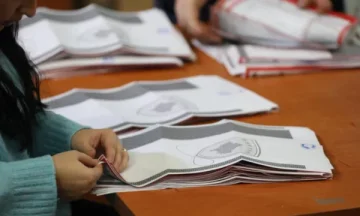
In 2009, for the first time after independence, independent Kosovo is challenged with election organisation, these elections were organised on November 15th 2009.
2009 is also remembered for an unusual event. At midnight on November 20th 2009, PDK leaders, from a nightclub called “Zanzibar” had said they have broken up the ruling coalition with the LDK.
On July 22, 2010, the International Court of Justice had issued the ruling, which proved Kosovo's declaration of independence to be legitimate and fair.
On September 24, 2010, the Constitutional Court ruled that President Sejdiu has violated the country's highest judicial act, since it does not recognise frozen office. This followed Sejdiu's resignation on September 27, 2010.
Following the collapse of the ruling coalition, early parliamentary elections were announced, which were held on 12 December 2010. Even this winning choice made The PDK led by Hashim Thaci.
On February 22nd 2011, following the failure of two rounds, Pacolli is elected president in the third round with 62 votes, four against and one abstention.
After just a month, on March 28th 2011, the Constitutional Court ruled, in which it finds that Pacolli president's election procedures have been unconstitutional.
On April 7, 2011, Atifete Jahjaga was elected president of the country.
On July 25th 2011, with a decision by then Prime Minister Hashim Thaci the Kosovo Special Police Unit is ordered to enter the north to take over the border checkpoints at Jarinje and Brnjak. In this Kosovo Police action, Special Unit Police Officer Enver Zymber is killed.
In early March 2011, dialogue had begun between Kosovo and Serbia, so called technical dialogue aimed at reaching some agreements between the two countries to offer to the European Union.
This resulted in the achievement of the agreement, which was called historic between the two prime ministers on April 19, 2011.
After the 2009 elections, Kosovo organises the second municipal elections as an independent and sovereign state. These elections under law and the Constitution are held on November 3, 2013.
Following the dissolution of Parliament early in May, early parliamentary elections are held on June 8, 2014. After these winning elections, the PDK still shows up.
But as had never happened before, parties that lost in the elections became together against Hashim Thaci's PDK.
This block was joined by Vetevendosje three months later, and this block was named V LAN, which lasted six months.
After the bloc's collapse, agreement between the PDK and the LDK is reached at the office of former President Atifete Jahjaga, with the presence of former US Ambassador to Kosovo Tracy Ann Jacobson.
After that agreement, December 8th is the constitution where Kadri Wessel is elected chairman of the Parliament.
On December 9th, Isa Mustafa was voted into Kosovo prime minister.
After the institution's restoration, in late 2014 the migration of Kosovo citizens illegally through Serbia and Hungary towards Western countries, mainly in Germany. It was estimated that only at the end of 2014 and early 2015, over 100,000 Kosovo citizens left Kosovo.
On August 3, 2015, by majority, constitutional amendments enabled the establishment of the Special Court for War Crimes.
Isa Mustafa's government signed the agreement on the establishment of the Serb majority Communists Association, until one day later the agreement for ratification of the demarcation agreement between Kosovo and Montenegro is signed.
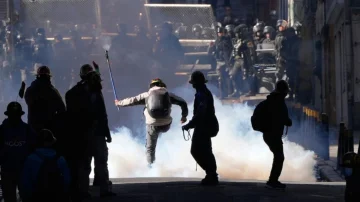
At the September 22, 2015, session, there were more than eggs used against the government.
The use of tear gas was unusual in the Kosovo Assembly, which led the country into crisis. As a consequence of opposition objections, ratification of the demarcation agreement between Kosovo and Montenegro was not reached.
Do not ratify this agreement, it sent to the coalition's collapse between the PDK and LDK in May 2017.
Kosovo's president immediately announces early elections, which are held on 11 June 2017. These choices make together the arm of war, PDK, AAK and candidate initiative for prime minister Ramush Haradinaj.
Local elections are held on October 22nd.
Kosovo closed in 2017 with many challenges to enter in 2018, the year in which Kosovo turns ten years of state. And this decade of Kosovo's citizenship found citizens isolated without liberalisation, without sustainable economic development, no progress on the road towards EU membership, without the transformation of KSF into Armed Forces and many other issues.