2 hours ago
Compromises, only opportunity for resolving Kosovo- Serbia

Periskopi(8 years ago)
(8 years ago)The issue of dialogue between Kosovo and Serbia has sharply polarised the positions of political parties in Kosovo, and that still remains “the rowing” between the ruling and opposition parties, estimates connoisseurs of political developments in the country. According to them, reaching a consensus of the political spectrum on this subject is very difficult, although not [and]
According to them, reaching a consensus of the political spectrum on this subject is very difficult, though not impossible. While in recent days, institutional leaders and political parties -- mainly those in power -- have called for achieving a unity regarding the approach to Kosovo-Serbia dialogue, the Kosovo Parliament's chairmanship has already decided Wednesday, October 31st, to hold an extraordinary session at the request of opposition parties.
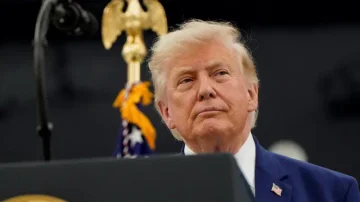
The topic of this session's debate, as it has been said, will be the <x0-direction of the president of Kosovo for the inclusion of the territorial exchange or border correction in the dialogue between Kosovo and Serbia”.
Artan Murati, analyst from the Kosovo Democratic Institute, tells Radio Free Europe that, in order to change the situation in which political parties are marginalised, political will and concrete actions have been missing so far. He stresses that in terms of dialogue there have been two topics that have been discussed, representation or who will guide the dialogue and <x0-line red” or the issue of territory failure.
If you want to go with the idea that there is no division of Kosovo, there is no exchange of territories, I believe at this point you could find out a little easier. However, when it comes to representation, there is that point of contention called president of the Republic of Kosovo, because the Democratic Party of Kosovo is in favour of the president leading the dialogue. The AAK and the Initiative is not that they have a very firm position, because depending on how political events are developing, they are about or against”.
There have been continuous moves in this location. Meanwhile, we know the attitude of opposition subjects, which are strongly opposed and consensus is a little bit more difficult to achieve on the issue of representation”, Murati stressed.
Political development acquaintance Artan Muhhaxhiri, speaking of Radio Free Europe, considers political parties to have low level of political consciousness and reaching a consensus for dialogue, according to him, already seems a luxury. However, according to him, there are two ways for that consensus to become possible.
I don't think opposition co-operation will be possible because the gap is too big. Without a major compromise by President Thaci and without international pressure from the US and the EU, it has not been possible for the opposition to display readiness to co-operate in the final phase of the dialogue. In fact, the opposition has no plan (for dialogue). The opposition's only plan is to oppose President Thaci, but President Thaci needs more opposition than that the opposition needs President Thaci”, Mujariri said.
Meanwhile, analyst Murati estimates that any domestic political struggle in Kosovo, among political subjects, will weaken the country's position in the negotiations in Brussels. For more, according to him, even any eventual agreement would remain a challenge.
“The challenge lies in how that agreement will be approved in the Kosovo Assembly, as we know that this international agreement must be ratified and two-thirds of the vote needed for something like that. We have seen from the past what happened and how much the processes have been postponed, when there has been no real co-operation from the beginning among parliamentary subjects. We would not like to see such scenes of major clashes inside and outside the Assembly regarding a foreign policy issue, and especially when it comes to a final agreement with Serbia, which is of utmost importance for the citizenship of Kosovo”, Murati said.
Recalling the situations of Kosovo's previous negotiations with Serbia, in Rambouillet, and later in Vienna, Mujajiri estimates that Kosovo will be in a very bad position under the Brussels dialogue, unless a consensus of the political spectrum is reached in the country.
“If, now, in this period, when it can become much easier in politics and a party agreement can be reached, Kosovo will not have a unity and go into the final phase with Serbia, it will be politically and terrifying”, Muhramir stressed.
However, while political parties in the country remain polarised over dialogue, Kosovo President Hashim Thaci has called on them for unity in the Kosovo Assembly, especially in terms of the platform for talks with Serbia.