2 hours ago
Merkel's leadership: Germany take luck in its hands

Periskopi(9 years ago)
(9 years ago)Convincing or not, Angela Merkel secured the fourth term at the head of the government, rivaling the longest-lived post-war leader, Konrad Adenauer and Helmut Kohl. The daughter of the Protestant priest from Eastern Europe will remain the most powerful woman in a world filled with unstable male leaders. CDU results [...]
Convincing or not, Angela Merkel secured the fourth term at the head of the government, rivaling the longest-lived post-war leader, Konrad Adenauer and Helmut Kohl.
The daughter of the Protestant priest from Eastern Europe will remain the most powerful woman in a world filled with unstable male leaders.
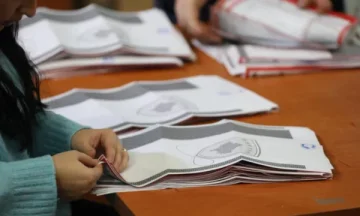
The CDU results were the worst in decades, yet, no one else can form the coalition. No party or politician is stronger than that.
The hard left centre pillar, the SDP looks like a plant in the boil. Its leader, Martin Schulz, enjoyed 10 minutes of delirium this spring, when it appeared as a fine new figure and took first place in the polls.
The problem is, the longer the Germans looked at it, the less they could imagine as their next Chancellor. Schulz and his SPD allies share a common mess with traditional European-based parties: the lack of ability to perform what motivates them, what they fight for, or whether they struggle for anything that sounds convincing to voters.
One of Schulz's great moments this spring was when he stepped forward and expressed deep indignation at Trump's humiliation of Merkel, indicating he was destroying Germany.
But that episode simply testified to how little the tested and calm leader needed to protect Schulz or anyone else. She answered briefly, making it clear that it is time for Germany to take “into its own destiny”, and increasingly emerging in Europe as Donald Trump's real alternative.
But the aura of infallibility, with these choices, has been shaken strongly. Merkel acknowledged that the vote would be the most difficult since the German union and the coalition talks will not be easy.
As for the famous formula “Wir schaffen das”, (We Can Succeed), it worked not only as an open humanitarian invitation but also as an expression of potential for action. Now, however, it will probably leave the country with another motto: social cohesion.