19 minutes ago
The demarcation agreement, like ʹbumerangʹ for Haradinaj Government

Periskopi(9 years ago)
(9 years ago)Kosovo is reducing options regarding border demarcation with Montenegro, political analysts say. According to them, Podgorica's repeated stance that for Montenegro, demarcation is a closed issue, has given clear messages to the Kosovo government that ratification of the current agreement, signed since August [...]
According to them, Podgorica's repeated stance that for Montenegro, demarcation is a closed issue, has given clear messages to the Kosovo government that ratification of the current agreement, signed since August 2015, remains the best solution.
But, Kosovo Foreign Minister Behgjet Pacolli has told officials in Podgorica that now for the ratification of existing agreements on the border demarcation is impossible due to political circumstances and the new composition of the Assembly.
Under these circumstances, connoisseurs and political developments in Pristina say Kosovo has no choice but to respect the bilateral agreement that has been signed between the commissions of the respective states.
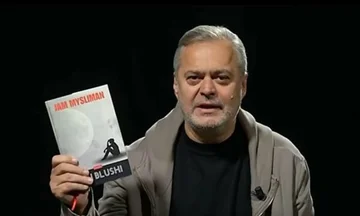
Politologist Ramush Tahiri told Radio Free Europe that undoing the current agreement or even sending it to the Arbitrazhi International Court is impossible, since the Malaysian side does not want to be involved in any circumstances in the matter.
The Agreement cannot be renegotiated because there is no new fact and there is no state commission remarks. Kosovo has made the switch of the commission that is in the prime minister's right. But, Kosovo, cannot change the criteria for renegotiation without consequences and without knowing the results”, Tahiri says.
Tahiri says that Kosovo, in this case its government, should act as a responsible subject and honour international agreements and not have behaviour as a political party.
The fact that the ruling political party -- from which the prime minister comes -- has not sent the issue to arbitration. These are professional issues the government should know about. Without opposition, the issue is not sent to arbitration. I just think that Kosovo is entering a dead end, due to political goals and losing state conditions and institutional respect and should respect the legal and constitutional criteria”, Tahiri said.
International ambition for marking the border line between Kosovo and Montenegro, according to analysts, could come to the point if Kosovo institutions ultimately fail to ratify the demarcation agreement in the Parliament.
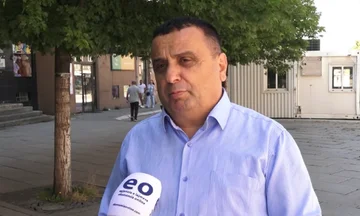
Analyst Artan Muhhaxhiri says the new government must find a quick solution to get out of blocking the demarcation issue.
The most real option may also be arbitration, but if all legal and political preparations are provided in advance, that such a process will not be harmful to the citizens of Kosovo and the European agenda of Kosovo”, he says.
Muhaxiri says the prime minister must find a real solution, not populist and stubborn.
Mr Haradinaj must face reality and seek a solution that is realistic and practical. So it should not be held hostage to populist attitudes until it was in opposition, as it is understandable that they have been stronger than it had to be, Muhramiri said.
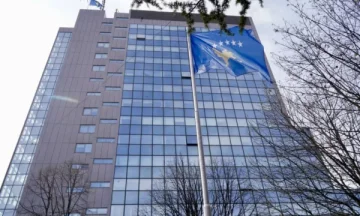
Otherwise, the newly appointed state commission for marking the border line is awaiting instructions and competencies from the Government of Kosovo on the issue of demarcation with Montenegro.
The chairman of this commission, Bulqi, has declared for Radio Free Europe that the new commission, as a first job, will have the review of the border demarcation agreement with Montenegro, but will also analyse all reports that have been made so far by the preliminary commission.
The border demarcation agreement between Kosovo and Montenegro was signed in August 2015 in Vienna.
Montenegro's Assembly has ratified this agreement, while it has rejected the former opposition in Kosovo, including Ramush Haradinaj, who is now prime minister of Kosovo.
The European Commission has conditioned Kosovo for visa liberalisation, namely ratification of the border demarcation agreement with Montenegro.