11 minutes ago
US-Iran Talks Face First Test in Switzerland
Periskopi(8 hours ago)
(8 hours ago)What was meant to be the first face-to-face technical commitment between the United States and Iran after the memorandum of understanding has become an early test to see if the fragile diplomatic commitment can survive the pressures of a broader regional war.
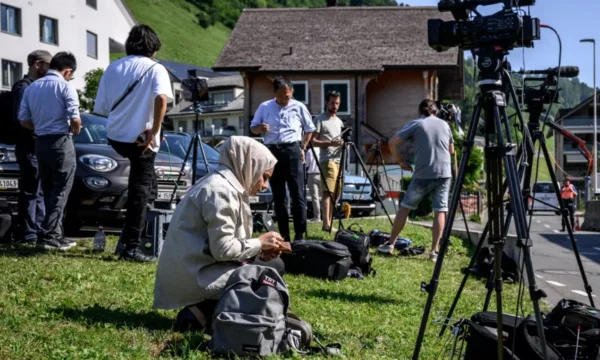
The talks, which were expected to take place at the Burgenstock resort in Switzerland, with Qatar and Pakistan helping facilitate the process, were suddenly postponed on June 19th, just hours after senior officials had started signaling to reporters that the meeting was expected to be held on schedule.
Then the plans changed.
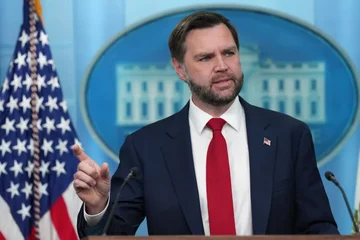
US Vice President JD Vance, who was expected to lead the American delegation, postponed his trip.
Switzerland's Foreign Ministry confirmed that the talks were postponed, at least for now.
Iran said there was no <x0 emergency” for immediate commitment, arguing that the initial memorandum has only been signed digitally and that the next phase would depend on the implementation of the conditions for which the parties have agreed.
The message from all sides was: This is just a postponement, not a collapse of efforts.
The key word here is simply, and not ♫x1>, Free Europe Radio Dr. Gorana Grgic, head of the Global Security Team at the Center for Security Studies in Zurich.
Swiss officials seem to share the same stance. Switzerland's Foreign Ministry announced that the preparation work in Burgenstock is continuing, hinting that all sides are still aiming to return to the negotiating table.
This is important because Switzerland has long played a unique role in diplomacy between the United States and Iran. Since the break-up of official relations after the 1979 Iranian Revolution, this country has served as Washington's defence power in Tehran and as a key channel of communication.
Grgic said Switzerland's role is often misunderstood.
Unofficial diplomatic channels
“Sevicra is acting as a negotiating centre”, she said, stressing that the state functions less as a direct and more direct mediator of the process, being host to negotiations, maintaining communication channels and enabling contacts through informal channels.
These backstage channels remain essential.
There are many informal channels that lead both to Washington and Tehran”, Grgic said. “and, they have been active throughout this whole process”.
Even this broader diplomatic architecture has evolved. While Geneva has traditionally been the center of multilateral diplomacy, new mediators have entered the game. Qatar has become an increasingly important actor, while Pakistan has emerged as an alternative mediator, a role once more connected to Oman.
This growing number of facilitaters of the process reflects both complexity and urgency of the moment.
Even according to Swiss standards, June 19th was a chaotic day. What started under the clear sky in Zurich ended with what Grgic described as a historical “stuy”, so powerful that he flooded the city's main train station.
For diplomats following the developments that were taking place, this seemed to be an appropriate metaphor for the situation.
Red lines
Postponing talks highlights a familiar reality of US-Iran diplomacy: the frameworks of the agreements are often easier to preserve than the final agreements. Lebanon is central to this uncertainty.
Iran's Foreign Ministry said negotiations on a final agreement depend on implementation of the defined “constitutional conditions in the memorandum of understanding ʹ languages that diplomats widely interpret as related to the stabilisation of the Lebanese front.
This connection has complicated everything.
Senior European officials told Radio Europe Free that, in fact, there is no new “ceasefire between Israel and Hezbollah. What was announced publicly was reactivating a previously reached ceasefire, which had been close to failure after several days of intense violence.
Hezbollah, the militant group and political parties supported by Iran and controlling much of southern Lebanon, is considered a terrorist organisation by the United States, while the European Union has put its armed arm on the blacklist, but not the political party.
A well-informed Israeli source said Hezbollah had urgently sought restoration of ceasefire conditions after Israeli attacks killed, according to Israel's “terrorist forces”, although there were civilians among the victims in Lebanon.
Meanwhile, Washington is signaling that Lebanon is already inseparable by the wider regional situation.
Ahead of talks to be held next week in Washington, US Secretary of State Marco Rubio told Lebanese President Joseph Aoun that Hezbollah should disarm and reconfirm US support for a Lebanese sovereign state that is “at peace with all its neighbours”.
That was more than standard diplomacy. It was a signal both to Beirut and Tehran that Washington sees Hezbollah's future as part of any wider regional solution.
Tehran's Influence
For Tehran, Hezbollah's survival on the battlefield is not separate from nuclear diplomacy.
Farzan Sabet, an expert on Iran at the Postive Studies Institute in Geneva, told Radio Free Europe that delaying negotiations does not necessarily mean that the initial memorandum of understanding is at risk.
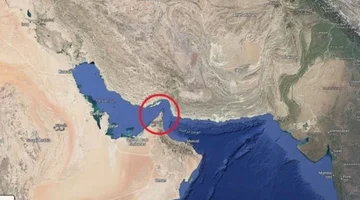
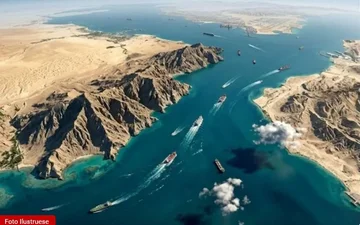
The main element of the memorandum of understanding is the reopening of Hormuz Strait”, he said, arguing that implementation of this first phase seems to be moving forward.
The dangers of passing ships through the straits have decreased, and the costs for ship insurance have also decreased, enabling commercial traffic normalisation.
This is evidence for Iran that the first phase is working.
But Sabet said Iran is now trying to expand the diplomatic framework by linking Hezbollah's security to the next phase of negotiations.
This serves some goals: protecting one of Iran's most important regional allies, calming the hardline within the country that remains sceptical of the deal, as well as testing whether the American President's administration, Donald Trump, can stem Israel's military campaign.
This is a way through which Iran is demonstrating force”, Sabet said.
This influence continues to have roots in geography. Iran maintains its ability to prevent circulation in the Strait of Hormuz, which remains its most powerful point of economic pressure. Sabet argued that Tehran believes that if attacked, it can respond not only by closing the strait but also by hitting energy infrastructure throughout the Gulf region.
This logic of prevention helps explain why President Trump eventually chose diplomacy instead of military escalation.
Sabet said, however, that he is careful about what might happen next.
“I'm not very optimistic that a second phase agreement will materialise, especially an agreement focused on the nuclear issue”, he said.
Long Road to Stage Two
For the time being, American and European officials say they still hope talks in Burgenstock can resume at this weekend.
But diplomats agree that the second phase where nuclear restrictions, sanctions relief, regional security guarantees and agreements for allied groups of parties crash will be markedly more difficult.
Iranian Supreme Leader, Mojtaba Khamenei, has already expressed scepticism against this framework. Hardline politicians in Tehran argue that the memorandum of understanding has many concessions.
For the Swiss, however, this kind of shuttle diplomacy is a known thing.
Sabet said Switzerland has spent decades facilitating just these types of negotiations since George W. Bush, through Barack Obama, Joe Biden and Donald Trum.
Delays, obstacles, setbacks - all parts of the same model.
The first US-Iran talks after the war were meant to create momentum. Instead, they have discovered how fragile that momentum remains and how quickly diplomacy can be left in second place by developments in the battlefield. / REL/
![About 50 pounds [18 kg] of marijuana confiscated, two arrested in Kacanik](/cnt/019ee57a-a005-7817-acc4-545a84abc5c1__s.webp)