8 hours ago
Reuters: Surviving massacre in Kosovo is Kosovo's newest face of change

Periskopi(9 years ago)
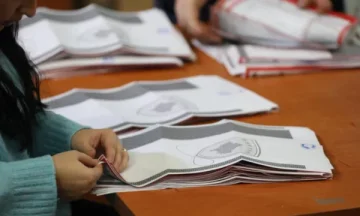
(9 years ago)The new Kosovo Parliament meets on Thursday, but what has become a routine issue since the country has marked a historic moment of secession from Serbia, on an extraordinary trip for a new member of the Kosovo parliament. Saranda Boguyevci survived 16 bullets and lost 14 family members [...]
Saranda Bogujevci survived 16 bullets and lost 14 members of her family, including her mother and two brothers during the brutal occupation of the Serbian Army towards Albanian ethnicity in 1998-99CE.
Four years later, Bogujevci, then 18, and her three cousins took the courage to testify before a Serbian court by counting the atrocities committed by then-led forces of Slobodan Milosovic.
On Thursday, it will swear as a new member of the opposition Vetevendosje party parliament, which in these last elections had doubled the vote taken by the people, and has promised to fight political corruption and nepotism in the small Balkan state.
“It's hard to get through some experiences when you see governments in order not working and there's no justice for people, that's what led me to get into politics”, Bogujevci told Reuters, during a visit to her family's cemetery in the town of Podujevo, in very in Pristina's capital.
I always imagined what Kosovo would be like after 20 years”, she said. “I never thought it would be like this which is currently”
Boguyevci's family was massacred in their yard in Podujevo on March 28th 1999 by members of a Serb paramilitary unit known as Scorpions. The youngest victim was two years old. Five men were eventually imprisoned for the murders, and in 2013 Bogujevci returned to Belgrade, where she had testified against them, with whom she had organised an exhibition about the killings.
The massacre occurred four days after the start of NATO air strikes, which will last 11 weeks, while the West tried to stop the killings and expulsion of ethnic Albanian civilians from Serb forces by waging an air struggle against Serb forces.
With the end of the conflict and entry of NATO troops, Boguyevci and her four surviving cousins were evacuated to the English city of Manchester, where she operated and after surgery she started university studies, where she resulted in receiving a university degree in interactive arts.
She returned to her homeland in 2014 to lead the Directorate of Culture in the Pristina municipality.
Bogujevci, now 32, recalls a NATO tank through a Pristina hospital window on her 14th birthday of June 12, 1999. For us this means freedom. I will never forget that moment”, she remembers the days of freedom.
Bogujevci now faces a new battle, in a country known as independent and recognised by more than half of the world, but is denied a country in the United Nations by Serbia and its ally Russia, reported “Reuters”, the Periscope broadcast.
Progress has been slow since Kosovo declared independence in 2008, with crime and corruption still widespread, poverty and unemployment are also very high.
Facing war was much easier, because we knew how we would solve things, today it is very difficult to accept and find a reason for what is happening”, Bogujevci said.
I love life, but at the same time I think I have a moral obligation towards Kosovo, England and humanity to do something based on what I've experienced”./Periscopi/