7 hours ago
“Kosovo and Serbia can use Germany's model for reconciliation”

Periskopi(9 years ago)
(9 years ago)The 1972 core agreement between West Germany and East Germany can serve as a model for Serbia and Kosovo, politicalologist and Balkan expert Werner Weidenfeld thinks. Serbian President Aleksandar Vucic has recently opened “a dialogue within Serbia” for Kosovo. Many believe that he is thus trying to divide [...]
The 1972 core agreement between West Germany and East Germany can serve as a model for Serbia and Kosovo, politicalologist and Balkan expert Werner Weidenfeld thinks.
Serbian President Aleksandar Vucic has recently opened “a dialogue within Serbia” for Kosovo. Many believe he is thus trying to share responsibility for a de facto recognition of Kosovo with the whole nation. Other suggestions, for example, are also heard. is again the model of the agreement between East and West Germany in 1972. Is that a good model?
According to politicalologist and Balkan expert Werner Weidenfeld, the situation is such that perhaps none of the major sides in the conflict will give up their stand altogether. It's like it used to be between West Germany and East Germany: two different views, no one basically gives up on principle, but there is an interest in practical improvement in the situation.
All sides continue in principle their position, but beyond that there is an improvement in the practical situation. If they are interested in better contacts, for example, in removing barriers to circulation, then the pattern of agreement between East and West Germany can certainly serve as a model. But such an agreement should not include the Kosovo status issue.
This model I've suggested, for example, for resolving the conflict in the Middle East. If negotiations in the Middle East conflict begin directly with the clarification of the status of Jerusalem, they will never move forward. In the East-Western conflict things became different and there was great progress.
Status issues should not necessarily be made essential elements of talks
The model of the agreement between East and West Germany was proposed since 2007 by Wolfgang Ischinger, but Belgrade then rejected that proposal.
Now the status quo is another and this should be the basis for which it can be discussed. One of the consequences of the agreement between the GDR and the RRF was that both states became UN members. Kosovo is not a member of the UN, among other things, from Russia's resistance.
In Werner Weidenfeld's opinion, if progress is intended to be achieved in this direction, it should not be that negotiations are weighed down with such a huge burden.
The status issues should not necessarily be made essential elements of further talks. They can be discussed after positive developments have been achieved. Such an agreement would lead to the removal of the border issue, as once between the GDR and the RRF. Balkan countries want to integrate into the EU, but they have tensions among them and must work to lower them. ”
All ideas must be discussed
In connection with the release of the old idea of partitioning Kosovo by Serbia's Foreign Minister Dačić, under which Serbia should take over Kosovo's north and Kosovo the Presevo region, politicalologist and Balkan expert Weidenfeld, thinks all ideas should be collected and discussed for things to move forward.
The best thing is for the parties to say, what the best ideas are about and then discuss with the help of any mediator, for example. President of the Council of Europe.
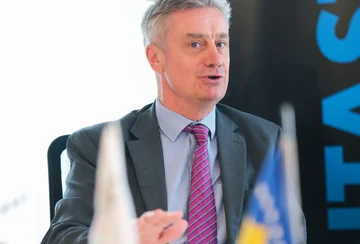
Prof. Dr. Werner Weidenfeld is professor of Political Systems and European Integrations at Munich University and director of the Applied Policy Research Centre. He is the author of many books and political expert towards the Balkans. From 1987 to 1999 he was the German government's co-ordinator for German-American co-operation.