7 hours ago
Veton Surroi says we can change demarcation, there is a call for politicians

Periskopi(9 years ago)
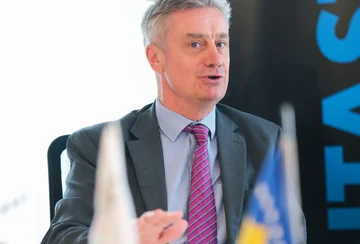
(9 years ago)Publicist Veton Surroi has done an analysis of the demarcation issue based on an analysis of British lawyer Marc Weller, who says he trusts him deeply. On the basis of the writing, it turns out that the former ORAAIder who has been involved in Kosovo's status talks is convinced that the agreement [...]
For this reason, he has urged them to sit down and find solutions by getting the country out of the blind road. Kosovo does not have instruments of international law that would contest this border. At the moment when the demarcation agreement has received the signing of Kosovo's representatives of power, the Kosovo Assembly can ratify it or not, but this does not change the” Agreement has written Surroi.
Below, you can read the complete text published in Time.net
A blind road to demarcation - neither to continue nor to new roads
Life continues for the whole world if Kosovo's Assembly, during this century or the coming centuries, cannot secure votes for ratification of the Agreement; it continues for those in Brussels who have set this as the pre-breaking condition for visa liberalisation.
1.
To remove the two-year-old mist that was created on the topic of demarcation of the border with Montenegro, I returned to a source I trust, the analysis of Professor Marc Waller, a sincere judicial mind and a Kosovo love, whenever he needed his advice from the Ramboullet Conference from now on.
So this is my reading, with the help of his analysis, about the state of international law as follows.
Kosovo already has internationally recognised borders with Montenegro. This border has been transformed into part of international law by signatories on behalf of Kosovo and Montenegro. Montenegro has ratified this signature in the Assembly and this ratification has already made this border legally protected by international law and, what is equally important, and if necessary, physically protected, even by Article V of the NATO Treaty (naturally, if granted), with which the attack on one NATO member is considered an attack on all.
Kosovo does not have instruments of international law with which it would contest this border. At the moment when the demarcation agreement has received the signing of Kosovo's representatives of power, the Kosovo Assembly can ratify or not, but this does not change the Agreement. Moreover, the Assembly may not put the Agreement in a vote for ratification at all; this does not change its Agreement or implementation on Montenegro's part. Life continues for the whole world if the Assembly of Kosovo, during this century or the coming centuries, cannot secure votes for ratification of the Agreement; it continues for those in Brussels who have set it as the pre-breaking condition for visa liberalisation.
2.
Montenegro has been brought with a marked dignity and culture of good neighbourlyness. At no time has he politicised this issue or turned the cause to change the nature of relations with Kosovo. And besides state maturity, there is a simple reason for this behavior: for him, as its officials claim, the demarcation issue has ended, therefore this is the internal issue of Kosovo.
Such a statement is of particular weight because it takes two instruments out of Kosovo's hand, which were supposed to have them. One is the agreement or redress for the border, and the other is sending the issue to arbitration. For both of them, the consent of Montenegro -- the consent this country has declared to be failing to give. Even if there was minimal will in Government to give such consent, it would legally mean that Montenegro would undermine ratification made in Parliament and pave the way for a new negotiating process (or arbitration). This would be a dangerous step to Montenegro's integrity, because if the Parliament could undermine the ratification of an international agreement such as the one on the border with Kosovo, then it becomes the precedent for breaking ratification of other agreements. The world would not be far from orchestrating a new prorus pressure in Montenegro to break up, for example, the ratification of Montenegro's NATO membership agreement. Montenegro does not have to gamble with itself, as Kosovo is used to.
So when all these rights instruments are removed, the only remaining instrument is political. So Kosovo has the opportunity to convince the US and the EU that a new agreement (or arbitration) is needed. The odds of such a thing do not appear at all, because the US is now officially behind the current agreement and EU officials have declared it.
Ah, yes, if you want additional clarification of Kosovo's political reports and capacity to convince someone: Montenegro is a member of NATO and a candidate state to join the EU (maybe in 2025) and Kosovo is a controversial state by five EU members and four NATO member states (possibly for completely undefinated membership)
3.
In the current situation, the Government of Kosovo has prosecuted the Law on Ratification and Commission Report formed to find the past Commission's errors. Since the Commission's report has no legal character, it is simply informative, the Kosovo Assembly must be declared for the Bill.
So the Assembly will not have a new proposal. His statement is required for the Vienna Agreement, as in 2015. Since 2015 two things have not changed. The Serbian list will not vote for ratification of the Agreement, since it would recognise Kosovo as an independent state, which is regulating borders with neighbouring states. The AAK, the country's prime minister's party, has warned that it will not vote because of beliefs that Vienna's agreement is at the expense of Kosovo.
With this force report, if it goes out for a vote in the Assembly, the Law for Ratification of Demarket will not get two-thirds of the votes needed to pass. Bringing the law into Kosovo legislation could mean paving the way for another law, but not international law. The collapse of the Law on Border Demarcation with Montenegro has no legal consequences. There is no US, EU and NATO either. As a result, there is no way out for a new deal. Furthermore, any unilatal proposal of Kosovo for the new border can be interpreted negatively, from ignoring international agreements to risking good neighbourlyness.
Then three things are not happening. Kosovo has no new proposal for borders with Montenegro. Kosovo has no political strength to ratify the agreement as it is. Kosovo has no political strength (or new arguments) to convince Montenegro, the US and the EU that a new agreement or arbitration is needed.
4.
This dead end is so blind that even in a hypothetical situation that the government Commission really found the 8 thousand hectares lost, and that all in Kosovo are convinced of this, there are no international, legal and political ears to listen to.
This isn't the first time this happened. From Kosovo's declaration of independence to here, therefore, the country has passed ten years from one diplomatic challenge to another, from the six points of Ban Ki-moon, the Brussels Agreement, the establishment of the Special Court to the agreement on demarcation. It all happens the same way: a proposal is made abroad, is given to one or two responsible people in the country, they one or two people make the decision, saying it is for the benefit of Kosovo (and that they have had no rent), then they seek support and eventually blame others for the consequences. Someone on the outside always blames: Ban Ki-moon why you draw six points, Serbia for everything, the EU for the Brussels dialogue, everyone else for the border with Montenegro, the Serbian List for Army and ratification, and everything else that's wrong.
But for ten years in a row, the majority political parties, the political parties of Albanians at no single moment have created consensus agreements, from six points to demarcation. There has always been a subject or a man who has interpreted the will of the majority. And so we've achieved, with demarcation, in symbol of the dead end: neither are we going to go on nor are we for any new road.
Before trying to convince Montenegro, the US, the EU and NATO, Albanian parties did well to convince each other. Perhaps they would find ways out of this situation. In their words, they would probably be able to make big decisions “. Or perhaps, in their own words, they still want to expect that one of them “opens the way for major decisions”.
However, if they don't sit down and talk, they won't be able to find a way out of the blind road. It exists.