3 hours ago
World Bank: Albania to take 35 years to reach EU average

Periskopi(9 years ago)
(9 years ago)The World Bank found the latest report “Western Balkans: Relaunching the growth and prosperity engine”, that the Western Balkans will take 60 years to capture the average European Union. But for Albania there is good news, we will not have to wait so long. Ekaterina Vostroknuova, Lead Economist at the World Bank for Europe [...]
The World Bank found the latest report “Western Balkans: Relaunching the growth and prosperity engine”, that the Western Balkans will take 60 years to capture the average European Union. But for Albania there is good news, we will not have to wait so long.
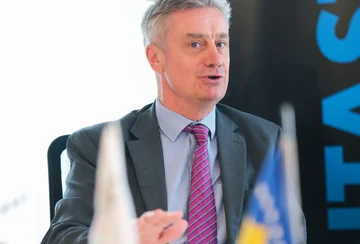
Ekaterina Vostroktuova, chief economist at the World Bank for Eastern Europe and Central Asia, said during the presentation of the report in Tirana, that 60 years is the average of the entire Balkans, while Albania will be 35 years to reach the EU average, if it will continue at the current rate of economic growth.
If the country will grow above 5%, then it will take 25 years, she said. The Balkans slow down Serbia, which for a decade has had zero growth.
Vostroknutova confirmed that growth so far in Albania has been consumer-oriented. But in the future there must be investments that should boost investments, it recommended.
Since 1990, the country has marked the fastest growth rates in proportion to itself and living standards have been cast off, she said, commenting on the report's findings. But again, so far, Albania has had a weaker performance than the region in the convergence process (convergence means Albania to grow faster than the EU average, so that per capita incomes can be achieved.
According to Eurostat's latest data, Albania's revenues in 2016 were as much as 30% of the EU average, as in 2012 and the lowest in the region. Macedonia's revenues in 2016 were 38% of the EU average, from 34% in 2012.
Improvements by 3 percentage points also made Bosnia and Montenegro, reaching 31% and 42% respectively. Only Serbia has scored a percentage point to 36%.
The World Bank, in its latest report, stresses that the convergence process can be achieved through comprehensive reforms.
The fundamental challenges are to distort the government's role in the economy, promote private company potential, better use of human labour and capital, and become deeper integration into the EU and the global economy, all of this, while maintaining macroeconomic stability.
In all, the goal is to rebalancing growth from consumption to investment, from private demand to international demand, and from the public to the private. The Bank stresses that convergence towards higher revenues is slowed by unfinished structural reforms. (montonor)