a few seconds ago
Are money and religion more similar than we think?

Periskopi(9 years ago)
(9 years ago)Diana Brown has hundreds (according to some estimates, thousands) of religions worldwide. Oxford Dictionarys define religion as “the belief and worship of a superhuman controlling power, especially a God or some personal gods”. Based on this definition, we can draw some interesting comparisons between the worship of a god and the worship of all - powerful money. [...]
Diana Brown
There are hundreds (according to some estimates, thousands) of religions worldwide. Oxford Dictionarys define religion as “the belief and worship of a superhuman controlling power, especially a God or some personal gods”. Based on this definition, we can draw some interesting comparisons between the worship of a god and the worship of all - powerful money. Because: What is money if it's not a “superhuman control”?
It's not like all people worship money or the economy or financial institutions. But many of the traps of organized religion are set around them. In his book “Paraology”, philosopher Philip Goodchild writes that our entire financial system is elevated to faith.
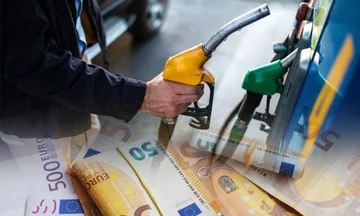
Our money is worth it because we agree they do. Especially as money becomes ever more digital, like debit cards and Bitconi's idea of belief in monetary values is essential to the economic structure we have established. The currency basically represents a promise to pay a debt, supported by a financial institution, as a commercial bank or a central bank. Without faith in this promise, our money is not worth the amount of paper they have been printed.
And they weren't always printed. In the past, valuables such as chocolates, salts, peppers, and other valuables were used in exchange for goods and services.
So besides having a faith - based economic system, there are other aspects of finance that reflect religion. Many religions, for example, have temples or shrines to which you can go to worship, or speak to a priest, or holy member, who helps you interpret the will, according to their god or gods. Even Wall Street, or any stock exchange, can be interpreted in a similar way: a cooking economic center, with investors calling out to buy or sell shares, based on nothing other than investor trust or, basically, trust in the value of something.
The mysterious power of the free market or the economy should also be translated into secular terms for many of us, especially since modern money creation is so complicated. It includes loans, loans, partial reserve banks and so on. We rely on financial advisers to interpret the will of the market for us. And malmanagement or misinterpretation could result in a “hit” by “supernatural force”, in the form of economic recessions and depressions, as we saw in many countries during the 2008 global financial crisis.
Religion has been used to control human behavior through the threat of hell or the promise of eternal life in Paradise. But philosopher Goodchild argues that money, and debt, are today the main motivers of human co-operation, so much of it has begun to combine with religion. There is a vast sect of Christianism known as the Gospel of prosperity, which considers personal wealth as a sign of being blessed by God, linking even more money to religion. Does this mean that an official sect will ever be created? Or that the most traditional form of religion will appeal to a money theology? / “Net” World.al