an hour ago
Erdogan's economic offensive in Serbia

Periskopi(9 years ago)
(9 years ago)Turkish President Erdogan visits Serbia with a large delegation of investors. He knocks on an open gate. Ankara will expand political innuenza in the EU's rear corridor, the Balkans. The dark, quadratic blue jacket seems to bring good luck to two powerful statesmen in April. In this garment [...]
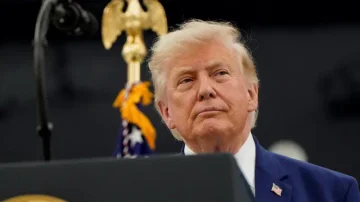
The dark, quadratic blue jacket seems to bring good luck to two powerful statesmen in April. In this outfit Aleksandar Vucic took the vote in the presidential elections in Serbia, which he in fact took from the first round. In the same outfit, his counterpart, Tay Erdogan, appeared at the polling centre when he managed to apply the presidential system through the referendum. It's a symbolic piece of clothing that makes the two powerful look modern. The Serbian Twitter community has even found a nickname for this: dictators' jacket. But Erdogan and Vucic unite more than just style. Although because of the size of their countries they play in different categories, both prefer absolute power as well as the humiliation of opposition and critical media. They prefer to install themselves as saviors who work hard for the people for jobs and development. That is what is aimed at Tuesday (10.10), when Erdogan, accompanied by his delegation with investors comprised of 150 economy bosses, visits Belgrade. It is not unusual for Erdogan to travel accompanied by investors' delegation. But for the Serbian government this is a event with which it aims to score points among the people. The message is, money is coming in with bags.
...and everyone's happy.
The Turkish government's economic reason is easily harmonised with the Serbian one, economists say. The magic word in Ankara is export. Only if further export increases can the promised growth reach 5.5 per cent annually. The Western Balkans provide a lot of cheap labour forces for Turkish investors, as well as easy access to the EU market. The process of EU-Turkey membership talks is currently dead. So it is a deciziive advantage, if Turkish companies produce in countries that are closer to the EU and even within the union”, economists from Istanbul and political analyst Atilla Yeşilada thinks.
Vucic is otherwise counting on the money and new jobs he is even willing to pay investors about 10,000 Euro subsidies for any job. The only Serbian ruler repeatedly declares that he will be the European number for economic development. But so far the figures are devastating to him. In the past three years with a 1.6 per cent increase in the region (Montenegro at 7.7%, Kosovo with 9.1% and Macedonia with 10.2%). The average salary of less than $400 a month is among the lowest in Europe. However, Turkish money will mostly be poured into the so-called industry of little additional value -- that is, where there is a greater need for simple labour and not innovation, says Yeşilada. Even now more than 1,000 workers in Serbia produce cheap Jeans pants for Turkish rmats, and according to the Serbian government that figure will increase to 3,000. In addition, Turkish interests towards the wood and milk industry are included in Serbian opinion. This would benefit both sides: “in such branches in Balkan countries can be achieved immediately, economic perspective, and at the same time serves as the basis for Turkish export economy”, says Yeşilada for DW.
Neo-osman Dream
The business “Invasion: Turks again invade Serbia”, so titled the boulevardeske newspaper Blic last year an article alluding to the five hundred-year rule of the Ottoman Empire in Serbia. But this hyperbole is understood to actually have a positive cootation. Biljana Stepanovic would prefer to be more realistic, because so far Turkish investments in the region have been moderate, says Belgrade economics magazine editor-in-chief “Noova economy”. Exports to six Western Balkan countries, located in the EU's waiting room for membership (Serbia, Albania, Bosnia and Herzegovina, Kosovo, Macedonia, Montenegro), with a total of 20 million inhabitants, have an annual volume under two billion US dollars. More Turkish producers sell to Azerbaijan or Israel, both with less than 10 million inhabitants. So Stepanovic points out, should be expected once, to be seen, how seriously Turks are. Many observers, however, speculate that Turkey is not only targeting the economy in the Balkans. As of now, mostly in predominantly Muslim countries, such as Bosnia and Herzegovina or Albania, mosques, schools and humanitarian organisations are provided. We're also dealing with neo-osmanism. Turks live with the illusion that former colonels are expecting them with open arms”, says Atilla Yeşilada. In fact, that is not the case, however, Turks have good reason to be politically interested in the region. On the one hand, stability is needed in this part of the neighbourhood, on the other hand, even though the AKP's “government believes that it is wrong for me that over the medium term the EU will be more rival than partner”, says Atilla Yeşilada.