3 days ago
You won't believe it. Research reveals how humans can live up to 156 years
Periskopi(15 hours ago)
(15 hours ago)A team of researchers has discovered a new mathematical model that is said to have been the basis for living for up to 156 years if any reverse sign of aging were eliminated except one.
The discovery provides the first quantitative ceiling on human life expectancy based solely on somatic mutations - irreversible DNA errors that accumulate in our cells over time.
Work affects both aging science and future therapeutic strategy, signaling that even the most advanced interventions against aging can reach a strong biological limit if genetic damage cannot be controlled.
According to the authors of the study, tissue that cannot be regenerated - the brain and the heart - are the ones that eventually set that limit.
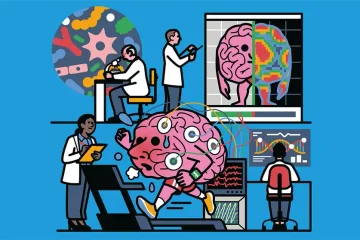
The research, published in neg Aing, uses a multiphasor model for"activated"aging mechanisms one by one and to determine how long a person can live if all mutations except somatic - a change of DNA born into any non-reproducing cell after conception, which means affects body tissues, but cannot be passed on to offspring - would be cured.
The authors found that eliminating any other aging process still leaves an average life span limited between 146 and 194 years, with neurons and cardiomics acting as obstacles. "Neurons and cardiomics, which do not have the ability to separate, resulted in the main restrictive factors", co-author Evgenity Efimov said in a statement.
Somatic mutations like the ultimate obstacle
Unlike other distinctive signs of aging - such as the mitocondrial decline, epigenetic shift, or loss of protein - somatic mutations cannot be reversed by any existing therapy. They accumulate slowly but over and over again, and in tissues that cannot replace their cells, damage becomes permanent. The Model relates:
The liver and other renewable organs can withstand thousands of years of mutations from the constant circulation of cells.
Brain and heart cells that don't divide cannot narrow down their damage and ultimately fail.
This asymmetry explains why diseases such as degeneracy and cardiac inadequacy dominate the delayed morbydity: they hit the very tissue that cannot be regenerated.
Assistant Professor Yordan Weiss, who studies health life expectancy and population aging at NYU's Gross Medical School, said specific knowledge of model tissue reflects the patterns of the real world.
"Conditions that cost people their independent and healthy years - such as the demity and inadequacy cardia - fall far above the very tissue that cannot regenerate", he told Newsweek. So the gap between the life span of people and the length of good health is not a total body division. It is focused on organs that have no way of replacing consumed cells. "
Why the border is 156 years
Researchers began with a <x0 hypothetical human that does not age", the risk of mortality never grows by age. In that scenario, average life expectancy would be 1,759 years. After somatic mutations increased back into the model, life expectancy fell to 156 years, entirely due to the vulnerability of non-renewive tissue.
Even when all other aging processes were removed, the limit of the model barely shifted. This suggests that somatic mutations contribute approximately half the gap between theoretical immortality and human life expectancy in the real world.
Farmer and researcher of regenerative medicine Egle Pavyde said that the value of the study lies in quantitative definition of what scientists have long suspected. "It confirms that the DNA damage that is collected in our cells is one of the reasons why we cannot live indefinitely, but it also shows that our bodies are complex systems and that it is only a part of a much larger enigma", she said.
What does this mean for the search for aging
The authors of the study and foreign experts agree that somatic mutations are probably the most dependent" "on gerroscence. They are difficult to prevent, almost impossible to overturn, and they lack a single drug route.
As Newsweek Michael Leone, associate professor at the Precision Medicine Division at NYU's Grosman Medical School: "Sommatic must be one of the most dependent on the science of target geoscope... The most dependent objectives - such as curbing our November with rapamy or cleaning up aging cells - are far more logical interventions to give priority. "
The model does not claim that people will live until 190 years of age. Instead, it offers a ranking system for aging mechanisms, indicating which ones shorten their lives more and where interventions may matter more.
Pavyde reiterated that thought, noting that aging is"more like a machine that is consumed in several ways at a time", with mitocolndial malfunction, protein quality reduction, epigenetic changes and other processes contributing together.
The Brain and the Heart as Life - Long - Suffering Hurdles
The stronger meaning of the model is that life expectancy is not limited by the entire body, but by two specific tissue:
Neuronet
Cardimicity
These cells can't separate, can't replace themselves and can't reduce DNA damage. Their failure determines the higher limit of human life span - even in a world where any other process of aging is cured.
Weiss said this framework provides a more accurate way of thinking about healthy aging: "if renewable organs already tolerate decades of damage to DNA without many problems, there is little to gain from their further protection. The hardest and most valuable problem is saving the DNA of brain and heart cells. "
What Happens After
Researchers plan to expand their pattern to include other distinctive signs of aging, such as:
Mitokondrial malfunction
Epigenetic movement
Telemers cut
protein loss
Their goal is a sweeping quantitative theory of aging - a theory that can sort any mechanism according to how much it shortens life and leads future therapeutic priorities.
The conclusion is not that people can live until 190 years of age. It is that researchers now have a way to set priorities", Weiss said.