12 hours ago
How Healthy Is Your Brain? Now we know how to find out.
Periskopi(6 days ago)
(6 days ago)In our efforts to keep our brain healthy, how do we know what works? Helen Thompson explores a new generation of tests that can find out if our efforts are bearing fruit.
Recently, though, I've had the feeling that my brain isn't working with all the cylinders. It's not just math, it's general slowness.
That's what matters to me. Not only do I write about my brain to live, I work hard to keep mine healthy. Eat well, exercise, and even play trumpets, all hoping that these things are helping.
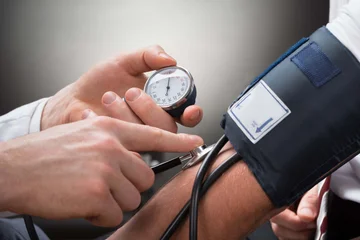
However, unlike an expanding waist or an increase in blood pressure, brain health is difficult to monitor, hidden as it is behind a thick skull. But times are changing.
I think maybe we're at the beginning of a change to the treatment of brain health more like physical health - something that we monitor in an active and inactive manner”, says neurologia Hedley Emsley at the University of Lancaster, Great Britain.
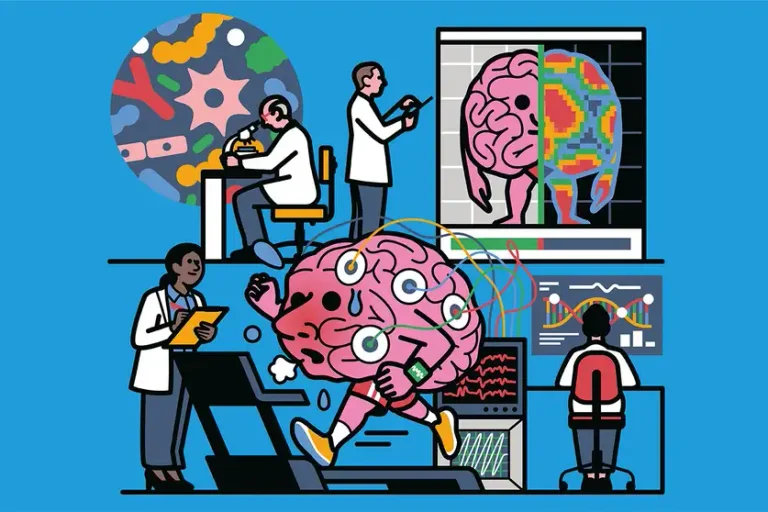
Technological advances, artificial intelligence and an obsession with personal health data are creating a new generation of tools that promise to give us unprecedented knowledge of what is happening among our ears, and even discover whether your brain is in good condition for your age.
So, faced with a lot of options - from advanced blood tests to expensive brain scans - I began to find out which ones are worth it and if any of them can really tell me whether the steps I'm taking to protect my brain are working.
In the early 2000 ' s, few people talked about brain health. Neuroscence was more concerned with what makes a brain sick than with determining what makes one thrive. About that time, you can count the number of studies that refer to brain health in both hands. Nowadays, more than 4,000 studies are published on this subject each year.
Our increased brain health obsession
Part of this growth reflects a cultural change. We trace our steps, our sleep, our heartbeat; our brain was an inevitable step next. Concern about mental health likely played a role as well. About 40 per cent of American adults surveyed by Muse, a neuro-pajissed company, believe they have an undiagnosed brain condition, with anxiety and depression leading the list of concerns. In view of the possibility, most people say that they would have a brain - health test, even if it provided information about a disease that cannot be treated or prevented.
Technology has also changed. EEG devices that track brain activity in a non-invasive way are cheaper than ever, and the IA can now analyze, interpret and personalise brain imaging data in real time -- something that would have been impossible five years ago. The result is a fast - growing market that promises to provide us with insight into the health of our brain.
Eager to get some knowledge about my brain, I decided to start with something I already have some information about: genetic testing. More than a decade ago, I was analyzed by my genes and discovered that I possess a copy of the version of the APOE4 gene, known for increasing the likelihood of Alzheimer's disease by three to four times compared to someone without it. There's a lot of tests they're offering to show you if you have this gene version, but if you want to ask them that's another question.
My result probably makes me think about the health of my brain a little bit more than I would do otherwise, but it doesn't give me a picture of how my brain is working now. Plus, I also know that having a family history of Alzheimer's or a single copy of APOE4 does not make the disease inevitable. In fact, Alzheimer's organizations in the United Kingdom and the United States do not recommend these tests at all because there are so many life - style factors that affect one's final risk.
A more tempting option is to make a brain scan. Images can reveal bloodshed, tumors, contractions, vascular injuries, and other age - related changes that can potentially provide valuable information about current health - and future brain health. In fact, I already have a photograph of my brain safely stored on my computer by a clinical test in which I participated. It seems beautiful and fortunate - it didn't reveal any sudden anomalies known as random finds.