4 hours ago
“E Large Martha” for EU enlargement: Four candidate countries advance in membership negotiations
Periskopi(11 hours ago)
(11 hours ago)Four countries aimed at joining the European Union marked significant steps forward on Tuesday in the membership process, in one of the bloc's biggest enlargement moves in more than two decades.
Intergovernmental conferences were held in Brussels for the opening or ceremonial closure of negotiating chapters for four key EU membership candidates -- Albania, Montenegro, Moldova and war-hit Ukraine. However, it may still take years before any of them becomes a member of the 27-nation bloc.
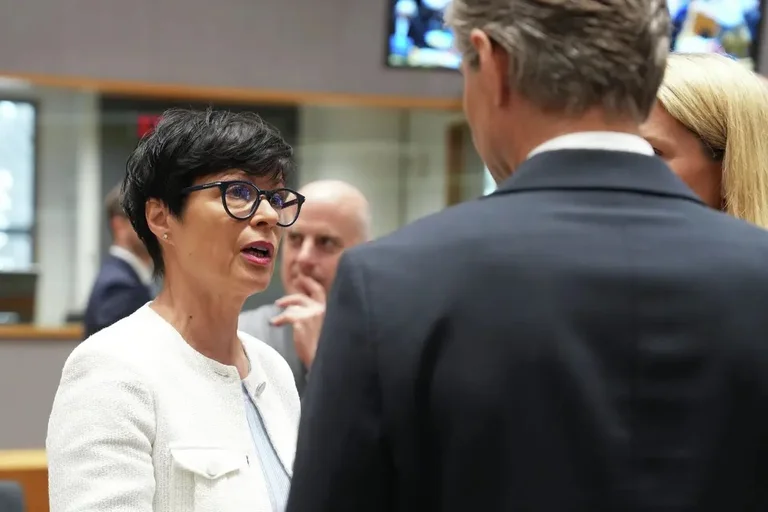
We haven't seen anything like this in over two decades. The last time was in 2002. This is a Tuesday's Super for EU enlargement and Ukraine is part of it”, Enlargement Commissioner Marta Kos told reporters, the AP reports, Periscopi broadcast.
Although holding four conferences in one day is rare, the EU accepted 10 countries mostly from Central Europe in 2004. Croatia, the last country to join the world's largest trade bloc, became a member in 2013.
Geopolitical changes are accelerating enlargement
Tuesday's step reflects the major political and geostrategic changes taking place in Europe. In 2019, French President Emmanuel Macron had declared he would block any new enlargement until the EU itself completed deep reforms.
But the biggest land war in Europe in decades and its consequences have changed this approach. The European Union has intensified support for reforms in candidate countries, given the growing influence of Russia and China.
Ukraine's progress is considered impressive. The country applied for membership only in 2022, four days after Russia began its full-scale invasion. Moldova has also faced intense pressure from Russia.
Ukraine views EU membership as one of the security guarantees for a stable future after the end of the war. The strongest guarantee would be NATO membership, but US President Donald Trump's administration insists that this cannot happen, while other NATO countries are reluctant to accept Ukraine as long as the war continues.
European countries consider fighting an existential threat and fear that Russian President Vladimir Putin could target other states in the coming years, especially if he achieves his goals in Ukraine.
“Arguments for Ukraine's EU membership are very strong”, Kos said.
Our continent's future “Archarectature of security is unimaginable without Ukraine. Ukrainians have transformed their country into a military power with capacities that few other countries can compare, especially in rapidly developing drone technology”, she added.
EU membership benefits
The prospect of membership in the European Union is a powerful impetus for democratic reforms. Membership has increased trade and created jobs, especially in the Balkans, where the wars of the 1990s disbanded the former Yugoslavia. Most candidate countries for membership are Balkan states.
Aspiring countries must complete negotiations in 35 political areas, known as chapters, involving sectors from agriculture and taxes to energy and trade. This process could take years.
Last month, Ukraine and Moldova opened negotiations on a group of five chapters related to basic EU values and principles, such as rule of law, respect for fundamental rights and the functioning of democratic institutions.
On Tuesday, the two countries also opened a second set of chapters, including foreign relations, security and defence policy, trade policy, development co-operation and humanitarian aid.
The meeting with Albania served for the promotional closure of negotiations in the fields of science and research, education and culture, as well as foreign relations. Meanwhile, Montenegro, which aims to become a member in 2028, effectively closed negotiations on competition policy and customs regulations.
Orban leaving speeded up the process
One important factor that has affected the new pace of enlargement is the change of government in Hungary.
The Ukraine membership process was long blocked by former nationalist Prime Minister Viktor Orban, who was considered Russia's closest ally in Europe and a challenge to the European project. The candidates of Ukraine and Moldova were connected, so none could advance.
However, US President Donald Trump's ally lost his election in April, ending 16 years in power.
Orban had consistently exploited the rule of unanimity in the EU, under which the 27 member states must agree on specific decisions, including opening and closing each negotiating chapter, as well as on sanctions or political statements.
Currently, nine countries have official EU membership candidate status -- Albania, Bosnia and Herzegovina, Montenegro, Northern Macedonia, Serbia, Georgia, Moldova, Ukraine and Turkey. Negotiations with Georgia and Turkey have been suspended due to concerns over democratic standards.
Even Kosovo has applied for membership in the European Union, but has not yet been granted candidate status./ Periscope.