5 minutes ago
FIFA published evidence that England's goal of Norway was fair: The top chip did not record any contact during flight

Periskopi(an hour ago)
(an hour ago)England secured the semi-finals qualifications of the World Cup after a 2-1 victory over Norway, but the match was accompanied by controversy for the goal of the draw done by Jude Bellingham at the end of the first part.
Norway advanced in 36th minute with Andreas Schjelderup's goal, while England tied for the extra time of the first part through Real Madrid star Jude Bellingham.
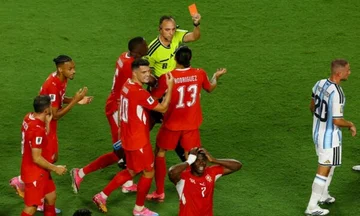
After the goal, Norwegian goalkeeper Oryan Nyland approached Judge Clement Turpin protesting and signaling to the cable carrying the air camera over the field.
Nyland claimed that the ball, after his hit through the gate, had touched the cable during flight. Under the rules, if a ball touches an external object during the game, the action should be interrupted and the goal cancelled.
However, after the VAR vetting it was found that the ball had not had any contact with any object during flight.
After extensive discussions on whether England had benefited from a bad decision to move to the semifinals, FIFA published the data from intelligent ball technology.
The"Conconnected Ball"system, which is used in this World Cup to assist in judges' decisions, confirmed that England's goal was completely regular.
The graph published by FIFA shows the moment when Nyland hits the ball from the gate shooting and then the data from the chip inside the ball proves that no contact with any object has been recorded throughout its flight.
Thus, despite the Norwegian goal of the goal goal of Bellingham, who turned England into a game, proved valuable according to FIFA official technology. /Telegraphy/