9 minutes ago
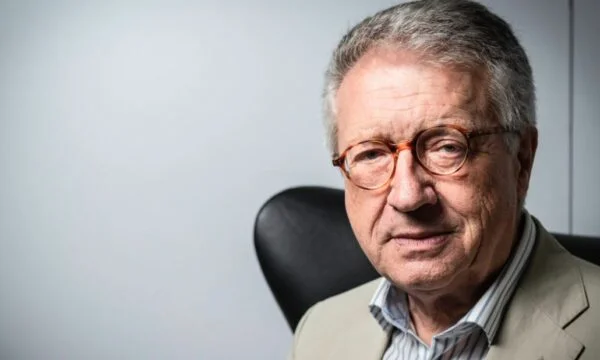
Wolfgang Petritsch: Democracy in Kosovo being misused for party reasons
Periskopi(an hour ago)
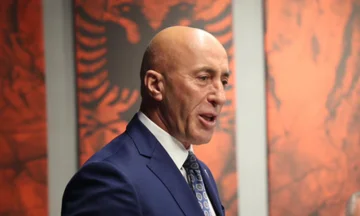
(an hour ago)Former Austrian senior diplomat Wolfgang Petritsch estimates that Kosovo is facing an extended period of political uncertainty and institutional blockade, which, according to him, is affecting both domestic reforms and the country's international position. He in an interview for Radop Kosovo stresses the lack of political compromise, polarisation of the political scene, and challenges in Kosovo's dialogue to Serbia as the main obstacles to democratic stability and Kosovo's advancement towards European integration.
Kosovo, I would say, has experienced a prolonged period of political uncertainty over the past few months. It can also be said that the country is facing an institutional blockade. How do you assess the current political situation, and what are the main dangers to democratic governance in this context?
Wolfgang Petritsch: In many ways, I feel that the idea of democracy is being misused in the sense that elections are constantly being repeated for party reasons. The main problem I see, the biggest challenge for a democratic Kosovo, is the lack of readiness for political compromise. The very idea of democracy is the ability to find a lasting compromise even under difficult circumstances. That's the point of it. The second important point, which applies to Kosovo as well, is how minorities are treated in one state, whether ethnic, linguistic, cultural or other minorities. The way a country treats minorities is actually the best test to assess whether it has a functioning liberal-democratic system. And in this very respect, I see room for improvement.
Improve in what sense? If we look at minorities in Kosovo, I would say they enjoy very good rights based on constitutional rights. If you refer to the Serb community, do you see that there is will on their part to integrate more into Kosovo institutions and society?
Wolfgang Petritsch: When I say there's room for improvement, of course I'm very aware, because I've been involved in the Rambouillet Peace Agreement as chief negotiator of the European Union, along with a Russian colleague and an American. I think that, on paper, there are many elements that make Kosovo a European democracy. But the problem I see, and that's why I think there's room for improvement, is that not everything is being implemented. And of course, you mentioned this, the question of the Serb community and Kosovo Serb citizens should be addressed in a serious way. However, I know Belgrade poses a major obstacle in this direction. But you, as a country supported to become independent from half the world where NATO, under the leadership of the United States, intervened militarily, provided a unique example in the world of how a people under military threat were released in this case from Serbia and its army. This, in fact, adds the responsibility of every government and every president to ensure that the country moves forward, passing from being a problem for Europe and the international community, to being part of the solution. Especially now, when facing an unprecedented global challenge since 1945. And my impression is that any discussion in Kosovo has to do with domestic problems, with the inability to develop dialogue, to dialogue within the country. And I'm not yet talking about dialogue mediated by the European Union. I am talking about daily political dialogue among political parties. All of them are democratic parties.
To what extent do you think political polarisation in Kosovo is at this point affecting Kosovo's ability to implement reforms or advance the international agenda?
Wolfgang Petritsch: In everything you just mentioned on both these major issues. First of all, if you don't have a elected government, reforms aren't happening. While internationally, I see more and more Europeans, even here in Austria, who are seeing Kosovo as a growing problem, rather than as a country that is reducing its challenges. For now, Kosovo is in a situation where less and less support is coming from the European Union and the international community. People are not willing, under these very difficult circumstances for Europe, where we have a war of war even two wars in the neighbourhood - in Ukraine, but also in the Middle East, which is also part of Europe's neighbourhood. We have to make sure that every country in Europe solves its own problems. This is something that is now more important than ever before.
And what do you think should be the role of political leadership in Kosovo in restoring institutional stability and, perhaps, the public's confidence?
Wolfgang Petritsch: Let me say one thing, very personal. I've known Prime Minister Kurt for years. I remember when we were negotiating in 1998 and early 1999 in Kosovo; He was the secretary of one of the most important leaders there. He was a young student with long hair. He was clearly very interested in politics. I met him later. I was among those who supported his release from prison while in prison from Belgrade. He had a lot of international sympathy and commitment to his release. I met him again after that and I saw him last year. He is a very capable and very intelligent person. But what I miss is a situation in a tragic way is that he, like the most powerful politician, has the greatest responsibility for the welfare of the country. And, however, it seems that it is failing to find a way to communicate or reach a constructive solution to the problems that are growing in Kosovo. This is a very unfortunate situation, I would say. And I have a high appreciation for Mr. Kurti, just like I have friends from other political parties. I know these people, as I know many diplomats, ambassadors and young people. And that's what's missing: there's a lot of potential, but the main politicians have to sit together and find a solution between the government and the opposition. This is essential.
I would stop in Kosovo's dialogue. More than two decades have passed since the conflict, and normalisation between these two countries, I would say, remains unclear. What, according to you, are the main obstacles to reaching a comprehensive agreement in this phase? Or do you believe that this dialogue should continue in the form it used to be, since we are currently in a status quo?
Wolfgang Petritsch: I must stress initially that this dialogue has achieved much. It is truly impressive when you think of the period immediately after NATO intervention and the years that followed until the proclamation of independence. The European Union has always played a very constructive role. I recently talked to Mr. Sorensen for the situation and he's really engaged. I think it's one of the best people you can have for such a process, for this dialogue. He well knows Kosovo and the region in general; he is a very experienced and dedicated diplomat of the EU. But in the end, everything will be up to Pristina to do the right thing. I know Belgrade is the biggest problem, but it has to be kept in mind that even Belgrade is missing something. Many Serbs still believe Kosovo belongs to them. This is irrational and very emotional. For Kosovo it is important to finally consolidate as a sovereign state. Therefore, Pristina must do more to fulfill its obligations. That's more important. And if Belgrade does not follow this process, then this should not be viewed as Kosovo's problem.
What should Kosovo do to better fulfill those agreements? What are the steps Kosovo institutions must take further in implementing the agreements reached if Serbia does not follow them?
Wolfgang Petritsch: For example, the 2023 Ohrid Agreement both sides have signed. If Belgrade is unwilling to move, then Pristina can do something in this direction. I think we should create a playing ground that is positive and constructive. And I know we're talking about the northern part of Kosovo, where the Serb majority community lives. More than 10 years ago, it was agreed to have a form of self - administration. I'm not talking about Republika Srpska. We, Europeans, are fully convinced that Kosovo must become a functional and stable state. And there cannot be, there should not be a problem similar to Republika Srpska, as we see in Bosnia. This is expelled. But in the administrative, linguistic, education and administration field, there are many areas where the integration of Serbs should be made in the idea of a joint state. This is difficult, I know, because there is now a leadership in Belgrade that does not support this, but this is the art of politics to achieve something that seems elusive. It has to move this way. But when I look at political Pristina, I see continuing clashes of strife between parties and personalities rather than having a concerted and coordinated effort to see how to move forward towards full sovereignty. How to move forward on concrete issues -- like a Stabilisation and Association Agreement, as membership in the Council of Europe? These are steps that can be clearly defined and that can be far more successful than in the past.
The European Union is also facilitating this dialogue. Do you think the EU facilitated dialogue has lost its momentum, or are there still steps that need to be taken to reinstate this process?
Wolfgang Petritsch: After such a long period of time, where, as I said, many things have been achieved, some issues have taken their course and the process is not working so well. I see the biggest problem mainly at the level of personalities. Just a few years ago, maybe seven or eight years ago, I organised a meeting between Mr. Vucic and Mr. Thaci in Austria in Tirol, in a big symposium. It was the first time a public meeting was held with Austria's president and both leaders. Then I had the impression that they respected each other and that a personal dialogue was possible. Unfortunately, Mr Thaci is no longer on the political scene; he is facing The Hague with a very difficult situation. But Mr. Kurti has failed to establish a functional relationship with Mr. Vucic. And, of course, the same can be said of Mr. Vucic why doesn't he do more to communicate with Mr. Kurti? However, Vucic in the past has managed to establish a working relationship with Kosovo Albanian leader Mr. Thaci. So why isn't this working with Mr. Kurt now? This is something Mr. Kurti should think about and see what he can do to improve relations, because Serbia will always remain Kosovo's neighbour. Serbs in Kosovo will always look to Belgrade, but they should also be invited to look to Pristina for solutions.
Do you think the current regional and international environment creates new opportunities or additional challenges for normalising relations between the two countries?
Wolfgang Petritsch: Dialogue exists, but is functioning more on the side of Brussels, while it is not really functioning at the level of two capitals -- Pristina and Belgrade. However, improvements are being made at the technical level. And I think it's good that this part isn't much in the attention of the public or the media. Mr. Sorensen is doing a really great job, but he can be as successful as Pristina and Belgrade want. As I mentioned earlier, Kosovo aims to membership in the European Union and become part of European states and communities. But Europe is in a very difficult political situation. I mentioned fighting in the neighborhood. Now, of course, the relationship with Trump administration is also at one of the lowest levels possible. Mr. Trump has other problems, domestic challenges and political difficulties, as the Muslim elections approach. So, I think we Europeans should work together and make sure that we solve our own problems. The geopolitical situation is an absolute challenge and we cannot afford one or two countries I am thinking of Bosnia and Kosovo to create more problems than necessary.
Mr. Wolfgang, Kosovo has traditionally relied heavily on strong support from both the European Union and the United States. How would you characterize these relationships today, at this new moment, I would say?
Wolfgang Petritsch: The new approach Washington has chosen is a strictly transaction approach. It's just business. Think about what's happening with American companies in Albania -- big protests against this kind of commitment that is only business and nothing else. The same situation is in Bosnia, where construction of a gas pipeline is being considered by an American company, which is obviously disabled, and the only “avantage” is the fact that friends of Mr. Trump are owners of it and want to build this gas pipeline. These are developments completely contrary to Europe's interest. European regulations and standards apply in Bosnia as well as Albania, and must be applied in Kosovo as well. Therefore, you must ensure that these processes are properly regulated and that Kosovo has a good economic development. I talked to Kosovars and they tell me the economy is not doing well. This is the main issue you have to deal with.
Do you think the recent tensions between Kosovo and some Western partners show deeper strategic disputes?
Wolfgang Petritsch: Not as much strategic disagreement as a frustration over the fact that things are not moving forward. To see that for nearly two years the only thing discussed in Kosovo is new elections, or the inability to elect a president, is problematic. I think I should add one more thing: I see a problem in the constitution. The rules for electing president, or perhaps, after this phase has been passed successfully, should be revised to the system of governance in Kosovo. The constitution needs some changes so you don't end up every time you try to elect a president, in the same institutional problems.
What is your opinion about what Kosovo should do to strengthen credibility and partnership with Brussels and Washington?
Wolfgang Petritsch: The central issue is to have dialogue to find a good solution to the rights of the Serb community, which is a majority in some areas. Let's put aside the term “Association”, if Mr. Kurt doesn't like that term. Let's be pragmatic, but find a solution that applies the spirit of the association agreement. In my opinion, this is important, not what you call it, but what content it has. And you have to make sure that you yourself are in charge of the proposals. Because the moment you get something from Brussels, often the problem is you may not like it. Therefore, it is best to do your own “housework” and offer solutions to the Serb community, guaranteeing them the necessary rights. This will remain a long-term issue, but it must now start and create a good implementation, control and co-operation mechanism.
So you think Kosovo's biggest problem with its partners is the rights of the Serb community?
Wolfgang Petritsch: No, I don't think Kosovo's biggest problem with its partners is the rights of the Serb community. But it is a matter that also has a very symbolic dimension. You have a constitution that envisions many rights for minorities, but the Serb side is something more specific and more controversial. As you know, you still have five non-recognition states. I think these governments will recognise Kosovo once there is a satisfactory solution for the northern part of the country. I believe this would really help and strengthen Kosovo more than it is today.
We are seeing NATO withdraw some of the military troops from Kosovo. How do you see this as a signal? Is something positive, does it mean that Kosovo has achieved its stability, or how do you assess NATO's role in Kosovo?
Wolfgang Petritsch: NATO is under great pressure from Washington. Washington has already announced publicly that the US will withdraw its troops from Europe. And that, obviously, affects Kosovo as well. So, I think it's necessary to make progress on all the issues we've discussed in this interview, so that you can get closer to the creation of your sovereign armed forces. You'll have to take responsibility for your own safety. You will need to become a security provider for Kosovo and the region. You have to become a stabilizer. Currently, you are contributing more to an unstable situation throughout the region, and that is not good. We need Kosovo to become a constructive partner in Europe.
What do you mean by the unstable “cysitute”?
Wolfgang Petritsch: I don't know exactly what it means. We know that there is always an internal debate, as we discussed earlier, is a political situation that is not stable.
And my last question would be: how do you see the European Union enlargement process and its impact on the countries of the region, in the Western Balkans, especially in Kosovo?
Wolfgang Petritsch: This is the most important issue that applies to the entire Western Balkan region. Montenegro has made a lot of progress and has overcome many of the problems that still hamper Kosovo. Think of the fact that Montenegro, although having only about 600 thousand people, is a multiethnic state. They have Albanians, relations are good enough, they have other Serb and non-Montenegrin communities. They also have a difficult relationship with Belgrade, but manage it. And this is very positive for the region. Northern Macedonia is also struggling hard. The relationship between Slav Macedonians and Albanians is also complicated, but they are working in this direction. But he does not hear problems such as those faced in Pristina, where political parties do not talk to each other. This is not a good sign for Kosovo. Therefore, the European Union is expanding towards the Western Balkans, but at the same time there is a clear mandate from member states: reforming, solving your problems and then joining the European Union. And that applies to Kosovo.