8 hours ago
O Report EK: Kosovo with lower wages in Balkans, citizens continue to feel expensive
Periskopi(17 hours ago)
(17 hours ago)An analysis released by Kosovo's Economic Oda shows that average salaries in Kosovo have marked continued growth during the 1920s, but citizens continue to face rising cost of living and inflation.
Salaries in Kosovo have marked continued increases in recent years, but citizens continue to face increasingly higher costs of living.
The analysis released by Kosovo's Oda Economics shows that, although the average salary has reached 713 euros in 2025, real purchasing power remains under pressure from inflation and expensive basic products.
Compared to the countries of the region, Kosovo continues to remain at the lowest pay rate in the Western Balkans.
According to data based on official statistics by the Kosovo Statistics Agency, the average gross salary in Kosovo has increased from 477 euros in 2019 to 713 euros in 2025, marking an increase of approximately 49.5 per cent.
However, the analysis points out that most of this growth is <x0Wren's” from the price of living.
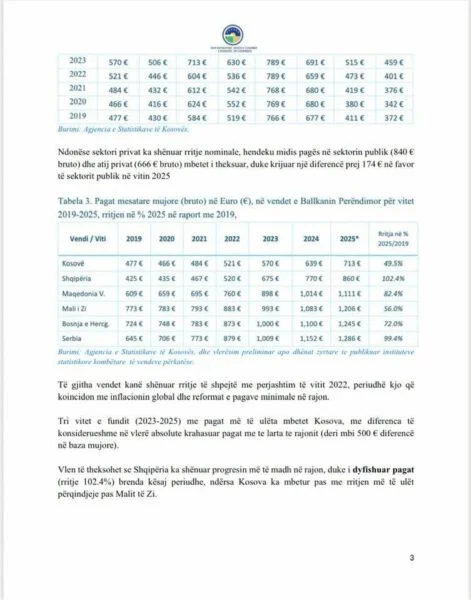
According to statistics presented in the report, Serbia leads with an average salary of 1,286 euros, followed by Bosnia and Herzegovina with 1,245 euros and Montenegro at 1,206 euros.
Albania has also passed Kosovo on an average salary of 860 euros, while Northern Macedonia has reached 1,111 euros.
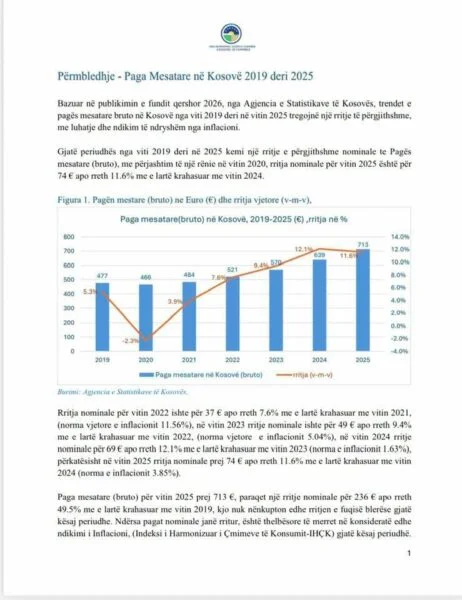
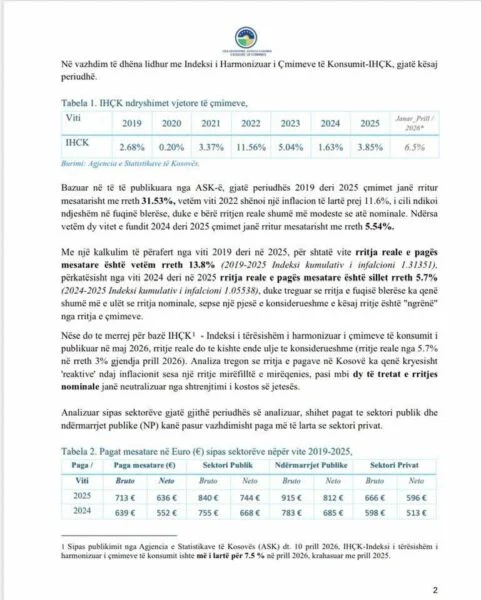
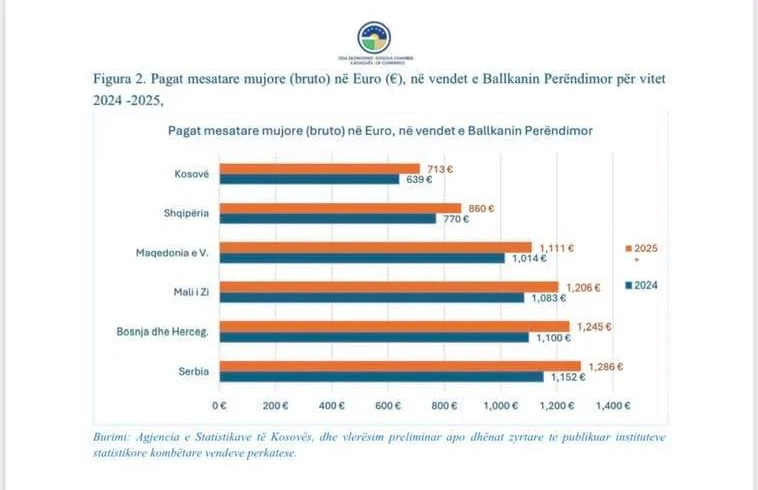
According to the report, more than two-thirds of wage growth has been absorbed by inflation, which means that the real purchasing power of citizens has increased much less than nominal wage numbers.
“over this period, average salaries have marked continued growth in nominal value. However, the analysis shows that this growth has been largely response to inflation and increased cost of living, more than the result of a significant improvement in economic prosperity.
The data shows that the real purchasing power of citizens has increased markedly less than nominal wages, as more than two-thirds of the wage increases have been absorbed by rising prices”, OEK has indicated.
The data also shows major differences among sectors.
The public sector and public enterprises continue to offer markedly higher salaries compared to the private sector.
In 2025, the average gross public sector salary totals 840 euros, while in the private sector of 666 euros, creating a range of 174 euros in public sector favour.
“rracation between sectors proves that the public sector and public enterprises continue to offer average salaries higher than the private sector.
Regionally, Kosovo remains the country with the lowest average wage rate in the Western Balkans analysis aims to offer a clear mirror on wage trends, the impact of inflation, and challenges related to purchasing power and labour market competitiveness in Kosovo”.
Compared to the countries of the region, Kosovo remains with the lowest wages in the Western Balkans.
According to the analysis, Albania has scored the largest wage increase during this period, doubling them by over 102 percent, while Kosovo has remained among the countries at the lowest pace of growth.
The report estimates that wage increases in recent years are mainly related to global inflation, lack of labour force, and pressure to raise minimum wages in the region
Regarding price hikes and inflation, days ago the Statistics Agency has shown that citizens are continuing to pay more dearly.
Recent Consumption Prices show that annual inflation in May 2026 has reached 6.8 percent compared to the same period last year, confirming the continuation of the expensive wave that is hitting almost every family.
The largest price increase is recorded in transportation, with a total of 14.1 percent more than a year ago.
“in May 2026, the harmonised Consumer Prices Index (IHÇK) has increased by 6.8% compared to May 2025. The increase has been influenced by main groups of COICOP: transportation (14.1%), housing, electricity, gas and other fuels (13.2%), alcohol, tobacco and narcotics (5.6%), restaurants and accommodation services (5.3%), non-alcohol food and drink (5.7%), health (4.1%), furniture and household equipment and household maintenance (3.6%), personal care, and various goods and services (3.0%), resolution, sports and culture (2.7%), clothing and shoes (4% and communication and <2%).