7 hours ago
NYT: US plans to pull a third of Europe's fighter aircraft
Periskopi(15 hours ago)
(15 hours ago)The United States plans to significantly reduce aircraft and warships that make NATO operations in Europe available, according to two senior European officials. This step accelerates Washington's efforts to reduce the defence it has offered European allies for nearly eight decades.
The decision is expected to limit NATO's ability to conduct long-range action attacks and surveillance operations. It has been communicated to allies in early June through an official document, part of which has been viewed by “The New York Times”. European officials spoke on condition of anonymity due to the sensitivity of military plans, Klankosova broadcasts.tv.
Under the plan, the US aims:
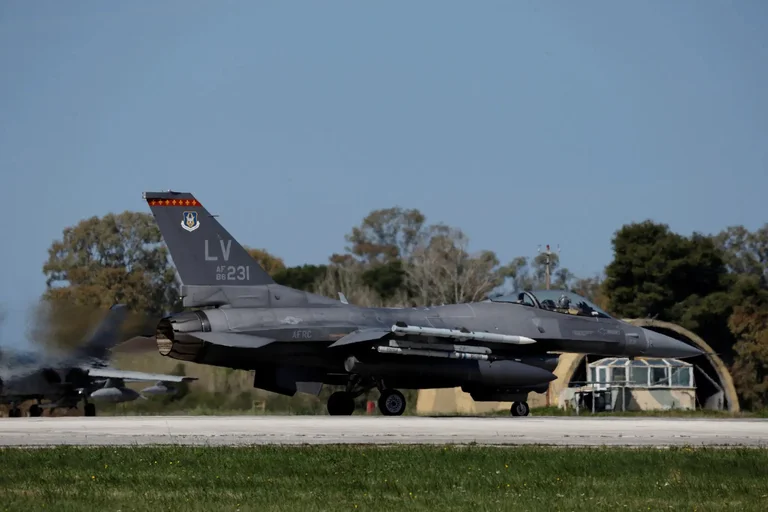
- Lower the number of fighter planes F-16 and F-15E from about 150 to 100;
- To reduce sea detection planes from 26 to 15 and attract all eight tanker planes for fuel supplies available to Europe;
- Resize a submarine equipped with rockets and an aircraft carrier, along with several warships and dozens of planes participating in its missions;
- Rescheduling one of the two groups of bombers previously designated for Europe's defence.
The Pentagon refused to comment on the concrete figures in the document, referring to a statement by the US European Command, which last week announced in general terms the intention to reduce commitments in Europe.
Details, some of which were initially reported by the German media “Die Welt”, give the most clear view so far for the extent of the reduction of President Donald Trump's administration's commitment to NATO. The military alliance, established after World War II, is still considered by European countries as essential to Russia's curbing.
The Pentagon has not yet made public the deadlines for implementation of the plan, but American officials have hinted that changes will enter into force very quickly, earlier than European allies had predicted.
Such reduction would affect NATO's ability to monitor Russian submarine movements or launch long-range missiles such as Tomahawk, deep in Russian territory.
Experts estimate that, although European countries have similar missile capacities, the pre-emptive effect is greater when these systems are controlled by the US.
President Trump has been criticising the burden that, according to him, the US keeps within NATO. He has repeatedly demanded that Europe invest more in its defence and has even threatened to leave the alliance.
Europe continues to face difficulties in coordinating its military efforts. Germany recently confirmed the withdrawal of a joint project with France and Spain for the construction of a new fighter plane.
For some European politicians, the main issue is no longer the number of American military vehicles in Europe, but if the Trump administration was willing to use them in case of conflict.
The reduction plan comes at a tense moment for Europe.
Details of the plan were privately communicated, while top American defence officials were speaking publicly of the need to re-loan forces towards the Indo-peace area.
General Alexandrus G. Grinkewich, commander of the US European Command and NATO's top military commander, stated in early June that “has had an unhealthy co-dependence of the NATO force model by US forces”.
He added that President Trump, Defence Secretary Pete Hegseth and other officials have been clear that this situation must change and change, as the possibility of simultaneous conflicts in some regions of the world requires this. / Periscopi/