11 minutes ago
O B S: Extreme heat may have caused over 1,300 additional deaths in Europe

Periskopi(an hour ago)
(an hour ago)The head of the World Health Organization (OBSH), Tedros Adhanom Ghebraesus, warned that extreme temperatures could be responsible for hundreds of additional deaths in Europe.
“Mbi 1,300 additional deaths have been recorded since 21 June and related to high temperatures in Europe”, Tedros wrote on the X network.
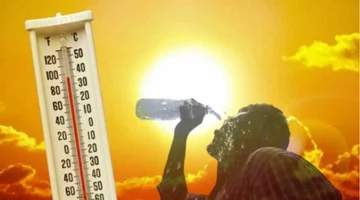
“Europe is the continent that is warming faster in the world at twice the global average. Currently, 150 million people live under the influence of extreme heat -- hundreds have lost their lives, schools are closed and energy networks are overloading”, he added.
Over the past weekend, in several European countries, including Germany, Poland, and Czechia, records of temperatures have been broken, reaching or exceeding 40 degrees Celsius.
Czech authorities called on citizens to avoid physical activity and issued warnings for smog in the country's central and northern part, due to high levels of ozone near the surface of the earth, caused by the heat.
Train trips to a main line in the West Bank, Nordrhan-Westfalen were reduced to Germany, while streetcar circulation was suspended in the eastern town of Leipzig.
Berlin police used water cannons to help residents of the capital cool off.
According to local media, many people stayed inside the house and avoided going out until after sundown.
French energy distribution company Enedis announced on Sunday afternoon that some 36,000 families in the north and in the center of France are without electricity.
Hungary's government said the Paces nuclear power plant in this country has lowered production Sunday due to the high temperature of the Danube River, whose water is used for cooling.
Extreme heat wave grips European cities
Tedros said that heat stress is often called the silent suicide “”, adding that homes, jobs, and schools in Europe are not built to cope with such temperatures.
“ -- driven by climate change and global warming -- the phenomenon of heat waves that once occurred in a generation -- is now being repeated almost every year”, he said.
The Reuters news agency quoted some scientists as saying that the heat wave, which started on June 20th, has been the worst ever recorded in Europe. / REL