8 hours ago
EU audit: Kosovo railway situation worse than before the start of millions of investments 10 years ago
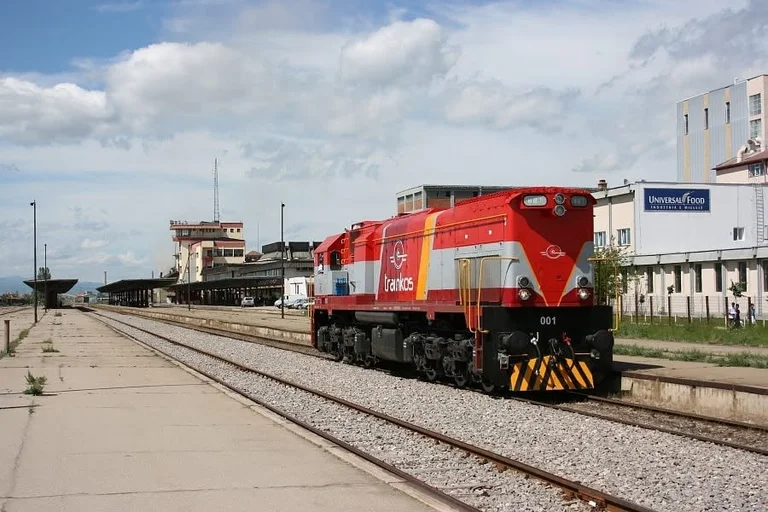
Periskopi(9 days ago)
(9 days ago)A report by the European Court of Auditors has found that the state of Kosovo's railways in 2025 was worse than before the start of rehabilitation 10 years ago, while there is still no clear deadline for the completion of Kosovo's railway network.
Despite investments of tens of millions of euros from European Union grants and Kosovo Government projects, the current state of Kosovo railways is worse than 10 years ago, when these investments had even begun.
This finding comes out from a report by the European Court of Auditors, which has measured the performance of railway projects funded by the European Union in the Western Balkans.
The report analyses a total of 12 projects in Kosovo, Serbia, Bosnia and Herzegovina and northern Macedonia, financed through the Investment Framework for the Western Balkans (w BIF).
Auditors find that the projects are in line with EU priorities for connecting the region with the European transport network, but their implementation has been characterised by major delays and problems in management.
Thus, the target set for completion of the main rail transport network by 2030 is unlikely to be achieved.
According to the report, the European Commission has financed projects in the Western Balkans without sufficiently assessing their readiness for implementation.
What does the Kosovo report say?
In this report, Kosovo is cited in the context of rehabilitation of the railway network linking Kosovo with the countries of the region and beyond.
The rehabilitation of the railway network within Kosovo is 148km, and was divided into three phases: The first phase starts from Hani of Elezi Fushesh Kosovo, the second phase Fushe Kosova Kosova Mitrovica South, and the third phase is from South Mitrovica to Lesak, on the border with Serbia.
This line is then designed to link to the ten railway corridor linking Kosovo with the Western Balkans and the Trans-European Transport Network.
However, when over 10 years have passed since the start of these projects, the current state of Kosovo railways is worse than when these investments started.
Two projects from Kosovo in the corridor are included in the audit sample: a segment of 66.8km, with the EU grant of 38.5m euros, approved in 2015; and another segment of 33.4km, with grants of 17.2m euros, approved in 2016.
In total, audited projects for Kosovo cover 100.2km, as part of the railway network that is Kosovo's responsibility to build it.
EU auditors found that none of these projects for which Kosovo had pledged to carry out were completed according to key network standards T EN-T until audit time.
The most critical finding for Kosovo is that, in June 2025, the railway situation was worse than before the start of project”, the report said.
Moreover, the report found that Kosovo's railway transport had been cut off since 2020, as several tunnels had collapsed during the works. Also, audiences stress there was no predictable date for starting works in the northern part of Kosovo. Meanwhile, signalling and electrification were not yet functional in audit time, in June 2025.
Problems Even in the Region
The report reveals serious problems in other countries of the region as well.
In Bosnia and Herzegovina, the European Commission in June 2022 had suspended two initially approved projects, including unbound segments of Corridor Vc, due to the political situation in Republika Srpska.
In northern Macedonia, audiences point out that a 23km railway section, which was to begin in 2017 near the border with Bulgaria, had not yet been built. His conclusion was scheduled for 2030. The report also mentions that a grant was approved for a railway segment that, at the time of approval, was not fully linked to neighbouring countries and there were no agreements that would guarantee the functioning of the entire corridor.
For Serbia, the report says support for the railway sector is still largely in the planning phase, aimed at improving lines according to EU standards. On the report's table, Corridor Hekurudor X in Serbia has 513, but not a mile finished according to key network standards T En-T; while for Corridor Xc, traffic is developing only under specific conditions during the works.