2 minutes ago
Oil shipments through Hormuz Strait rise markedly after US-Iran deal
Periskopi(an hour ago)
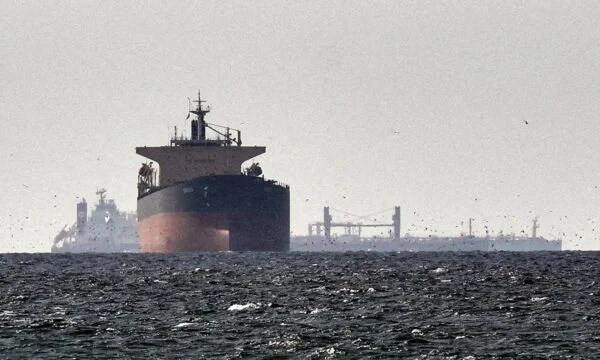
(an hour ago)Oil shipments through the Hormuz Strait have increased markedly Friday, after the United States and Iran signed a ceasefire agreement. Meanwhile, Gulf producers are preparing to increase exports despite concerns about the conditions set by Tehran for the use of this vital maritime route.
Washington and Tehran published the text of a memorandum of understanding signed Wednesday to end the conflict, while US President Donald Trump warned that the attacks could resume if Iran does not abide by the agreement.
At least four tankers carrying crude oil, oil products and liquid gas entered the strait Friday, heading towards Gulf ports in Iraq, according to MarineTraff data.
A Japanese-owned oil tank emerged from the strait after being delayed from the war and was heading for Japan.
On Thursday, 25 commercial crossings through Hormuz were registered the highest daily number since April 18th and more than five times the daily average of the first 10 days of June, according to AXS Marine data.
The traffic course at Hormuz remains well below the pre-conflict level of about 120 crossings a day.
Meanwhile, the United States officially removed the blockade of Iranian ports Thursday.
“Marines should be informed of mine existence and expect maritime presence while continuing cleaning operations”, the U.S. Navy-led Marine Information Centre said on Thursday evening.
It advised ships to avoid the scheme of dividing traffic due to mine risks.
This scheme, approved by the United Nations shipping agency in 1968, established navigation corridors through Iranian and Ottoman waters in the straits.
The risks range from mine risk... to the impasse in the Middle East Gulf if tensions escalate and Iran block Hormuz” again, said ship broker Braemar.
The Agreement ... opens up the possibility that Iran will impose a tranche management fee at Hormuz after 60 days”.
Switzerland, meanwhile, claimed that US talks on a broader peace pact would not take place Friday, while US Vice President JD Vance cancelled a planned visit, stressing uncertainty about a lasting solution.
Iran signalled stricter control over shipping, with state television reporting that ships should be co-ordinated with the Trans Revolutionary Guard Navy.
The British sea security firm Adrey said Iranian forces ordered a tank with Hong Kong flag and a cargo ship with the flag of St. Kits Island and Nevis to return on Thursday.
In a dateless announcement, circulated in the maritime industry in the last 24 hours and seen by Reuters, Iran's Persian Gulf Strait Authority said no ship is allowed through the Hormuz Strait without a valid pass permission issued by PGSA<1>.
P The GSA, which describes itself as the only body authorised to issue permission, also said it reserves the right to impose security fees, requiring ship owners to take over and renew security coverage.
The shipping industry has rejected any tax or tariff system that would be imposed on what they consider an international water route.
Meanwhile, a fleet of 10 loaded Iranian supercisters carrying about 20 million barrels of oil was sailing from Iran's Chabahari to Oman Bay and heading toward Asia, possibly for Chinese refinerys, according to an analysis of the United American Group Against Nuclear Iran, which monitors the traffic of tankers associated with Iran.