2 minutes ago
US Embassy: Persistent stalemate is costing Kosovo with lost opportunities
Periskopi(5 days ago)
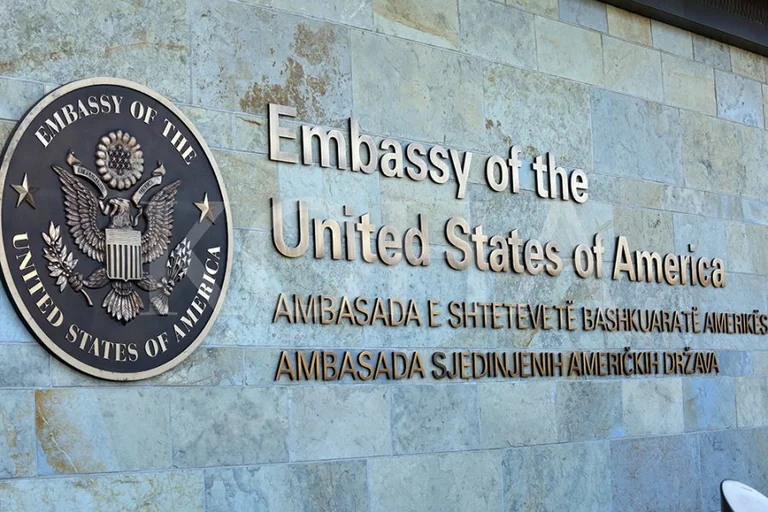
(5 days ago)The U.S. Embassy in Kosovo expects Kosovo to form new institutions quickly after the certificate of election results of June 7th 2026.
The diplomatic mission, it said. Callo. com that the political stalemate is costing Kosovo a loss of opportunity.
This ongoing political stalemate is costing Kosovo lost potential. The time has come for leaders to give priority to progress and stability, for the sake of all citizens” -- said the embassy's response.
Kosovo's political leaders, according to the American Embassy, should work together on forming institutions in accordance with the Constitution and Constitutional Court decisions.
Kosovo's “citizens expect their leaders to fulfil the pledge to act in the country's best interest” ) highlights this embassy.
The Central Election Commission (KQZ) plans that the final results of the June 7th early parliamentary elections be announced on June 26th, meanwhile, to make their Certificate by 6 July.
The election of the new president remains one of the biggest challenges after the election process ends. While some parties are awaiting the certificate of election results to open domestic discussions, some enter the process with concrete names. If the Assembly is agreed quickly, the new MPs will have 60 days' deadlines to elect the country's leader.
Meanwhile, the preliminary results of early elections show that no political subject has come up with enough power to build the new institutions alone, while the president's election is seen as the main challenge that will require agreement among the parties.
Early elections were held after the Parliament failed to elect the country's president within the deadline set by the Constitutional Court. At the last session, which had started April 27th and ended on April 28th, there was no quorum for voting.
Although there is not a firm provision legally determining which process should have absolute priority, in such a case when the Constitutional Court has determined that 60 days is the term for electing the president, connoisseurs of the Constitution and legal issues assess that, due to deadlines and risk from the institutional vacuum, the election of the head of state should be the top priority.
Paragraph number 182 of the Constitutional Court's act of 25.03.2026 confirms that the Parliament is available to the term sixty (60) day before the entry in the 30-30 daily period, set in paragraph 2 of Article 86 of the Constitution.
However, according to the bias, in the context of the case circumstances, related to the constitutional term of electing the president when there is no constitutional and functional framework and referring to the purpose of constitutional norms, “Gjycata estimates that the procedure for electing the president should begin from the day of the constitution's constitutionalisation and end further within sixty-60 days of the start of the procedure for the president's election. ”
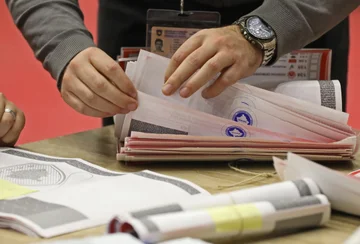
100% of the parties' votes are counted by regular locations across Kosovo. About 100 thousand votes from abroad and conditional votes could distribute another five mandates.
However, given the preliminary results, the Vetevendosje (LVV) Movement, with 42.91% of the vote, is expected to secure 48 seats in the Kosovo Assembly. Compared to its parliamentary composition following the 28 December elections, LVV so far results in nine less mandates.
The second party again turns out to be the Democratic Party of Kosovo (PDK), which with 21.12% of the vote, will have 24 MPs. Otherwise last time, The PDK had 22 deputies.
Meanwhile, the third Democratic League of Kosovo party (LDK) with 17.85% of the vote will have 20 deputies. The LDK has added five deputies in proportion to the December 28th 2025 elections.
An apparent rise experienced the Alliance for the Future of Kosovo (AAK). With 7.16%, this party will have 8 deputies. Otherwise, in past elections, there were six deputies.
20 other seats are divided for non-US communities. 10 of them for the Serb majority community and 10 more for non-Serb communities.
So far the Serbian List has 6,18% of the vote. On the other hand, Nenad Rashiqi's party -- the Party for Freedom, Justice and Survival -- has 0.076%.
Meanwhile, from non-Serb communities, the highest are the Turkish Democratic Party, the Vacat Coalition, the New Democratic Initiative of Kosovo (Egyptian), the Social Democrat Union (Bosnian), the New Democratic Party (Bosnian), the Ashkali Social Democrats, the Egyptian Liberal Party, the Gorane Party of Adam Hoxha. /Periscopi/