2 hours ago
Economy expert: Kosovo has highest inflation in region, statistics game is not new phenomenon
Periskopi(17 hours ago)
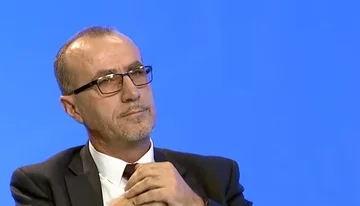
(17 hours ago)The claims on economic growth and investment climate improvement do not reflect the real state of the economy in Kosovo, economy expert Ismet Mulaj estimates, reports Online Economy.
According to him, the reported growth in the country relies mainly on consumption, remittances and social assistance, while structural reforms and investments in new production capacities are lacking that would ensure sustainable economic development.
Mulaj in an interview for Online Economy said that using statistics for political purposes is not a new phenomenon, adding that economic reality in the country is presented differently from the figures presented.
And if you're playing statistics, it's not a game that's said to be new, it's an old game, especially politicians know how to use these statistics in favor of their political cause. But in reality the situation is quite different. Kosovo today has the highest inflation in the region, according to professional reports by the European Union and the World Bank. And economic growth does not thanks to consumption, consumer growth and price hikes, money coming from the diaspora and actually these social aid that the Government of Kosovo has shared”, he said.
According to him, Kosovo continues to face lack of structural reforms, problems in the energy sector, judicial security and infrastructure -- factors that negatively impact attracting investments.
So there are no structural economic reforms, there is no economic stability Kosovo. Because much is not being invested in building new production capacities in Kosovo. Kosovo has extraordinary problems with electricity, there are exceptional problems with judicial security, these, according to various reports, are problem with infrastructure. So, if a business comes today with an investment in Kosovo, it has a lot of problems from the state to take a piece of land to build the business, it also has a high cost. Political stability too. Political instability, in addition to undermining Kosovo's image, is certainly not a serious partner to communicate with businesses that are interested in investing in Kosovo. Kosovo for eighteen months has passed three sets of elections -- both national and local -- and really this is a spirit that doesn't create space -- is not the friendly environment to invest”, he said.
Mulaj stressed that remittances from the diaspora continue to be an important support for the family economy, but they do not create new production capacities, according to him.
The dayday is getting worse for citizens' pocket. Thanks to the diaspora, of course, families thus increase consumption, that the diaspora is still close to Kosovo and sends remittances. Besides these informal and informal officials, their arrival at the two seasons, and the summer season, and the season of the new year, is a good infusion for the economy. The same infusion is temporary and goes towards increasing imports, increasing overall consumption. Not in terms of building new business capacities that are manufacturing businesses”, he told EO.
He also criticised the level of capital investment realisation, praising that delays in projects are creating negative chain effects on the economy.
Therefore, the Kosovo government would have a completely different approach in relation to business, even in relation to spending Kosovo's budget. Today almost none of the capital investment projects are being finalised. All these businesses working today, they get contracts from the state. If they fail to finalize them in time, they have problems that are, in attracting money for the work done. This causes, as it were, the negative chain effect on the economy. Therefore, the use of remittances and social assistance that the Government of Kosovo is using from time to time does not create a positive economic environment in Kosovo”, he said.
According to Mulajt, Kosovo needs a higher rate of economic growth to be competitive and to prepare for integration into the European market.
The “of course has to steadily increase inflation and has to have a moderate growth in economic development. Kosovo does not need 3.5% or 5.5% economic growth, Kosovo needs over 8% economic growth, in order to be a competitive economy and to draw closer if the day after tomorrow we can be part of the European Union and, of course, businesses should be prepared to be competitive in relation to European Union businesses. If we don't prepare businesses, of course many of them are bankrupt, we have to become one place only of importers, not producer”, he said.
Acting Finance Minister Hekuran Murati announced days ago that Kosovo's economy has scored 5.43 per cent growth in the first quarter, praising it as indications of accelerated economic pace and increasing business confidence to invest. Periscope.