Ikiballe Hood's most extremist mother, from Iran, threatened Kosovo allies: Fight America and Israel
 3 minutes ago
 (2 hours ago)
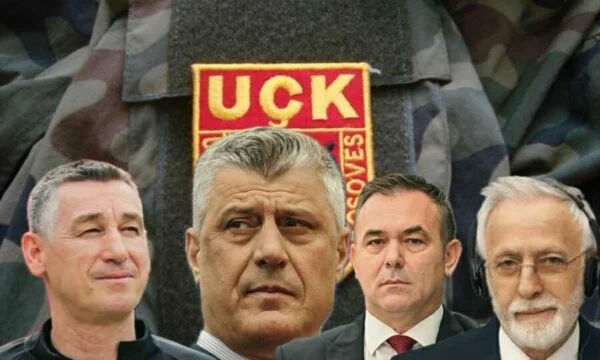
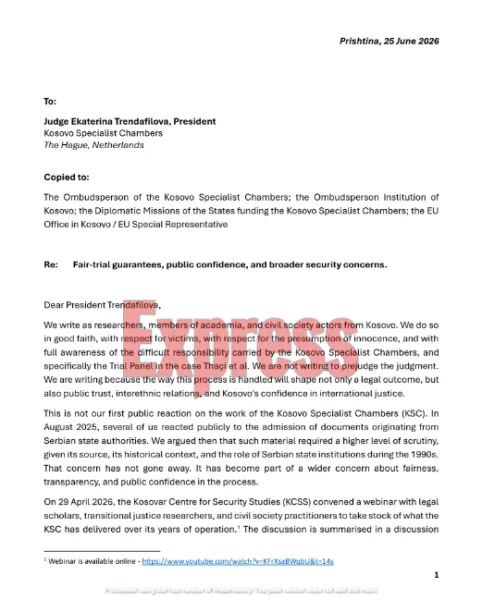
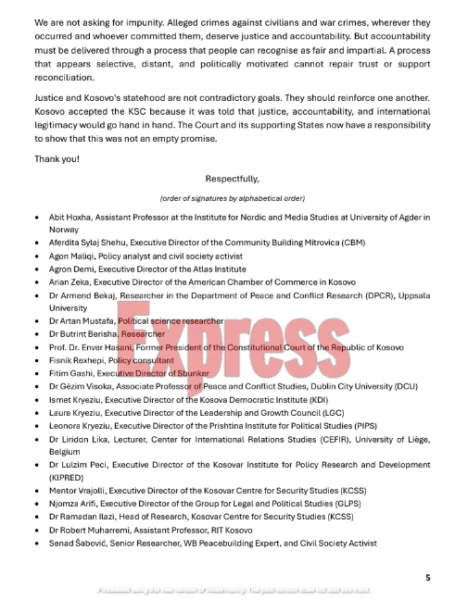
A group of 22 leaders and members of civil society organisations have addressed a letter to Special Court President Ekaterina Trendavilova, through which a series of concerns concerning the court process in The Hague against former KLA leaders are addressed. Several requests are also listed on paper, writes Express newspaper.
The beginning of the letter explains that it aims to prejudge the Special's decision, but to stress that the approach of the judicial process against former KLA leaders will have not only a legal outcome, but also an impact on public faith, interethnic reports and Kosovo's belief in international justice.
The letter explains that this is the first reaction and that civil society in Kosovo has also raised concerns about accepting as evidence documents issued by Serbia's institutions.
This is not our first public response to the work of Specialised Chambers. In August 2025, some of us reacted publicly to the acceptance of documents stemming from Serbian state institutions. We argued then that such material required a higher level of review, given the source, historical context and role of Serbian state institutions during the 1990s. This concern has not disappeared. It has become part of a broader concern for justice, transparency and public trust in the process”, the newspaper Express says.
Seven main concerns concerning the judicial process have been listed in this letter to Tredafilova. The British report in which a series of concerns and approach of the Special Court have been listed is mentioned.
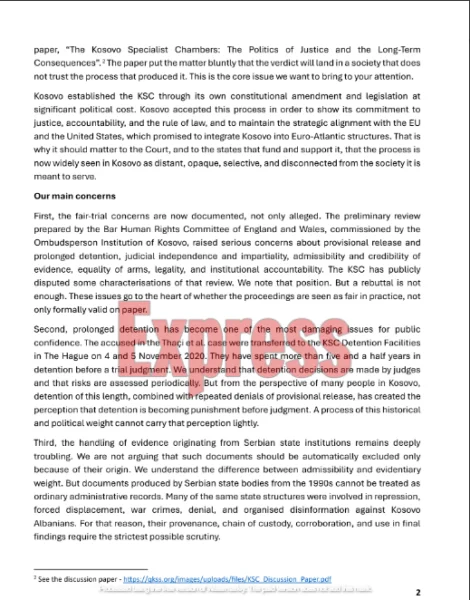
“First, concerns about a fair trial are already documented, not just alleged. The preliminary revision prepared by the Committee for Human Rights of the English and Wales Lawyers House (BHRC), commissioned by the Kosovo Ombudsman's Institution, raised serious concerns about the provisional release and prolonged detention, independence and judicial impartiality, compliance and credibility of evidence, the equality of weapons, legality and institutional accountability. Specialised rooms have publicly rejected some of the characteristics of this report. We observe that attitude. But a response is not enough. These issues affect the core of perception whether procedures are right in practice, not only formally valid on paper”, says the letter.
The November 2020 detention issue is the second concern that is listed in this letter to Tredafilova. The detention period, said on the paper, has created the perception that detention is becoming punishment before the judicial decision.
“second, protracted detention has become one of the most damaging issues to public trust. The accused in the Thaci case and the others were transferred to DPSC detention facilities in The Hague on 4 November and 5 November 2020. They have spent more than five and a half years in custody without a first-degree decision. We understand that the detention decisions are taken by the judges and that the risks are frequently assessed. But from the perspective of many people in Kosovo, such a length, combined with repeated rejections of provisional release, has created the perception that detention is being turned into punishment before judicial decision”, it is said further on paper.
Next to the letter, the treatment of evidence stemming from Serbian state institutions remains deeply troubling.
“We are not arguing that such documents should be automatically excluded due to their origin. We understand the difference between compliance and promotional weight. But documents produced by Serbian state bodies during the 1990s cannot be treated as ordinary administrative documents. Many of the same state structures were involved in repression, forced shift, war crimes, denials and structure organised against Kosovo Albanians. Hence, their origin, the storage chain, verification, and use in the final findings require the most rigorous possible review of”, the letters wrote.
The letter lists both the issue of collective responsibility and the appointment of the Special Prosecutor for former KLA leaders as “joint criminal enterprise”.
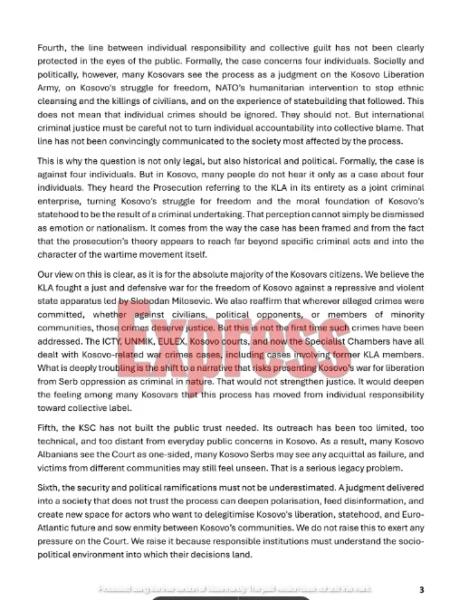
The difference between individual responsibility and collective guilt is not clearly protected in public eyes. The case is literally four individuals. Politically and socially, however, many Kosovars see the process as a trial against the Kosovo Liberation Army, against Kosovo's freedom war, NATO humanitarian intervention and the subsequent statehood process. This does not mean that individual crimes should be ignored. They should not be ignored. But international criminal justice must be careful that individual responsibility does not become collective guilt. In Kosovo, many people do not hear this case only as a process against four individuals. They've heard the DA referring to it. U n The CK as a whole as a joint criminal enterprise, presenting the struggle for Kosovo's freedom and the moral basis of its citizenship as a result of a criminal enterprise. This perception cannot simply be dismissed as emotion or nationalism”, the letter points.
Also mentioned in the letter are trials held by The Hague Tribunal, UNMIK, EULEX and local courts where the subject were former KLA members. Narrativa to criminalise the KLA war, the letter says it would only weaken justice and deepen Kosovo's feelings that property is seeking collective labels.
Our view of this is clear, as it is to the absolute majority of Kosovo's citizens. We believe that the KLA waged a fair and defensive fight for Kosovo's freedom against a violent and oppressive state camera led by Slobodan Milosevic. We also reaffirm that wherever alleged crimes have been committed, whether against civilians, political opponents or members of minority communities, these crimes deserve justice. But this is not the first time such crimes have been addressed. I The CY, UNMIK, EULEX, Kosovo courts and now Specialised Chambers have handled all cases of war crimes related to Kosovo, including cases involving former KLA members. What is deeply troubling is the transition to a narrative that risks presenting Kosovo's struggle for release from Serb oppression as a criminal in nature. This would not strengthen justice. It would deepen the feeling among many Kosovars that this process has shifted from individual responsibility to collective label”, the letter adds.
At the end of the list of concerns, there is also the mention of a lack of public confidence in the Special Court. The letter points out that the majority of Kosovo Albanian citizens see the court as unilateral, while Kosovo Serb citizens can see any release from the charges as failure. In the meantime, victims from various communities may feel unrepresented.
Fifth “, Specialised Chambers have not built needed public trust. Their information activities have been too limited, too technical and far away from the daily concerns of Kosovo citizens. As a result, many Kosovo Albanians see the Court as unilateral, many Kosovo Serbs can see any release from the charges as a failure, while victims from different communities may still feel unrepresented”, the letter stresses.
The letter raised concern about the impact and consequences a Special Decision can have on security and politics.
A decision handed down in a society that does not trust the process can deepen polarisation, foster dezinformation and create new space for actors who want to delegate Kosovo's liberation war, its citizenship and the Euro-Atlantic future, as well as promote hostility between communities”, the paper adds.
Members of civil society signed on paper also remind Trudafilova of the use Russia and Serbia could make the decision to delegate Kosovo's liberation and the argument for citizenship.
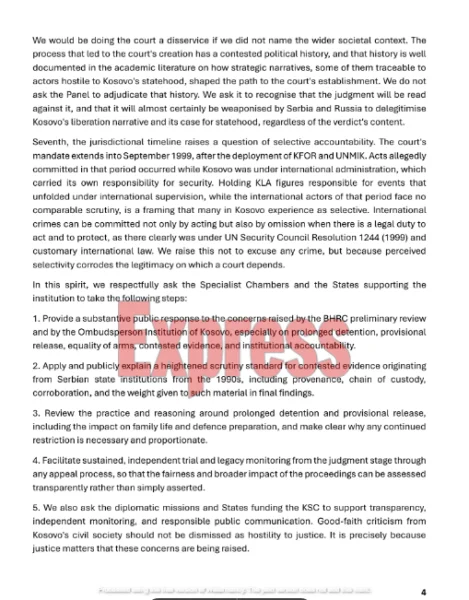
The process that led to the establishment of the Court has a controversial political history. This story is documented in academic literature, which argues that strategic narrators -- some of them linked to hostile actors to Kosovo's citizenship -- influenced the way to the founding of the Court. We do not demand that the Judicial Chamber judge this story. We only ask that it be admitted that the decision will be read in this context and that it will almost certainly be used by Serbia and Russia to delegate Kosovo's liberation initiative and its topic for citizenship, regardless of the content of decision”, is indicated on paper.
The end says that the time of jurisdiction raises concerns about selective accountability.
The court's “mandate extends until September 1999, following the deployment of KFOR and UNMIK. Keeping the KLA figures responsible for events that took place under international administration, while international actors of that period do not undergo a similar review, perceived by many Kosovo citizens as selective”, the letter said.
After listing seven concerns, a number of requests for the Special Speaker have been placed on paper.
Substantial response to concerns raised by the British, explanation for the accepted Serbian evidence, review of the practice and rationalisation of the length of detention and enable independent and long-term monitoring of the judicial process.
The “offer a substantial public response to concerns raised by the BHRC's preliminary report and the Kosovo Ombudsman Institution.
To apply and publicly explain an added standard of review for controversial evidence stemming from the Serbian state institutions of the 1990s.
Review the practice and reasoning regarding prolonged detention and temporary release.
To enable independent and long-term monitoring of the judicial process and its heritage.
To encourage diplomatic missions and financial states to support transparency, independent monitoring and responsible public communication”, it says on paper.
At the end of the letter, it is said that impunity is being required and that accountability for any alleged crime should be sought through a process that people may consider just and impartial.
The alleged crimes against civilians and war crimes, wherever they have been committed and anyone who has been committed, deserve justice and accountability. But accountability must be realized through a process that humans can recognize as just and impartial. A process that is perceived as selective, distant, and politically motivated cannot repair trust or support reconciliation. Kosovo's justice and citizenship are not controversial goals. They have to strengthen each other. Kosovo accepted the Specialised Chambers because it was told that international justice, accountability and legitimacy would follow in parallel. Now the Court and the states that support it have the responsibility to testify that this was not an empty pledge”, the letter concludes.
 25 minutes ago
 an hour ago
 an hour ago
 2 hours ago