13 hours ago
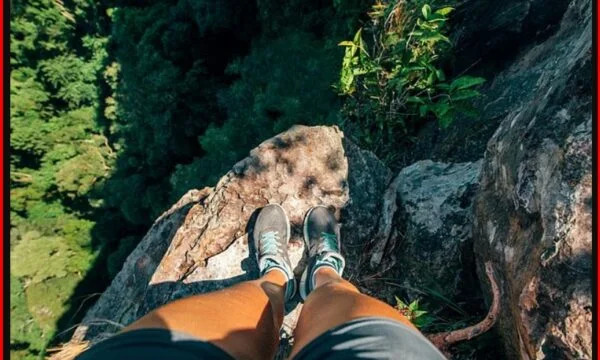
Fear of heights begins at the feet
Periskopi(2 months ago)
(2 months ago)Some people just don't feel good at heights. But the reason that the body begins to tremble near a chasm can be more attached to its feet than to its head.
Scientists have found that staying close to a major decline moves the nervous system to increase sensitivity on the feet. This may explain why some people feel buzz, needle piercing, gravity, or uncertainty as they approach an edge.
According to Professor Michelle Spear, an anatomy expert at the University of Bristol, the brain appears to be <x0-directing the volume” of the sense signals associated with the position of the body and the setting of the legs. What is usually processed in the background, unnoticed, can become conscious in such situations.
Fear of heights is very common. About a quarter of people experience some discomfort at altitudes. But studies show that even those who do not experience it as strong fear show measurable changes in balance and attitude when approaching a decline.
The nervous system constantly processes large amounts of sensitive information, but most of it never reaches consciousness. To avoid overload, the brain filters or reduces the importance of many of these signals. However, when he sees it necessary, he can strengthen some of them.
In the case of altitudes, the nervous system seems to become more alert to its balance and position. The information from the soles becomes more important, the body's attitude hardens slightly, and movement becomes more cautious and deliberate.
The soles of the legs are filled with specialized receptors that sense touch, shake, and weight distribution. As the main point of contact with the earth, they play a vital role in maintaining balance and attitude.
Usually, these receptors work silently, helping us to walk or move our weight without thinking. But as we approach a major crash, the risk of the crash increases, and the body begins to give more attention to these signals.
Spaar says that this could be an adaptation inherited from our evolutionary past, which helped ancestors avoid fatal declines in uneven, rocky, or elevated terrains. From this standpoint, a system that made a person more cautious next to a abyss would have been a priority.
These changes occur automatically, whether we love them or not. However, some people notice them far more than others do. A greater sensitivity to pressure and balance can be beneficial for climbing, and experienced climbers often develop a very thin sense of weight distribution.
But when that consciousness becomes too strong, it can distract or cause anxiety by preventing free movement. High - foot signals can feel like buzzing or piercing needles on their feet. Some people report severe feelings, as if their feet are being pulled toward the earth; others feel unstable and need to freeze.
For some, this appears to be a reluctance to move forward or to approach the edge. This is not the same as vertigo, which is related to internal ear disorders and creates a false sense of movement.
The difference, according to Spear, can stay in the way people process scientific information. Some are more sensitive to subtle signals from muscles, knots, and skin, while others filter these signals better without bringing them to consciousness.
Attention also plays a role. Once someone notices such a feeling close to heights, the brain is more likely to see it again in the future. Thus, fear of heights can be strengthened not only by what the eyes see but also by what the body feels beneath.