9 minutes ago
Rama reacts sharply to Kurt: Kosovo does not belong to a movement, a leader or a single narrator, but to its citizens
Periskopi(2 months ago)
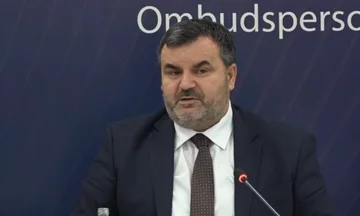
(2 months ago)Pristina Mayor Progress Rama declares that the “situata under way in the Kosovo Assembly is deeply disturbing and reflects a dangerous concentration of power, which undermines the very foundations of our democratic republic”. Rama, referring to political currentity, stresses that the “we are seeing is not healthy governance, but an alarming pattern of control, exclusion [...]
Pristina Mayor Progress Rama declares that the “situata under way in the Kosovo Assembly is deeply disturbing and reflects a dangerous concentration of power, which undermines the very foundations of our democratic republic”.
Rama, referring to political currentity, stresses that the “we are seeing is not healthy governance, but an alarming pattern of control, exclusion and capture of institutions”.
“Action has increasingly dimmed the line between the party and the state. Decisions are centralising, controversial voices are being overlooked and democratic processes are weakened. The framework, which should be the heart of open debate and representation, risks becoming a formal seal, rather than remaining a real accounting forum”, Rama points out.
Rama says that “should resist any tendency for political monopolising”.
Full response:
Kosovo does not belong to a movement, a leader or a single narrator. It belongs to its citizens.
The situation under way in the Kosovo Assembly is deeply disturbing and reflects a dangerous concentration of power, which undermines the very foundations of our democratic republic. What we are seeing is not healthy governance, but an alarming pattern of control, exclusion and capture of institutions.
Kosovo is built on principles of pluralism, transparency and accountability. No single party, despite the power of its mandate, has the right to exceed those principles or to treat state institutions as extensions of its political machinery. However, we are on our way.
Self - determination has increasingly dimmed the line between the party and the state. Decisions are centralising, controversial voices are being overlooked and democratic processes are weakened. The framework, which should be the heart of open debate and representation, risks becoming a formal seal, rather than remaining a real accounting forum.
As the head of Pristina, I see closely how this approach affects citizens. Government should empower municipalities, promote co-operation and serve the real needs of people, not tighten political control from the centre.
We must resist any tendency for political monopolism. Democracy is not just a question of winning elections, it's how power is exercised later. It requires restraint, involvement and respect for institutions.
Today, more than ever, Kosovo needs balance, dialogue and leadership that unites, not divides. Our future depends on the protection of democratic norms, not on their decline.