27 minutes ago
Trump pressure Europe to protect Hormuz Strait
Periskopi(4 months ago)
(4 months ago)While Trump adds pressure on Europe to protect the Strait of Hormuz, Russia is profiting from rising energy prices at the expense of Ukraine and its allies in Europe. American President Donald Trump's request that European allies help secure the passage of oil and gas tanks through the Strait [...]
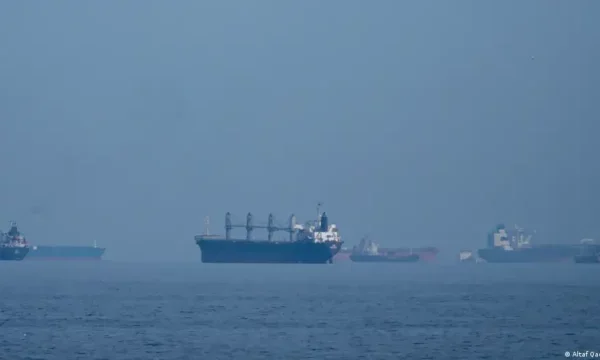
US President Donald Trump's request that European allies help secure the passage of oil and gas tankers through the Hormuz Strait was one of the main topics of discussion at Monday's (03.03.2026) meeting of European Union foreign ministers in Brussels.
Some member states indicated that they do not want NATO to be involved in protecting the strait, which was closed by Iran for most traffic in response to the US and Israeli bombing campaign.
Europeans are not ready to send troops to secure the Strait of Hormuz, “because this would add them to the list of possible targets” for Iran, associate with the Royal Institute for United Service (RUSI) told DW Charles Hecker.
At the beginning of the meeting, EU senior diplomat Kaya Kallas said it is in the interest of the bloc that Hormuz Strait remains open, “so we are also discussing what we can do in this direction from the European side of”, and added that the EU is in contact with American colleagues at different levels.
However, at the end of the meeting, she said there was no “nor will” among member states to expand the EU naval mission in the Hormuz Strait, “at the moment”.
The rapid increase in energy prices across the continent, and the following energy crises have further jeopardised the already tense relations between Europe and Washington.
EU ministers also praised how the conflict could give a stronger hand to Russia, which could use additional revenues from its fossil fuels exports to support its fight in Ukraine. THE only real winner from the fight against Iran at the moment is Russia,” said Hecker.
Trump pressure on Europe to provide ships at Hormuz
On Sunday (15.03.26), US President Donald Trump increased pressure on countries that receive energy supplies through the Strait of Hormuz, urging them to secure the protection of this waterway, where it usually exceeds about 20% of the world's crude oil supply.
Although the main buyers of these cargo are Asian countries, Trump appears to have again threatened NATO's alliance.
The “is perfectly reasonable for countries benefiting from the straits to help ensure that nothing bad happens there,” he said in an interview for The Financial Times. “If there is no reaction, or if the reaction is negative, I think this will be too bad for NATO's future.”
Hecker said, this is an attempt by Trump to get Europeans to engage more actively in the US and Israeli war against Iran. We do not know what kind of threat the president is making to NATO and how he would accomplish it. But he is doing everything he can to pressure the countries he wants to involve in the conflict. ”
Trump has especially called on France and the United Kingdom to join the effort, but Hecker said none of them are likely to be involved as long as the fighting continues.
“They are not ready to join the United States' military efforts in the Hormuz Strait, and most likely will not be in the near future either,” he added.
And not only because this would turn into goals for Iran but also because they do not have the objective and strategy of the United States and Israel into this war.
Germany's Foreign Minister, Johann Wadefhul, told reporters he sees no role for NATO is in securing the straits, and added that he expects Europeans to be informed by the US and Israel of their goals and plans.
I don't see that NATO has made any decisions in this direction or that it can take responsibility for Hormuz Strait. If that were the case, then NATO's bodies would handle this issue properly,” Wadephul said before the EU ministers' meeting.
France, however, has expressed more flexible. French President Emmanuel Macron said his country would be willing to help secure the strait “after the hottest phase of the conflict has ended. ”
Europe hit by rising energy prices
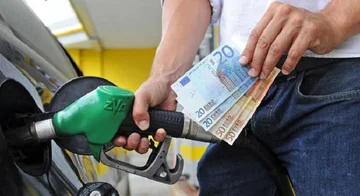
The EU is already being hit hard by the economic costs of the blockade. “Since the beginning of the conflict, gas prices have increased by 50 percent and oil prices by 27 percent,” said European Commission President Ursula von der Leyeen.
In just 10 days of fighting in Iran, European taxpayers have paid an additional 3 billion euros for imports of fossil fuels, she told members of the European Parliament.
“Europe is neither an oil producer nor a gas producer. For fossil fuels we are fully dependent on expensive and unstable imports, which put us in a structural disadvantage over other regions,” she added.
The current crisis in the Middle East clearly reminds us of how vulnerable we are for this reason. ”
To lower energy prices, European countries including France, Germany, Italy and the United Kingdom supported the decision to release millions of barrels of oil, along with other G750 members. The International Energy Agency has called for the release of 400 million barrels of oil from the emergency reserves.
Is Russia the greatest beneficiary of Iran's war?
As Iran launched missiles and fears towards hotels, airports and even oil refinerys in the Persian Gulf, and blocked the Hormuz Strait, Russia was ready to benefit.
When oil prices rose to 87.20 ($100, U.S.), the highest level since the Russian invasion of Ukraine in 2022, Moscow presented its oil and gas as an opportunity for desperate buyers.
“Russia has been and continues to be a reliable supplier of both oil and gas,” said Dmitry Peskov, Russian President Vladimir Putin's spokesman, while Kremlin adviser Kiril Dmitriev, criticised Europe's decision to secede from Russian energy, calling it a strategic mistake.
To contain price hikes, Trump temporarily suspended several sanctions for the purchase of Russian oil, including a 30-day exemption for India.
Europeans are concerned that a strong increase in energy prices will increase Russia's revenues and enable it to extend or even intensify the fight against Ukraine.
An additional concern is that the key defense devices Ukraine needs as Patriot missiles, which Europe often buys from the US to send Ukraine, can now be diverted to the Gulf.
Kallas has stressed that there is a “direct impact” of Iran's war on Ukraine, as the “defence capacity Ukraine needs” is now going towards the Middle East. ”
According to Ukrainian President Volodymyr Zelensky, Gulf countries have used more Patriot missiles in the first days of Iranian attacks than Ukraine during the four years of war since Russia's attack.
Ukraine has offered Gulf countries its anti-dime technology, hoping they will use counterattacking fears conducted in Ukraine and preserve Patriot systems only for missile attacks.
“Ukraina has years of experience in preventing Russian-type Shahed ʹ fears of the same Iran is using against its neighbours. Ukraine's defence industry has also developed anti-droon systems tested in battle, which it is offering to Gulf countries,” told DW Rafael Loss, expert of the European Council on Foreign Relations.
The goal is to create “requests for Patriot missile missiles in the Persian Gulf so that Ukraine can get more in the future,” said Loss. /DW/