2 minutes ago
Terras report: 2025, lost year for Kosovo
Periskopi(4 months ago)
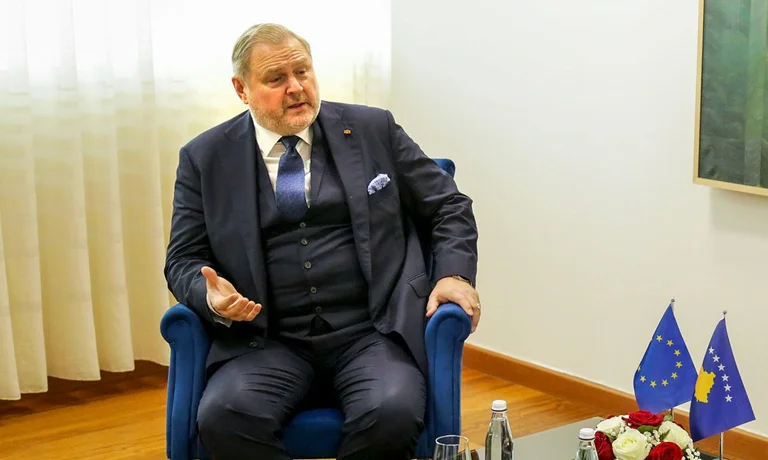
(4 months ago)European Parliament rapporteur Riho Terras has compiled the draft report on Kosovo including political developments, rule of law, economy, corruption, dialogue with Serbia and the Kosovo European integration process for 2025. In it, 2025 is considered the lost “ ” for Kosovo, while criticising the political blockade during 2025. “Express pity for [...]
In it, 2025 is considered the lost “ ” for Kosovo, while criticising the political blockade during 2025.
“I regret the political process paralysed during 2025, which resulted in a lost KPW for Kosovo”, said among other things in this report, published on March 6th of this year.
The report also criticises the president's non-election in the previous term.
“Voices regret over the decision's failure to elect a new president within the constitutional deadline, pushing the country towards new elections”, Terras further says in the draft report.
The rapporteur for Kosovo in the EP, as well as the EU-related reform progress, considers it insufficient, demanding acceleration of reforms.
“calls on Kosovo authorities to intensify progress in implementing EU-related reforms, especially in the area of rule of law and fundamental freedoms”.
In addition, the report stresses limited progress in fighting corruption.
“Expects concern for limited progress in the fight against corruption in general”.
While the report welcomes the overall positive assessment of parliamentary and local elections held in 2025, noting that they were held in a peaceful, competitive and inclusive manner, it expresses <x0->credience for continued efforts to politicise independent institutions, including pressure on the Central Election Commission, and shortcomings in governance within the Independent Media Commission”.
The report stresses that it remains concerned about the limited implementation of the law-rule strategy and insufficient implementation of reforms, the incomplete membership of the Kosovo Judicial Council and the Kosovo Prosecutorial Council, and delays in implementing reforms in justice.
The report also expresses concern about limited progress in the fight against corruption in general; “view with concern Kosovo's fall in the global Corruption Index for 2025, where it ranks 76th out of 182 countries and territories, three countries below in 2024, overturning a previous trend of gradual improvement (4)x1>.
But Terras's report welcomes the fact that some progress has been made in the fight against organised crime; “called for a quick adoption of a national strategy and action plan against organised crime”.
This draft report notes Kosovo's pluralistic media landscape, “but laments the lack of progress in ensuring freedom of expression; laments that Kosovo's ranking for media freedom has dropped 24 places to 99th in the World Press Freedom Index 2025”.
Terrace in the report reiterates his concern “over attacks and threats against journalists and media workers; calls for an improved response to the prosecution and the approach of media-related legislation acquis of the EU and other relevant international standards”.
The goal also highlights the need to ensure sustainable financing and independence of the public broadcaster; the report “calls for balanced monitoring and representatives of Kosovo Radio Television, Kosovo public broadcaster”.
The report expresses concern for growing dezinformation about interethnic tensions spread by foreign actors, particularly during election periods; “called for a strengthened institutional response and improved media education”.
Among other things, the report reiterates the importance of constructive engagement on the part of Kosovo and Serbia authorities “in order to reach a comprehensive and legally binding agreement on normalisation, based on mutual recognition and in line with international law”.
The report also calls on both Kosovo and Serbia “to implement the Brussels and Ohrid Accords, including the establishment of the Association/Unitation of Serb Majority municipalities, and the removal of Serbia's opposition to Kosovo's membership in regional and international organisations, as well as to avoid unilateral actions that could harm the process of dialogue”.
Terras in the report says he expects Kosovo and Serbia to fully co-operate and take all necessary measures to bring quickly to justice the authors of the 2023 terrorist attack in Banjska, while expressing regret over the fact that “Serbia has not yet prosecuted the guilty, especially Milan Radociqi, former vice president of the Serbian List”.
In addition, the unresolved fate of some 590 missing persons, “, mentioned only 26 cases resolved between April 2024 and September 2025”.
Citing the issue of EU enlargement, the report stresses that this process requires a stable moment of reform and urges Kosovo to accelerate its progress in implementing EU-related reforms, “particularly in the area of rule of fundamental law and freedoms; stresses that redefining the priorities of these reforms is necessary for Kosovo to return to the right path towards EU”.
Terras says he supports Kosovo's EU membership bid submitted in December 2022 and also calls on five member states that have not recognised Kosovo to move towards recognition, “enabling Kosovo to advance equally with other candidates”.
He reiterates full support for Kosovo's application for membership in the Council of Europe and for the country's strategic orientation plan to join NATO's Partnership for Peace programme.
The European Parliament's Foreign Affairs Committee (AFET) will review draft reports for several European Union candidate countries (BE) during a scheduled meeting for March 16th and 17th. Reports were prepared by relevant rapporteurs of the institution.
After an exchange of views with Enlargement Commissioner Marta Kos on Tuesday, commission members will discuss the details of the draft reports concerning Kosovo, Bosnia and Herzegovina, Ukraine, Moldova and Serbia the next day.
The AFET report on Kosovo is prepared by rapporteur Riho Terras. The document analyses political developments, rule of law, economy, corruption, dialogue with Serbia and the Kosovo European integration process.
He praises Kosovo's progress in its relationship with the EU; includes criticism, recommendations and remarks for Kosovo institutions; proposes the European Parliament's political position on Kosovo.
After publishing this draft report, the same is presented to the EP by the Terras Eurodeput.
Afterwards, the committee's deputies present amendments (changing). Committee AFET votes the report, and the approved report goes for voting at the European Parliament's plenary session.
Only after these steps does it become an official resolution of the European Parliament.