7 hours ago
Albania gets most expensive oil in Europe according to purchasing power
Periskopi(4 months ago)
(4 months ago)Albania results in the country with the most expensive fuel in Europe when the price of oil is compared to citizens' income. The Monitor has been processing US per capita income data for 2026 under the publication of the International Monetary Fund and the current oil price, according to Global Petrol Price, broadcast Periscope. Average income [...]
Monitor's been processing dollars per capita income data for 2026 according to the publication of the International Monetary Fund and the current oil price, according to Global Petrol Price, broadcast Periscope.
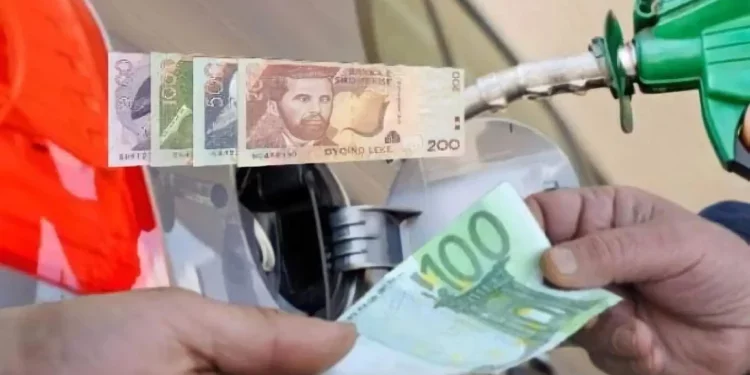
The average dollar per capita income in Albania for 2026 is $12,000, or $33 a day, according to the IMF's Global Economic Mirror. A liter of oil was traded in Albania yesterday at about $200, or $2.4, on the current course.
As a result, an Albanian citizen would currently need 7.2% of his daily income to buy a litre of oil.
According to data processed by the Monitor, based on IMF figures and Global Petrol Price, this is the highest burden among European countries involved in the analysis.
Compared to other countries in the region, weight is at least twice as high. In Serbia, a litre of fuel represents about 3.7% of daily income in Montenegro about 3.6%, while in Romania around 2.8%. Even in Greece, one of Europe's most expensive fuel markets in nominal terms, the weight of an oil liter in proportion to revenues is around 2.5%.
The region has oil prices and nominal value, an average of 15-30% lower than Albania, especially Kosovo and Northern Macedonia. Meanwhile, the country's per capita revenues remain among the lowest in the region, recently passing on to northern Macedonia, with Kosovo at its lowest.
In the most developed European economies, the difference is even greater because of higher revenues, with fuel in Albania being three to 6 times more expensive in relative terms, according to purchasing power.
In countries such as Italy, France, Germany, or Belgium, a litre of fuel usually represents less than 2% of average daily income, while in some countries of northern Europe weight drops even further. The Netherlands has the most expensive oil in Europe in absolute value, but a citizen there only needs 1.1% of daily income to buy a litre, or 7 times less than Albania.
Albania already has one of the lowest levels of per capita income in Europe, while fuel prices are often similar or just slightly lower than those of European Union countries. This makes real fuel weight on the household budget and on transportation costs for businesses much higher.
According to Global Petrol Price data, even in nominal value, Albania ranks fifth in Europe for oil prices, behind Holland, Denmark, Norway, Switzerland, with the latter having fuel only 10 to 30 cents more than in our country.
Fuel is one of the main components of transport and logistics costs in the economy. In countries where its income burden is high, the impact is further extended to goods prices, to the cost of transporting goods, and to daily household expenses.
High tax weight remains one of the main reasons for expensive prices in the country, where about 60% of the price constitute taxes. Akzia: around 37-38 lek/liter; Transmission tax: around $27 (liter); carbon tax: about 3 leks; T VSH: 20% of the final price, etc.
Fuels, the price increase is reflected very quickly, but not!
Very fast price-growing reactions when they are expensive in stock exchanges and slow discounts when they fall on international markets remain another important reason.
According to Monitor reports in the rankings of larger companies according to profits, for example, in 2019, the profit rate for the sector rose by 0.5-1 percentage points. Market operators explained this with the tendency of fuel trading prices in the country that year.
The reduction of prices on international markets is not reflected at the same pace and time on the domestic market, and this leads to increased profit rates. The opposite is true when the price increases when reflection is faster, as indicated in the last days.
The same tendency was confirmed, and in 2024, where part of the companies saw a slight improvement in profit rates in 2024. Operators again acknowledged that when the price is low, companies are more likely to maneuver at prices, as and reflection on their market decline is slightly slower. In 2024 prices tended to be lowered, favouring importative and commercial societies. /Monitor. al