7 minutes ago
President, President or New Election in Kosovo
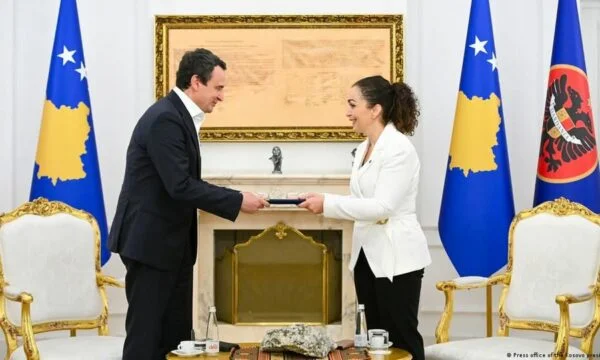
Periskopi(5 months ago)
(5 months ago)Many civil society organisations have been addressed with a public letter to parliamentary political parties, which require that a solution be found to elect the president and avoid renewed elections. Few days separate Kosovo from the election of President or president, or the country will go to extraordinary parliamentary elections. [...]
Few days separate Kosovo from the election of President or president, or the country will go to extraordinary parliamentary elections. No consensus names so far have been found by parliamentary political parties. Consensus does not have the current President Vjosa Osmani, who has expressed his candidacy.
The latter has already been declared willing to run even for a five-year term, but at least 30 deputies' signatures, which Osman has not yet secured, are needed for her candidacy. President Osmani has not spoken publicly if she has secured the signatures needed for her candidacy. But officially there is no choice. After a meeting held with the US Embassy in Pristina's charge, Annu Prattipati, Osmani cited the importance of completing constitutional processes and full institutional consolidation, in operation, as she says, “democratic stability, the country's development and addressing the needs of the citizens”, writes DW, broadcast Periscope.
LVV has not yet collected signatures
Most in the Kosovo Assembly, consisting of the Vetevendosje Movement and non-Serb minorities, do not want to propose their name for president or president, for having only 66 votes in the Assembly. He saw the opposition parties vote, not the number of 80 votes needed for the election of the president, so consensus is required. First Deputy Prime Minister and Minister of Foreign Affairs Glauk Konjufca expressed that position.
And the majority that is of 66 numbers in the Assembly, we are convinced there is no way, through a name proposed, a unilateral name, to get the guaranteed opposition vote to make 80 votes. This is the Megoranza consisting. I'm not saying it's absolute, because absolute things in politics don't exist, but roughly that's the conclusion of the majority”, says Konjufca, adding that most want to avoid the idea of proposing their own candidate.
Opposition Attitudes
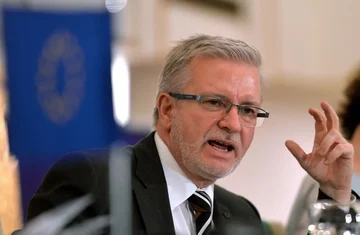
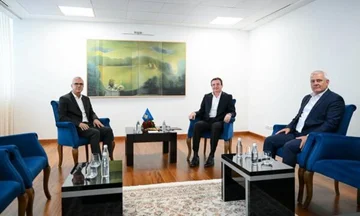
The two leaders of two opposition political parties, The PDK and LDK, which held meetings with Prime Minister Kurti, demand that the candidate's name for the post have broad support. The head of the Democratic Party of Kosovo (PDK), Bedri Hamza, says the president's “election is not the only question of a party, but of all elected representatives”.
“As the political subject of opposition, we have not been and are not a barrier to state processes, but neither do we support candidacy that do not represent civic unity, according to the constitutional spirit. I hope there are reflections from those who have the constitutional responsibility to propose broad-backed candidacys, avoiding short-term party calculations. institutional stability is vital and should be treated as such”, Hamza says.
On the other hand, Democratic League of Kosovo chairman Lumir Abdixhiku says the process of electing the president is under way within a limited deadline, and in this line it requires high political responsibility, clarity, caution and will to compromise”.
It is essential to understand that the presidency should remain the institution that guarantees power sharing and serves as a factor of unity for the country, not as the continuation of the ruling majority. In that spirit, and in line with the political declaration adopted in the LDK Parliament, I assess that there are two sustainable ways ahead -- either a broad parliamentary consensus about a common name for president, or a political agreement between parliamentary parties”, Abdixhiku says.
According to him, if no solution gets its way, the “seat comes to the elections, an unnecessary scenario at this time”.
The Attitudes of Civil Society
Analysts say it would be political maturity to have a political consensus on the president's issue, but, apparently, there is no readiness.
There is no clear willingness from Kurt to have a consensus for a president who will not be controlled by Kurti. It would be very positive for Kurt to make a proposal for president outside the VV and List Guxo. However, I think Kurt is heading towards the obligation of either Vjosa Osman or the extraordinary new elections. Whether it will manage to impose under compulsion, it is expected to be seen”, analyst Blerim Burjani tells DW. According to him, if Kurt failed to do so, it would be a big disappointment for him, for the fact that he presents the greatest political power in Kosovo and has the responsibility to avoid institutional instability.
The international community would also be surprised that Kosovo would not overcome this situation in terms of electing the president. This is falling short of democratic maturity, returning to the initial citizenship stage, where there has been a need for international intervention to avoid domestic political problems and conflicts, Burjani says, praising that “should demonstrate maturity, vigilance and reason to support citizenship, democracy and international co-operation”.
Viewing the real “for Kosovo to go to extraordinary elections again, many civil society organisations have addressed a public letter to parliamentary political parties, which require that a solution be found to elect the president and avoid renewed elections.
“Consensis for electing the president is a must for institutional stability. Repeated early elections should not be considered an instrument to ensure the functioning of institutions. Rather, they increase uncertainty and damage institutional continuity. A consensus-elected president offers stability, ensures normal functioning of powers and increases civic trust in state institutions”, said among other things in the letter published by civil society.
However, the Kosovo Parliament must elect the country's president or president as far away as 04.03, so no later than 30 days before the end of the current president's term, Vjosa Osman. Its mandate ends on April 4, 2026.
To compete for the country's president, a candidate needs to provide at least 30 deputies' signatures, while two-thirds of the votes are needed in the Kosovo Assembly with 120 deputies.
The quorum in the Assembly is reached with 80 deputies. If in the first two rounds of voting a candidate does not secure 80 votes, then the third vote will suffice to have 61 Sosh. The evental failure would lead Kosovo to early parliamentary elections.