8 minutes ago
IKD: Parliament Must Resume Vote for Subheaders From Groups
Periskopi(10 months ago)
(10 months ago)Kosovo's Institute for Justice (IKD) praises the constitutional election of Dimal Basha, the Speaker of the Parliament as an important step towards institutional unblockment after several months of paralyzing institutional functioning. However, violating the Constitution, Order, Act of Constitutional Court and Parliamentary Practice concerning subheadings from the ranks of communities presents a new scenario [...]
However, violating the Constitution, Orders, Act of Constitutional Court and Parliamentary Practice concerning subheadings from the ranks of communities presents a new blocking scenario towards the constitution's framework.
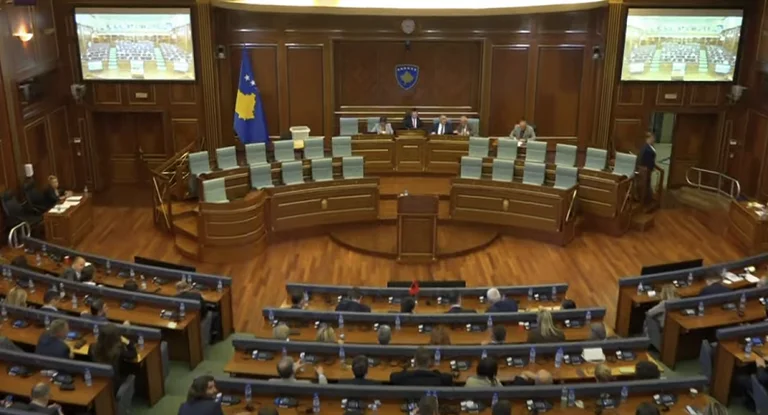
The IKD has monitored the process of developing the constitutional session on 26 August and has noted that the Speaker of the Parliament, Dimal Basha, has developed the procedure of electing the vice-presidents from among non-most communities contrary to obligations the Constitution has assigned to the Parliament, the Constitutional Court Act and the until-day parliamentary practice.
According to Constitutional Court judgments in cases No. No. Euro193/25 and KO196/25, the election of mayor and vice-presidents must be made in accordance with the Constitution, the Parliament Rule and the current parliamentary practice. According to the Constitution (Nini 67, paragraph 4), and the Assembly Order (Nen 12 paragraphs 4 and 5), the selection procedure for the subheaders from the ranks of communities is as follows:
Candidates for deputy heads of the Parliament, both from the Serb community and other communities, are proposed in writing;
The proposal is made by most Serbian community deputies, other communities respectively;
The vote by vice-presidents from the ranks of communities takes place in the package -- just as the vice-president vote by the three largest parliamentary groups).
With the exception of the written form of the proposal, which is innovation in the new Framework, this procedure has been consistently followed and respected during the parliamentary practice, including the dedication of last year's legislature in 2021, during which procedure was followed by the chairman of the Constitutive session, Mr. Avni Dehari.
Thus, initially, the new Speaker of the Assembly's invitation to propose the candidate for deputy head of the Parliament from among the communities is contrary to the Assembly Rule. This is because this regulation requires the written form of the proposal for deputy heads of the Parliament, which was ignored in the case of Emily Redzepi. For this reason, both the process of candidate proposal for deputy chairman from the ranks of the Serb community and the election of MP Emilia Redzepi in the position of the Parliament's deputy speaker was made contrary to the Parliament's rule of Parliament and in the absence of transparency. Political agreements, which were introduced by MP Elbert Krasniqi, cannot become part of a constitutional and legal process.
Next violation in the process was the voting process. As can easily be proved, the Constitution and regulation define two (2) paragraphs divided over the question of the vote of the Parliament's vice-presidents. These two (2) paragraphs speak of two (2) single voting processes: the vote of three (3) vice-presidents by the largest parliamentary groups and the vote of (2) vice-presidents from non-party communities. Thus, just as the process of voting vice-presidents cannot be shared by the three largest parliamentary groups, the process of voting under-heads from communities cannot be shared. So has been the current parliamentary practice, including the 2021 practice led by the LVV itself. For this reason, the division of the voting process in this case is contrary to the Constitution, the Assembly Order, the Constitutional Court's judgments and parliamentary practice. This fact presents dual constitutional violations, as in Mrs. RedÉpi in the position of vice president, as well as in denying the right of the Serb community to represent the head of the Assembly.
In terms of MP Nenad Raši's proposal for voting as deputy head of the Parliament from the Serb community's ranks, he is not nominated by most Serbian community deputies, whom the majority constituted the Serbian List with 9 deputies. Thus, self-proposal is prohibited both from forms required in writing and from matter, which is required to be representation by most Serbian community deputies.
The IKD also notes that the Speaker of the Parliament has started with the process of lots contrary to the rule of Parliament, because the lot applies only when there are no proposals submitted, while in this case there were concrete proposals from the Serb community deputies, who did not get the necessary votes, and on the other hand, the MPs of this community themselves rightly rejected the lot, because the way of implementing voting for both vice-presidents was not constitutional.
Presenting non-most communities in the ruling bodies of the Assembly is not a privilege, but a constitutional guarantee of their integration into the democratic process and protection of their rights. Imposing the will of minorities by the parliamentary majority on the name of minority representatives is contrary to the spirit of the Constitution of the Republic of Kosovo.
For this reason, in its entirety, the procedure followed in connection with the election of vice-presidents from non-proliferation communities is contrary to the Constitution, the Framework of the Parliament, the Constitutional Court's acts and the until-day parliamentary practice.
The IKD calls on the new Speaker of the Assembly to continue the constitutional session on August 28th, repeat the procedure of voting of deputy mayors from the communities, and the process to be conducted in accordance with the Constitution, the Parliament's Rule and the Constitutional Court's recent judgment. The deputy leader from the Serb community and deputy chairman from other non-s majority communities, after accepting written proposals, should be voted together in packages. This is necessary to ensure respect for constitutional order and to ensure that the constitutional court-setment process is carried out on the basis of clear legal and constitutional rules and within the 30-day deadline set by the Constitutional Court.