an hour ago
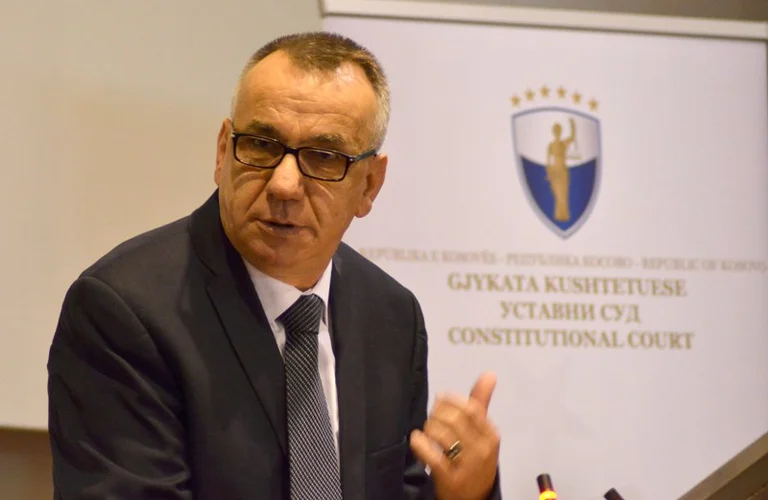
Enver Hasani: Kosovo dares not remain outside American gas project
Periskopi(an hour ago)
(an hour ago)Law and international relations professor Enver Hasani has expressed concern over Kosovo's access to energy projects with US support, warning that the country should not be isolated from strategic developments related to the energy policy of the United States in the Balkans.
For Kosovo, Hasani said the issue of American gas should be seen not only by economic prism, but as part of a broader geopolitical strategy.
According to Hasani, energy policy cannot be a question of party interests, but should be treated as a national and state interest. He said decisions on gas supply and energy projects are directly linked to Kosovo's geopolitical position in the region.
The issue of American gas is a global American policy issue, it's a segment for the Balkans. Kosovo cannot stay out. And I think even opposition parties should be a little more dynamic, more attentive, more aware of that, because power clearly has been supplied to each American foreign policy. Not only now, but also in Mr. Beden's administration there have been disagreements that offer Kosovo, ready to go to countries that have active anti-American policies. That's, as it were, almost turned on red light. It may also be that you remove masks very quickly. And that's wrong. Why? Because this is a question of Kosovo's geopolitical orientation, which can not be the pre-emptive of any party. If you say, I'll take the gas from Vlora, then the question is, Why would you take it? That this is geopolitical. And then you get from Macedonia here on the ground, the closest is”, he said.
In office Prime Minister Albin Kurti said days ago that coal gasification for energy production will be planned in the new government mandate as part of the development of modern energy technologies and increased Kosovo energy security.
However, the idea criticises Hasan, raising questions about its environmental and economic impact.
He argued it is unclear how such a project could be justified with environmental arguments, while earlier other energy projects have been rejected due to environmental impact.
Hasani warned that non-involvement in American gas and procrastination of energy independence projects could force Kosovo to continue importing electricity at high costs for years.
He also spoke of the problem of stealing electricity, stressing that prosecution of such cases is difficult because of lack of co-operation and the extent of evidence in various countries in the region.
“are insisting on gasification of coal. Second, if you've rejected an American project because of environmental considerations, then gasification, what's the reason? Explain to me now as a citizen why this gasification should be, which is very harmful in terms of the environment, far more harmful than what the Contour Global... If this is the case and this part of energy independence is this way, then why would you want to do that in 1015 years? Do you know what it means that 10 years from now you've been waiting for the gasification of lignite? That means buying every two to three years of electricity 1-2 billion euros. Stealing electricity is like getting a glass of water at sea. In a criminal way, to follow the thieves, the evidence is not in one place, but is in Serbia, Bosnia and Montenegro. It means you can't gather them, that you can't cooperate with them, and that's pure theft”, he ends up.
Kosovo's energy orientation debate has returned to the spotlight following statements by the US Embassy in Kosovo, Anu Prattipati, who called on Kosovo to join the United States-backed regional natural gas project.
Her call came several years after the Kosovo government had abandoned the natural gas component under the Millennium Challenge Corporation programme.
A night before the June 7th elections, incumbent Prime Minister Albin Kurti said the executive remains interested in using gas, but through a model linking Kosovo to energy infrastructure in Albania and the Vlora liquid gas terminal, citing also the possibility of using American technologies for gasification of lignite.