6 hours ago
WHAT your health reveals, according to science
Periskopi(a year ago)
(a year ago)It is the muscle we use every day to speak, swallow, and taste. But language can also be an important indicator of our health and give signs of what is happening inside our body, experts say. Various colors, texts, layers, and various forms of language can tell about [...]
But language can also be an important indicator of our health and give signs of what is happening inside our body, experts say.
Various colors, texting, layers, and various forms of language may indicate various health conditions.
And being attentive to this muscle organ can help us discover problems that we would otherwise ignore.
A healthy language is pink and with a slightly rough surface,” says Sarah Ramage, clinical director in Bupa.
The one that gives this text is the little bumps on the surface, called the slippers. ”
Any change from this situation may indicate a problem or a sign that you should work harder on your oral health.
So have you noticed any of these changes?
NO FIGHT FOOD
Nolls, bumps, or unusual signs may be a sign of oral cancer, warns Mrs. Ramage.
Red noses may indicate a condition called erythrope, while white or gray ones may be the leukemia, which can lead to cancer if not treated.
Your dentist will check on these during the regular checkup and, if there are concerns, send you to the family doctor or to a specialist.
The oral cancer cases have increased by nearly 60 percent in the last decade, so it is important to be aware of any change,” adds.
NO FIGHT (LEZIONE)
White - colored coats or lesions of creams can tell of a fungal infection, such as the oral candidia.
While it is usually harmless, it can spread to other parts of the mouth, causing bad taste, pain, or difficulty in eating and drinking.
E Where'd you go?
Dr. Leslie Anthony, a dentist who runs a clinic in Montana, says:
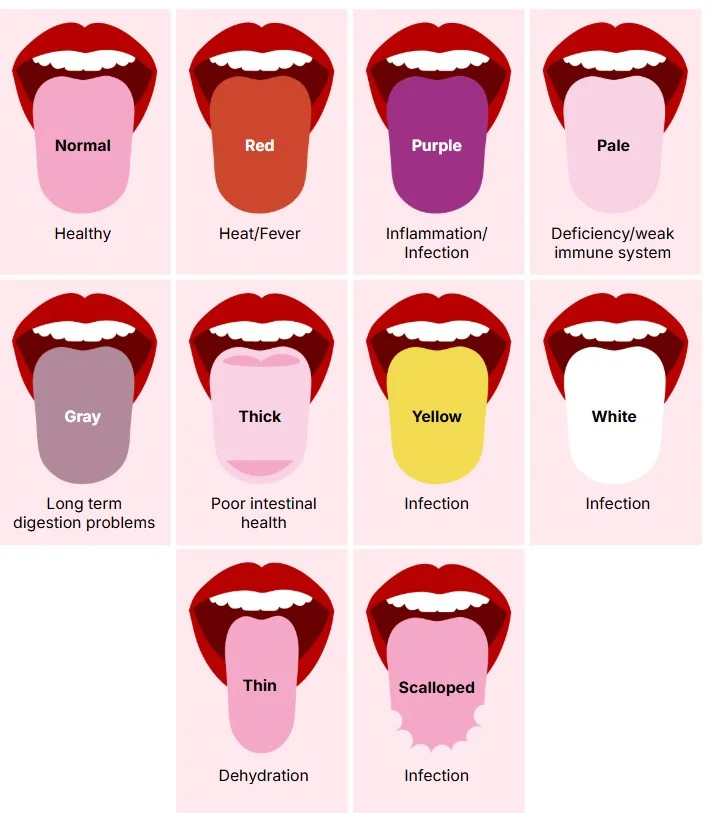
A red language can indicate body heat, such as fever or hormonal imbalance. A scarlet tongue is a sign of an inflammation or an infection in the body.
Meanwhile, a pale pink language may indicate a lack of vitamins, weak immune systems, or energy shortages. ”
STATES
A thick layer tells of intestine or digestive problems, explains Dr. Anthony.
The yellow layer indicates that there may be an infection in the body, while a gray or black layer may indicate a long - term digestive disorder or a serious health condition.
The thick white layer may mean poor circulation of blood to limbs or fungal infection.
FORMA
“If language is puffed up with corrugated or gum marks, it may indicate misabsorption of nutrients,” it adds.
And a very fine tongue can be a sign of dehydration.
JUDUHA “GEGRAPHIC”
A language with a map with normal parts mixed with smooth red zones occurs when the old surface of the tongue is replaced and the upper layer does not fall properly.
It may leave a sensitive red zone like a scratch, but it is usually harmless.
Experts say it's good to look at the language in the mirror and notice the colors, the text, the bumps and the embroidery.
It is recommended that the teeth be brushed before the teeth are washed.
HOW AFTER THE JOY
Experts recommend regular language washing to ward off bacteria from accumulate.
Washing the tongue is easy, and it can be made of the common silk of the toothbrush.
Colgate's website reads:
“juha collects bacteria and food remains covered by a thin mucus layer. ”
“Remove this layer that causes bad smell by using a little bit of toothbrush and carefully cleaning the surface of the tongue. Start at the end of your tongue and move forward toward the mouth entrance. Clean the entire surface with mild pressure and then wash your mouth with water or mouthwash. ”
For those seeking deeper cleansing, a hornet can be used to remove the mucozale layer from the tongue delicately.
WHAT IS CEACHER WRITER IN GHOY?
Ordinary cancer, also known as oral cancer, is when a tumor develops in the inner formation of the mouth.
It can occur on the surface of the tongue, inside the pages, on the upper part of the mouth, on the lips, or on the gums.
Tumores can also be developed in saliva - producing glands, almonds in the back of the mouth, and the throat that connects the mouth to the tragga (faring) yet rarer.
Symptoms include:
Painful wounds that do not heal for weeks
Inexplicable, steady bumps in the mouth or neck
moving teeth or holes that are not healed after tooth removal
Sting or strange sensations on lips or languages
White or red spots in oral alignment or language may be early signs of cancer and should be investigated
Changes in speech, like. Stuttering or Lisp
Go to your doctor or dentist if these symptoms do not last within three weeks, especially if you smoke or smoke frequently./Periscopi/