3 minutes ago
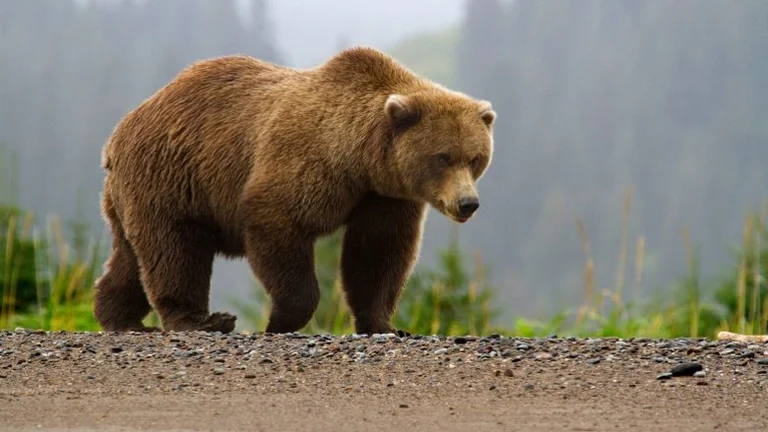
Murm bear meat to be sold for citizens in Slovakia
Periskopi(a year ago)
(a year ago)Bribered bear meat, a protected species in the EU, may soon be available to eat in Slovakia after the populist government approved plans for sale. Last month, the cabinet authorised a plan to kill about a quarter of the country's 1,300 brown bears in response to some [...]
Last month, the cabinet authorised a plan to kill about a quarter of the country's 1,300 brown bears in response to several recent fatal meetings.
The state-owned slaughter has been criticised by environmentalists and opposition politicians, including the European Parliament. The brown bear is listed as a species “almost threatened by the EU” by the World Conservation Union.
However, Slovakia's government is moving ahead with the plan, and this week it announced that culled bear meat would be sold to the public to prevent waste of food.
By next week, organisations depending on the environment ministry can offer meat for sale, provided all legal and hygienic conditions are met.
State Minister Philip Kuffa said it was an abuse the animals were previously sent to the remains' annihilation sites.
We will release every shot animal that meets certain conditions for consumption. Why? Because bear meat is edible”, he said.
Bears have become a political issue in Slovakia following an increasing number of meetings with people, including fatal attacks.
Slovakia ranks second in Europe, after Romania, which is estimated to have some 13,000 brown bears, in terms of the number of attacks.
The country reported a total of 54 bears attacks between 2000 and 2020. Approximate figures suggest the average number of attacks has also increased to 10 per year.
In April a man was attacked to death while walking in a forest in central Slovakia.
Shortly after that, Prime Minister Robert Fico announced the killing of animals, saying: “we cannot live in a place where people are afraid to go into the forest”.
He said his government would shoot as many as 350 brown bears -- an equivalent figure with the entire population of this kind in Spain.
His government argues that a problem of bear overpopulation has led to attacks.
However, environmental groups and critics say the focus should be on prevention.
Michal Wiesik, an ecologist and Euro-deput for the opposition Slovakian Progressive Party, told BBC Last month that the government plan was “absurd” and that it had already failed to limit the number of attacks “via the unprecedented murder of this protected species”.
Wiesik argued that thousands of meetings a year passed without incident and hoped the European Commission would intervene.
Miroslava Abelova of Greenpeace Slovakia called the elimination plan “legally reckless”, accusing the government of ignoring nature conservation laws and scientific advice.
Coffee bears are strictly protected according to EU directives and can only be killed in extraordinary cases like public security threats when there are no other options.
Bear meat is not usually eaten in Europe, and it is considered a delicate in just a few regions, such as parts of Eastern Europe and Nordic countries.
In most EU member states, strict hunting rules and protected bear status imply that meat is rarely found. When it is found, it usually comes from controlled murder or hunting, and it is not usually found in restaurants or shops.
Where bear meat is consumed, health officials warn of the risk of Trichinella a parasite that could cause serious human illness.
Adjusting the European Union for Food Safety requires that all bear's flesh be tested for Trichinella larvae before it is sold and the U.S. Center for Disease Control and Prevention determines an internal temperature of at least 70 degrees Celsius to kill the parasite. Lifting, smoking, or drying meat does not make it safe.