22 minutes ago
Foreign investors face bureaucracy, lack of qualified workers
Periskopi(a year ago)
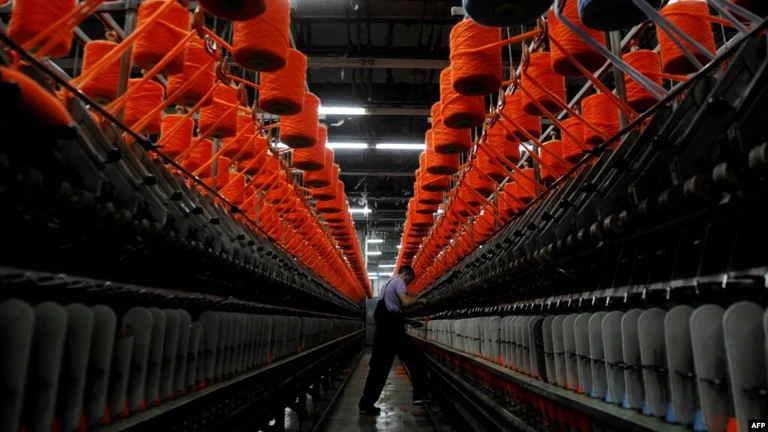
(a year ago)Since 2020, the Swiss-based Simtex company employs dozens of workers in Kosovo. But even after about 17m euros of investment, Simtex owners express dissatisfaction with the obstacles to businessmaking in Kosovo. The company's manager, Rasad Cey, says state institutions in Kosovo have not offered any assistance or relief to the company. He [...]
Since 2020, the Swiss-based Simtex company employs dozens of workers in Kosovo. But even after about 17m euros of investment, Simtex owners express dissatisfaction with the obstacles to businessmaking in Kosovo.
The company's manager, Rasad Cey, says state institutions in Kosovo have not offered any assistance or relief to the company. He even says any request or procedure faces long delays from institutions.
I'm just giving you one example: When we applied for high power supply, we waited nine months to get it. This is an extremely big challenge and loss for the company”, he stresses for Radio Free Europe, broadcast Periscope.
Currently with 150 workers, this company exports its textile products to European Union countries.
The problems, according to Cey, have increased further after visa liberalisation in January 2024, due to lack of labour and textile experts.
We're dependent on foreign engineers. Currently, we have 25 textile engineers from Turkey”, he says.
He complains that the workers the company takes and trains for three to six months eventually leave the company to emigrate abroad.
Cemre is not the only one facing such problems. Former Minister of Industry, Intervention and Trade Ismet Mulaj says bureaucratic procedures continue to remain an obstacle to investors even 17 years after declaring independence.
To solve this problem and attract more foreign investment, Mulaj proposes creating a special office that would accelerate all services for foreign businesses.
Such an office, according to him, would reduce bureaucracy and improve Kosovo's image as a secure and profitable investment country.
The demands of foreign investors go through numerous administrative procedures, which could last over two years. Serious investors don't have time to wait that long. For example, to attract a foreign investor in the area of renewable energy, 28 procedures must be passed, and only the minimum deadline is two”, Mulay tells Radio Free Europe.
Increased Foreign Investments Focused on Realty
Despite these challenges, foreign investments in Kosovo have increased in recent years. According to the Investment Agency and the Support of Enterprises in Kosovo (KIESA), these investments reached over 856m euros last year, up from 840m euros in the previous year.
Of all sectors, mostly foreign investment has been made in the real estate sector, according to KIESA data.
The focus on real estate is not positive, according to Mulajt. He believes it would have been more useful if investments were made in sectors that create new jobs or spur economic development.
“Investors from the diaspora are mainly investing in the purchase of residences, homes and lands”, he says.
With it, Ahmeti, from the Chamber of Commerce and Industry in Kosovo, who believes that real estate investments from the diaspora occur largely due to lack of facilitating businessmaking policies or non-informing investors over potential investment sectors.
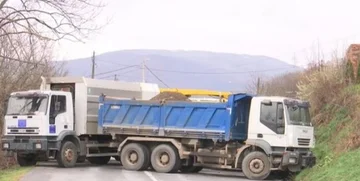
According to Ahmeti, the uncertainty of electricity supply, the unstable political situation, occasional unrest in Kosovo's north, bureaucratic procedures and vague rule of law make the country less attractive to investments in production or activities that would have a direct impact on economic growth.
“Improved environment for foreign investment could help reduce unemployment rates, increase production and exports, and reduce the number of unqualified workers in the labour market”, Ahmeti says.
Most foreign investments in Kosovo come from countries where the Kosovo diaspora is concentrated. In 2024, about 200m euros have been invested in Germany, while about 190m euros have been invested in Switzerland.
According to the Ministry of Industry, Undertaking and Trade, there are 13,388 businesses registered with foreign owners in Kosovo. Of them, 7,245 are active.
In the first three months of this year alone, 167 new businesses have been registered, which according to the Ministry, show a positive trend and continued interest by foreign investors for different sectors.
As good sectors for foreign investment in Kosovo, economic experts stress renewable energy, information and communication technology (TIK), agriculture and tourism. /Periscope/