4 minutes ago
The U.S. court blocks tariffs imposed by Trump: The president exceeded his authority
Periskopi(a year ago)
(a year ago)An American court blocked yesterday's entry into force of what US President Donald Trump calls the Freedom Day tariff, deciding he had exceeded his authority. The Central International Trade Court in Manhattan said the US Constitution gives Congress exclusive authority to regulate trade with [...]
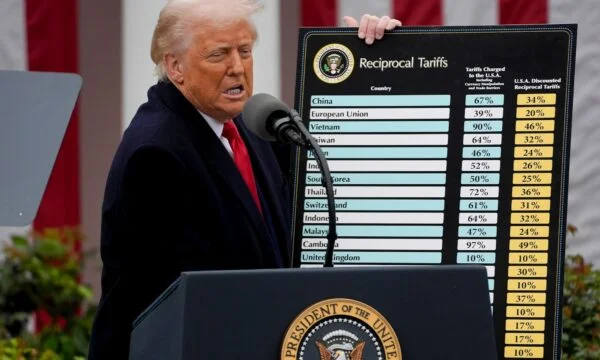
An American court blocked yesterday's entry into force of what US President Donald Trump calls the Freedom Day tariff, deciding he had exceeded his authority.
The Manhattan International Trade Court said the US Constitution gives Congress exclusive authority to regulate trade with other countries, which is not overlooked by the president's extraordinary powers to protect the US economy.
The trial does not decide on the wisdom or effectiveness of the president's use of tariffs as an impact tool. This use is illegal not because it is unreasonable or inefficient, but because (the federal law) does not allow it”, the three-judge panel in the ruling said.
The decision came on the basis of two indictments, one filed by the Liberty Law Centre on behalf of five small American companies importing goods from countries subject to tariffs, and the other from 13 US states.
Companies have said the tariffs would harm their ability to do business.
At least five other indictments have not been resolved yet.
Oregon General Prosecutor Dan Rayfield, a Democrat whose office is leading the state indictment, called Trump tariffs illegal, reckless and economically catastrophic.
This decision reaffirms that our laws matter and that trade decisions cannot be made according to the whims of President”, Rayfield said in a statement.
Trump claims he has broad authority to set tariffs under the International Emergency Powers Economic Act (IEEPA), which aims to address outstanding “threats” during a national emergency.
The law has been used historically to impose sanctions on US enemies or freeze their assets. Trump is the first American president to use it to set fees.
Setting tariffs in early April, Trump called the trade deficit a national emergency, justifying its total fee of 10 per cent for all imports, with higher rates for countries with which the United States has the largest trade deficits, especially China.
Many of these specific tariffs for the country were suspended a week later.
Trump said Friday he was unhappy with the pace of trade negotiations with the EU and threatened to set a 50 per cent tariff for all EU goods starting on June 1st. But then he agreed to extend the deadline for trade negotiations by 9 July.
Administration Trump said he would appeal the verdict./Periscopi/