19 minutes ago
Vucinic's opponents, supporters protest in Serbian cities amid mounting tensions
Periskopi(a year ago)
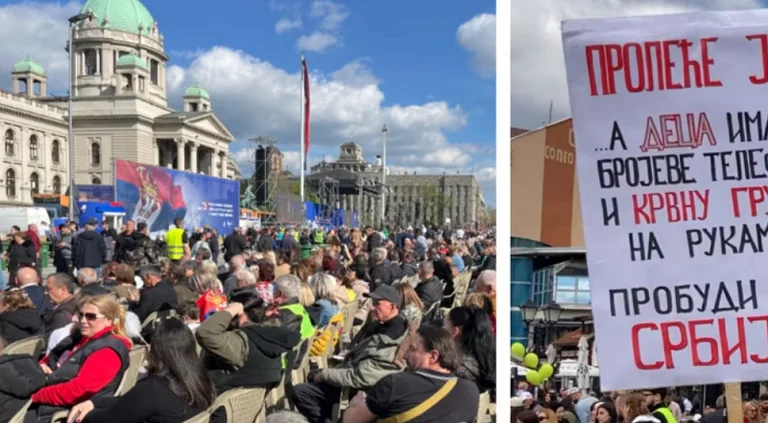
(a year ago)Serbian President Aleksandar Vuciq's opponents and supporters gathered at different locations on 12 April to protest, at a time when tensions are high, after months of protests organised by students against the Vuciqi-led government. Vuciq himself gathered supporters in Belgrade, announcing he would form [...]
Vuciq himself gathered supporters in Belgrade, announcing he would form a new political movement in the face of the growing wave of protests that began in November, following the collapse of the shelter at the train station as a result of which 16 people in Novi Sad lost their lives.
Protesters, led by student but united groups of thousands, have blamed corruption and lack of care for the tragedy at Novi Sad railway station.
The protests have turned into a broader movement opposing what demonstrators describe as a failure to rule the law, as well as systematic corruption under the leadership of Vuciqi, who has served as president since 2017, as he was prime minister for three years earlier.
Serbian bicycle protesters arrive in Budapest on April 5th on their two-week trip, 1,300km to the European Parliament in Strasbourg, France.
Vucic insists that the protests which have turned into one of the biggest challenges to his existing power are endangering peace and stability in the country and accusing organisers of being paid by “foreign intelligence agency”.
Before thousands of supporters, Serbia's populist president said authorities should initiate procedures “to restore order to the country” and that “full respect of the Constitution [should occur] to ensure Serbia's security”.
Vuciq said during the rally that a “movement is needed for the People and State”, because “needs new energy and new force, a new plan, not a plan until 2027, but by 2035”.
He did not elaborate on this movement but said that other gatherings will be held.
Vuciq reiterated the call to the students to return to schools and stated that the “color revolution has ended”.
Authorities in Serbia have repeatedly dubbed protests and student-led blockades as an effort for “colour revolution”.
This is a term referring to popular uprisings in countries like Ukraine, Georgia, and Kyrgyzstan that led to the overthrow of governments there.
Popular protests that led to the ouster of Yugoslav leader Slobodan Milosevic in 2000 were also often described as “colour revolution”.
Journalists at the scene reported that many of the supporters who attended the rally were brought by buses from all over Serbia, as well as from Kosovo and Bosnia and Herzegovina, where there are large Serb minorities.
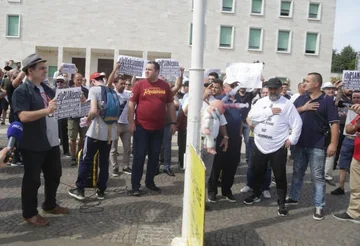
Students and others protest banners, music and cheers in Novi Pazar.
Students and others protest banners, music and cheers in Novi Pazar.
Bosnian Serb leader Milorad Dodik HINA wanted by the central authorities in Sarajevo after being convicted of violations of the Bosnian Constitution appeared at the Belgrade rally, reported AFP, writes REL.
Dodik, who is president of the Serbian entity in Bosnia, addressed the crowd at the gathering.
He is also under sanctions from the US and the United Kingdom for actions Western governments say are aimed at secession from Bosnia.
The Public Meetings Archive, a nongovernmental organisation praising the size of crowds, said around 55,000 attended the rally in Belgrade. On March 15th, the group estimated that the protest led by students against the government had between 275,000 and 325,000 participants.
Meanwhile, student-led protest was held on the streets of Novi Pazar, about 300km south of the capital.
Serbian President Aleksandar Vuciq's cartoon, with the message “You are not in front of”, seen at the student protest on February 1st 2025.
The protest is among a series of demonstrations called by students who have been blocking university faculties for more than four months, demanding accountability from the Government for the deaths of 16 people following the collapse of the Novi Sad concrete shelter.
A group of students in the blockades walked for days from other cities towards Novi Pazar to join protesters there.
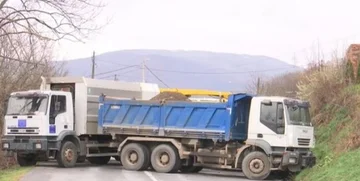
Novi Pazar University students blocked the census at the city's exit.
Supporters of the ruling Serbian Progressive Party, led by Vuciq, were scheduled to pass through that fence to move towards gatherings in Belgrade. It was not immediately clear that buses followed alternative routes.