19 minutes ago
Kallas: Kosovo dialogue has stalled, are considering other means for normalisation
Periskopi(a year ago)
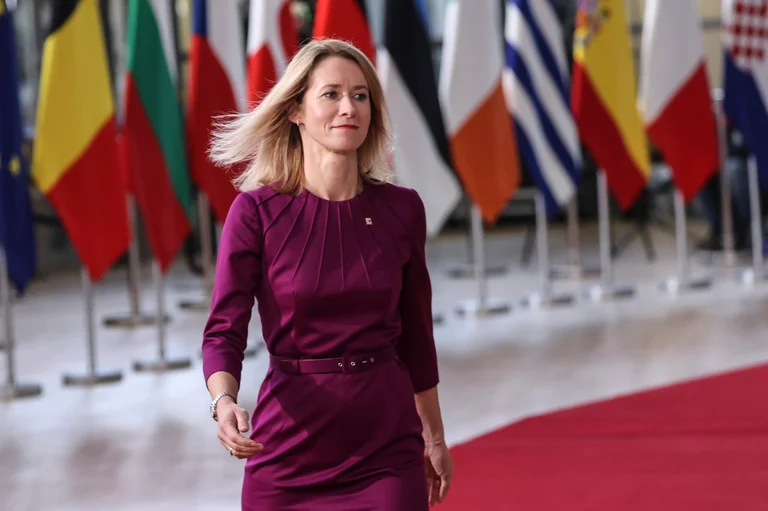
(a year ago)The European Union is interested in normalising relations between Kosovo and Serbia, whether through dialogue or any other instrument, European Union Foreign Policy chief Kaya Kallas has said in an interview for Radio Free Europe, Periscopi broadcasts. Perhaps it's a dialogue, maybe it's another tool. I am willing to examine [...]
Perhaps it's a dialogue, maybe it's another tool. I am willing to examine this issue, and I will do it together with the next day Special Representative”, Kallas said, who is expected to visit the Western Balkans next week.
Kallas also spoke of the possible impact of the trade struggle between the EU and the United States of America, as well as the possibility of a ceasefire in Ukraine, stressing the need for Europe's involvement in any negotiations on the issue.
Kallas: EU interested in normalisation between Kosovo, Serbia
Radio Free Europe: Today new [United States] tariffs of 25 percent for vehicles are in force. How will the European Union respond, and what do you think this indicates about transatlantic relations?
Kaya Callas: So far, our business people are interacting with Americans, so they don't know exactly what's coming. There are statements we see, but what are real actions? If such an act comes, we too have a plan, but what I want to point out is that there are no winners in commercial wars.
In the end, prices go up and consumers pay more for these products, and that is not wise. So I still hope we don't start this trade fight.
Radio Free Europe: [The president of Finland], Alexander Stubbb, while in late America, spoke of a possible full ceasefire in the war [between Ukraine and Russia] on April 20th. Do you think this is feasible?
Kaya Callas: So far, Ukraine has agreed to a ceasefire three weeks ago, and we have not seen any positive signs from Russia. They're just playing games.
I think it would be very good to give them a clear deadline until they have to answer, show their attitude, and show their goodwill for wanting peace.
Clearly Ukrainians love him.
Russia seeks removal of ceasefire sanctions, EU is unwilling
Radio Free Europe: [Kirill] Dmitriev, one of the Kremlin negotiators, is expected to visit Washington soon. Would you like to talk to him? Do you think the EU should negotiate with him?
Kaya Callas: For Ukraine, Ukraine must negotiate with Russia. This cannot be done by anyone else because it is Ukraine and cannot be done without Ukraine.
I think this is extremely important. When it comes to European security, we certainly need to discuss between us and our allies how to handle this issue.
Radio Free Europe: But is the EU or any European country willing to discuss directly with Moscow?
Kaya Callas: When it comes to real negotiations related to Europe, I think it's important to bear in mind that Russia should not have an impact on how we organise our security, because Europe is not attacking Russia. Instead, Russia has attacked its neighbours, so we are discussing our security arrangements.
However, as for negotiations for Ukraine, it is clear that Europe must be part of the table, because their outcome affects us as well. And any agreement cannot function without its implementation by Europeans.
Radio Free Europe: So will you talk about it with [US Secretary of State Marco] Rubio, when is he in Brussels the next few days?
Kaya Callas: We've been talking about this before, when we had G7 meetings in Canada, and we'll definitely talk about it again. It's very clear what the EU has in hand of the sanctions are imposed by the European Union, we have the training mission for Ukrainian soldiers, the civilian mission in Ukraine, and also the EU enlargement process, which includes Ukraine.
“We're discussing what we can do for REL”
Radio Free Europe: We've heard a lot of good words about Radio Free Europe, but what's the next step now? Is the European Union really willing to offer financial support, in the long and short term plan?
Kaya Callas: We are discussing what we can do, because free media and access to information are very important for the European Union. But, of course, we have many organizations, many of the places that are knocking on our door, because America is attracting support, and everyone is asking us to fill the void. Obviously we can't do this anywhere. Therefore, we should really discuss the plan to cover this situation.
Radio Free Europe: How do you view [Israel's prime minister, Benjamin] visit? Netanyahu, Hungary, an EU member state? Are you concerned that perhaps other persons wanted by the International Criminal Court can come to the EU? Especially the Russian leadership.
Kaya Callas: Member states are parties to the Rome Convention, which concerns the International Criminal Court. Hence, it is up to member states to carry out the decisions of the International Criminal Court and the obligations they have undertaken. It is clear that it is important to preserve the credibility of the International Criminal Court, and the European Union supports this court in every possible way.
Radio Free Europe: So, you cannot rule out the possibility that [Russian president, Vladimir] Putin visit an EU member state soon, unless the EU implements the convention?
Kaya Callas: The EU does, but the problem is that the EU is not a member of the convention, it is member states. Hence, member states must apply it if a person enters their territory, they must apply the decisions of the International Criminal Court.
Kosovo Dialogue
Radio Free Europe: Next week you will visit the Western Balkans. What do you think of the protests we are currently seeing in Serbia? Are you willing to organise a high-level meeting soon, within the dialogue between Kosovo and Serbia?
Kaya Callas: As for the protests, this is democracy happening even in EU member states that people get tired of governments and protest. This shows that democracy is working.
Regarding the Kosovo-Serbia dialogue, or the Belgrade-Pristina dialogue, I have appointed a Special Representative, with whom I will sit to see the future. What we are interested in is normalising relations between Kosovo and Serbia. Whether through this dialogue or any other instrument, we will gather ideas and come up with a proposal.
Radio Free Europe: So could it be anything other than dialogue?
Kaya Callas: The dialogue seems to be a little stuck, because the parties are just complaining about each other. I think we should keep the ultimate goal in mind the normalisation of relations between them so that they can move forward on the European road.
Maybe it's dialogue, maybe it's another tool. I'm willing to look into this case, and I'm going to do this with the Special Representative in the coming days.
Stability in Dialogue Tests EU
Radio Free Europe: And, finally, in terms of Georgia, how do you evaluate changes in the Law on Foreign Agents and the Law on Transmission? Does the EU still have any influence on Georgia?
Kaya Callas: The situation there is extremely difficult. We know that most Georgian people strongly support the European Union, and want Georgia to join the EU.
But this is not the way the government has chosen. The question for us is, What can we really do to help him? We have redirected funds from the government to nongovernmental organisations and civil society to help them continue on the European road.
Radio Free Europe: But is there anything more concrete about the government? The sanctions didn't work, is there anything else?
Kaya Callas: We should have agreements among the 27 member states. And that's the problem here. So we're still working on options. We have set up visa requirements for diplomatic passports, but we are constantly discussing what else we can do.