2 minutes ago
The increase in electricity prices makes the citizen poor: Market baskets expected to be more empty
Periskopi(a year ago)
(a year ago)If you paid the electricity bill for March 33 euros, for the same amount spent in May you will pay 38.31 euros. This, as of April 11th, Energy Regulatory Office (ZRRE) approved the rise in prices for electricity tariffs for households and businesses that have up to...
If you paid the electricity bill for March 33 euros, for the same amount spent in May you will pay 38.31 euros.
That, on April 11th, the Energy Regulatory Office (ZRRE) approved the rise in prices for electricity tariffs for households and businesses that have up to 50 workers.
Despite the organised protests to counter this increase, new tariffs have been approved on 16 April and will take effect on 1 May.
The Council for Protection of Human Rights and Freedoms (KMLDNJ) has strongly rejected the ZERE decision, saying that “the achievement of the price of energy will not remain an isolated case, but will produce additional price increases”.
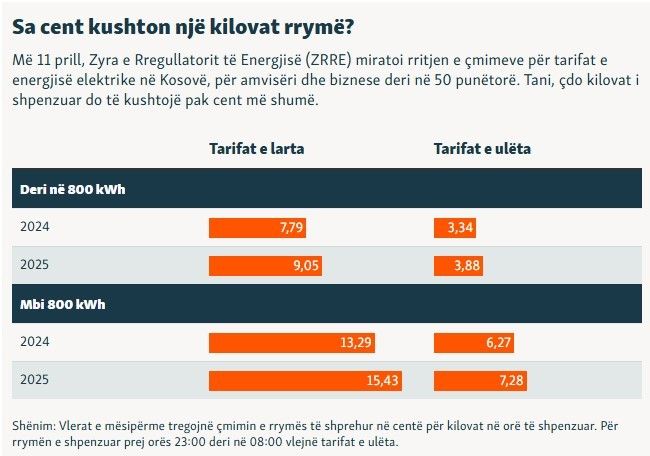
Usually, new tariffs take effect on April 1st, each year. This year this is happening a month later because of numerous complaints and reactions.
Energy supply operator, K ESCO is the main supplier licensed for electricity in Kosovo, while Z The RRE does the price revision every year.
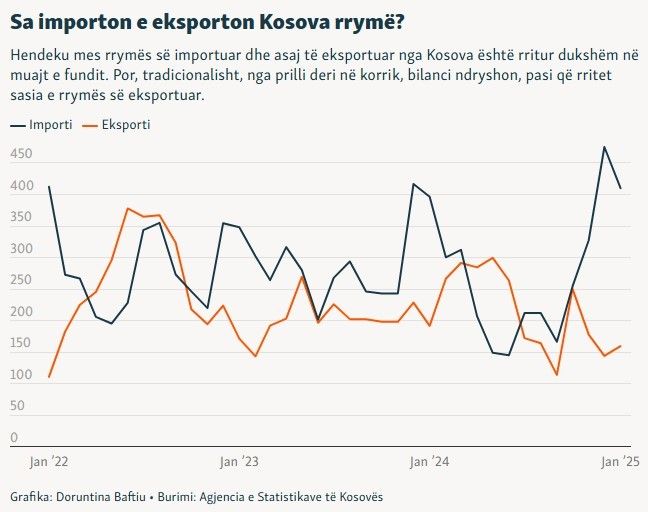
The rise in electricity prices has been argued with the lack of sufficient production by the Kosovo Energy Corporation (KEK) and the need for import at more expensive prices in international stock exchanges.
How can new prices affect the consumer basket?
The decision to expensive the electricity has prompted numerous reactions from citizens and businesses.
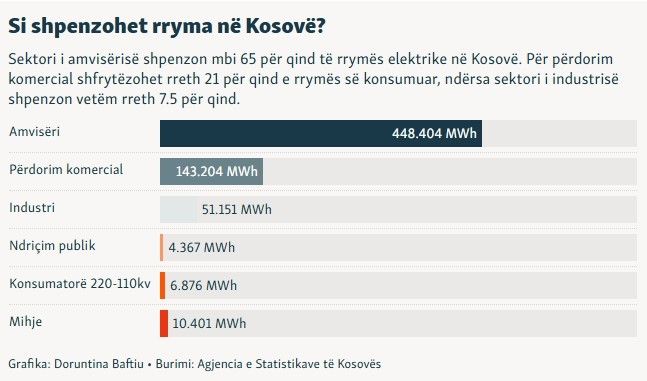
Rahime Mehmeti from Pristina, who works in the private sector, says the electricity price is still very expensive. For five members of her family, if she saves the electricity, the monthly bill is paid 100 euros.
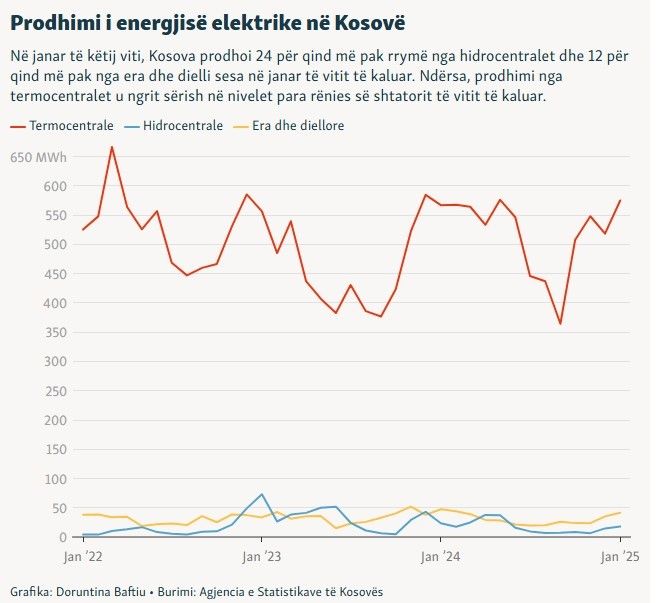
“We save the current to the extreme. During winter, we have not constantly released heating, we have climates, but we do not let it down, because the bill is up to 150 euros per month”, says Mehmeti, adding that rising energy tariffs exacerbate the standard of citizens because prices of other articles are expected to rise.
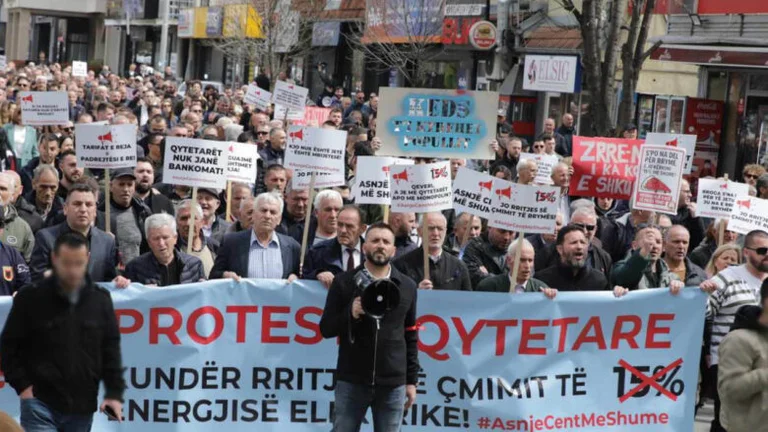
Anti-expensation protests have been organised twice in Pristina, while the group “no more cent” on Friday has indicated that the next protest will be held on April 19th.
The activist from this group, Besnik Shabiu, said that if there is no reflection on the ERE side, the protests will be massive. At a media conference Friday, he added that due to new energy tariffs, the price of flour has also been warned as an essential product.
Against the cost of electricity, this group has already announced they will hand over lawsuits to Z. RRE at the Foundation Court in Pristina.
This group's lawyer, Ardian Bajraktari, said the indictment is ready and that they are awaiting the official publication of the ZERE decision in order to proceed with other legal procedures.
Also, along with the indictment, it is noteworthy that we have worked and are working intensively on drafting the provisional mass proposal as a measure for delaying the execution of the decision, for the fact that such a decision poses damage, difficult reparable, for citizens”, Bajraktari said during the media conference.
That costing energy tariffs will only be the beginning and that this expensive later will affect the entire economy, representatives of businesses have warned.
While there is a way for citizens to save a little by using electrical equipment at night, when the current costs cheaper to local producers, this would not be possible, since their working schedules do not match the time of low tariffs from 11:00 p.m. to 8:00.
According to business representatives, the price of electricity would force businesses to increase the price of their products and services, such as flour, bread, milk, oil and other products produced in the country.
Radio Free Europe asked the Kosovo Mills Association for the possibility of rising that the flour price, as the group “warned no more cent”, and from this association confirmed that after receiving the increased bills there may be price movement but not large.
The chairman of this association, Bashkim Zajullahu, says the current price for 100kg of flour is up to 35 euros. Meanwhile, after the price increase in energy tariffs, the price for this amount of flour could be raised for two euros.
If the price is more expensive, it is exploiting the” situation, he tells Free Europe Radio.
Price hikes for other products have also warned Gani Durmishi, chairman of the Kosovo Association of Milky Producers and Processors.
When electricity is expensive, both the price of the ambalage, and the price of milk, cheese, yogurt and yogurt” increases, he tells Radio Free Europe.
The chairman of the Kosovo Economy House, Lulzim Rafuna, says businesses “will owe” to expensive prices of their products and services.
When prices rise, there is inflation... As a result, the value of money has been lost”, Rafuna says.
In the past four years, Kosovo has faced a steady increase in goods and services prices.
Initially due to the pandemic, COVIED-19 in 2020, and two years later, in 2022 when Russia began its invasion of Ukraine.
The year 2022 Kosovo shut down 11.6 per cent inflation rate. According to data from the Kosovo Statistics Agency (ASK), it dropped to 4.9 in 2023, while last year fell to 1.6 percent.
Even though inflation has declined or stabilised, prices have not dropped.
Liberalization or economic chaos and energy?
New electricity tariffs do not apply to all businesses in Kosovo.
The RER-run tariffs can only use household consumers and businesses that have up to 50 workers or that have annual circulation under 10m euros.
Larger businesses from June will be forced to select their own electricity supplier and to go out on the open market.
This means that they will pay more for the electricity they spend, but no price is yet known.
The ZRRE says this is a step towards liberalising the energy market.
Economic talks in Kosovo disagree with that decision. They say the country is not ready for this change because there are not enough licensed companies that provide energy at affordable prices for businesses and that it will upset the price market.
For this reason, on March 21st, the Kosovo Economic Oda asked the ombudsman to initiate this issue in the Constitutional Court and ask for the suspension of the decision for at least a year.
So far, the ombudsman has not answered questions about how he will act in this case.
The ZERE, however, has insisted there are 18 companies licensed for the sale of energy and has pledged to monitor agreements between businesses and supply companies on its own, to avoid possible abuses. /Radio Free Europe/