19 minutes ago
Budapest says it's withdrawing from GNP, hours after Netanyah's visit to Hungary
Periskopi(a year ago)
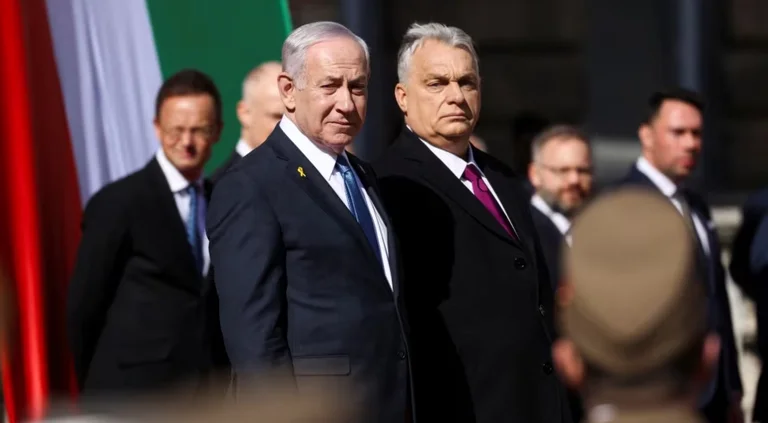
(a year ago)Hungary announced it is withdrawing from the International Criminal Court (GJNP), as Israeli Prime Minister Benjamin Netanyah arrived in Budapest on April 3rd. This is Netanyah's first visit to Europe since the JNP issued a warrant for his arrest over alleged war crimes in Gaza. Hungary's Defence Minister Christophe Szalay-Bobrovnikky met [...]
This is Netanyah's first visit to Europe since the JNP issued a warrant for his arrest over alleged war crimes in Gaza.
Hungary's Defence Minister Christophe Szalay-Bobrovnikky met with Netanyah at Budapest Airport around 2:30 and then, through a Facebook post, reported that the Israeli leader had arrived for a visit to his country, reports the report. Radio Free Europe.
Hours later Gergely Gulyas, the leader of the Hungarian prime minister's staff, Viktor Orban, was quoted as saying that the government is moving towards withdrawing from the JNP.
“Hungary will withdraw from JNP”, Gulyas said. “The government will initiate the withdrawal procedure [on 3 April], in line with international and constitutional legal framework”, follow Periscope.
Orban said then during a press conference with Netanyah that the latest <x0th of the International Criminal Court shows that it has become a political instrument”, as evidenced “more clearly from decisions on Israel”.
“We are withdrawing from the International Criminal Court”, he added.
Even before that announcement, Netanyyaah was sure that he would not be arrested during his four - day visit to Hungary.
As signatories to the tribunal in The Hague, Hungary is obliged to arrest him, but Budapest's domestic legal situation is complicated and has given the government sufficient space to welcome the Israeli prime minister.
The Hungarian Justice Minister will hand over the national Parliament documentation to conclude our co-operation with the” tribunal, Orban said.
The withdrawal process from the GNP is expected to take up to a year, as parliament must adopt such a decision.
Hungarian Prime Minister Viktor Orban had publicly invited Netanyah to visit in November, shortly after the JNP issued a warrant for the arrest.
The “guarantees him, if he comes, that the JNP decision will have no effect in Hungary”, Orban said.
Diplomatic sources within Hungary have told Free Europe Radio that the state has decided to withdraw from the JNP, even though such a decision has not yet been officially confirmed.
Orban is next to Netanyah and US President Donald Trump, who has also criticised the decision to issue arrest.
Trump has imposed sanctions on the JNP last month, criticising him as the groundless “” speaks of the arrest of Netanyah and former Israeli Defence Minister Yoav Gallant.
The indictment reportedly says Netanyahu “is claimed to be responsible for war crimes, respectively for the use of hunger as a war method and deliberately has led an attack against the civilian population and war crimes of murder, persecution and other inhuman acts from October 8th 2023 to May 2024<1>.
The JNP cannot arrest anyone, but it is up to the states that have signed the treaty to establish the Rome Constitution to implement the warrants.
The “does not belong to states to unilaterally determine the legal aspect of court decisions”, said JNP spokesman Fadi El-Abdallah for Radio Free Europe.
According to him, states have a legal obligation to carry out court decisions.
This stance is supported by two lawyers with whom Radio Free Europe spoke.